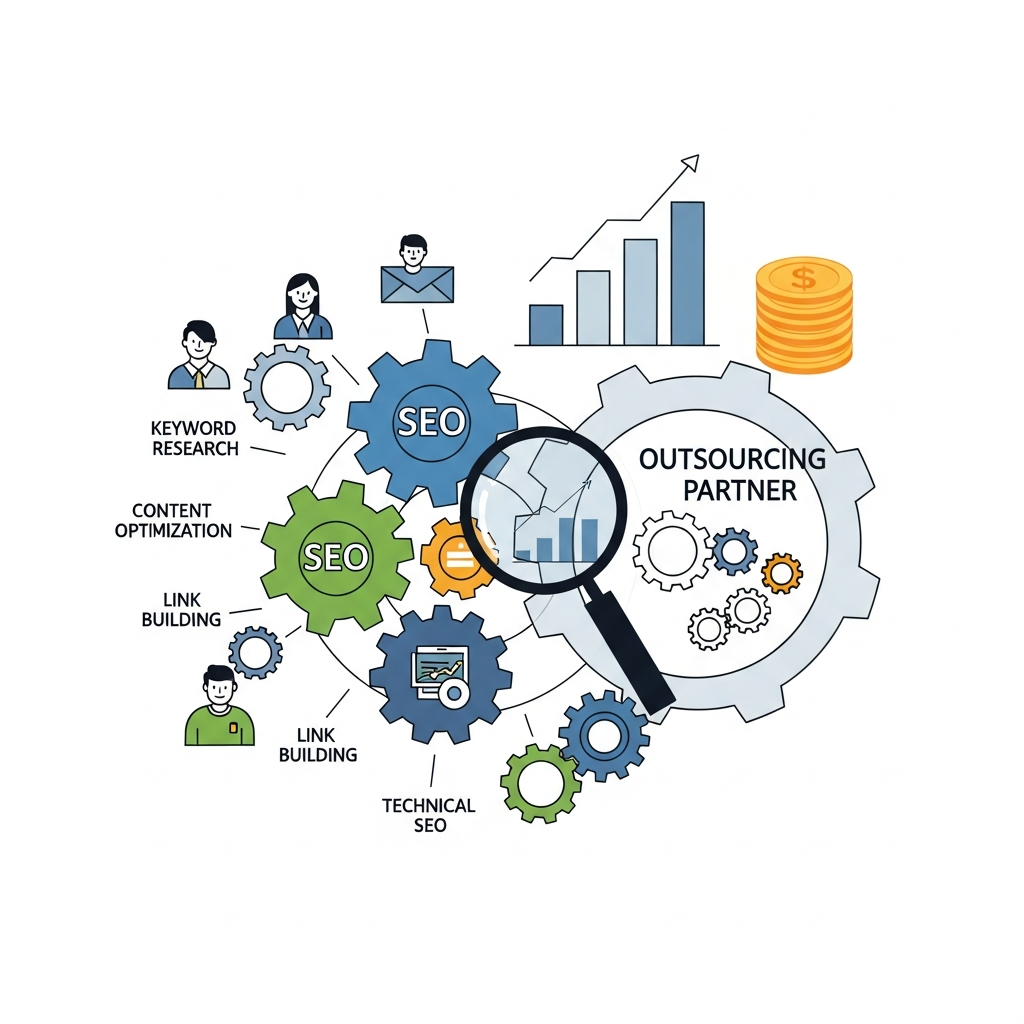
SEO Outsourcing for Teams: Affordable Packages That Preserve Quality
Why outsourcing SEO makes sense for in-house teams
Many marketing teams struggle to balance daily responsibilities with the demand for consistent, high-quality SEO. Outsourcing offers access to specialized expertise, scalable production, and an external eye that can spot opportunities missed by an in-house team. When done right, outsourcing preserves brand voice, maintains governance, and accelerates organic growth without forcing a full-time headcount.
Important benefits include faster content creation pipelines, access to technical SEO know-how, and the ability to experiment with new formats—without compromising existing brand standards. For teams juggling product launches, seasonal campaigns, or multi-market expansion, a trusted outsourcing partner can be a force multiplier. Keep in mind that the goal isn’t to replace your team but to augment it with specialists who can operate at scale.
Models of outsourcing for teams
There isn’t a one-size-fits-all model. Consider these commonly used approaches for teams of varying sizes and needs:
- Managed services: A dedicated team handles strategy, execution, and reporting. Ideal for teams seeking a turnkey solution with clear ownership by an external partner.
- White-label partnerships: Outsourcing with your brand on all deliverables. Great for agencies or in-house teams that want to scale without exposing vendor names to clients or stakeholders.
- Project-based packages: Short-term engagements focused on audits, launches, or pivot-driven campaigns. Useful for evaluations or discrete campaigns.
- Hybrid models: A mix of in-house oversight with selectively outsourced execution. This often yields the best balance of control and scale.
When evaluating models, prioritize governance, accountability, and the ability to integrate with your existing tech stack. A pilot period—such as a 30-day sprint—can help you assess quality, speed, and collaboration dynamics before committing to a longer contract. For a practical blueprint on running automation-led pilots, see our hands-on guide linked below.
For teams exploring automation-led strategies, the right partner should offer structured workflows, transparent dashboards, and a clear path to branding consistency. If you’re unsure how to start, our recommended 30-day onboarding blueprint can help you jumpstart SEO at scale while preserving quality. Explore the 30-day content calendar approach.
What affordable SEO packages typically cover (and what they don’t)
Affordable doesn’t have to mean skimpy. A solid package should give you a balanced set of deliverables across technical SEO, on-page optimization, content strategy, and measurement. Look for clarity in scope, milestones, and acceptance criteria. Common components include technical audits, keyword research, on-page optimization, content briefs, internal linking, and monthly reporting.
Beware of “one-size-fits-all” bundles that promise results without addressing your unique site architecture or product catalog. Ask vendors to tailor their packages to your business model—e.g., SEO packages for ecommerce often require category and product page optimization, structured data, and geo-specific localization. For a framework on measuring ROI and governance in automated SEO dashboards, see this in-depth resource: ROI-focused dashboards and governance.
Most teams will benefit from a phased package: foundation (technical fixups, crawlability), content (briefs, optimization, publishing), and growth (scale across categories, A/B testing of metadata, and multilingual adaptation). If you’re evaluating options, compare packages by deliverables, SLAs, and the ability to ramp up or down based on results. A practical primer on scalable content calendars is available here: 30-day content calendar for SEO.
Pricing dynamics: what drives cost and value
Pricing for outsourced SEO services varies widely based on scope, geography, and the level of customization. Expect fixed monthly retainers for ongoing programs, plus add-ons for audits, content creation, and technical remediation. Enterprise-grade engagements may include governance SLAs, SOC 2 considerations, and dedicated account management. When comparing pricing, align cost with anticipated ROI and the level of control you need over strategy and messaging.
To avoid sticker shock, seek transparent pricing structures and a clear link between activities and outcomes. Ask for a breakdown of cost drivers: baseline technical improvements, content generation, editing/QA, link-building, reporting dashboards, and platform access if any. If you want a governance lens on ROI, our dashboard-focused guide provides practical benchmarks you can apply to your own projects: measuring ROI and governance in automated SEO dashboards.
Tip: look for pricing that scales with volume, but also offers efficiency gains as your content library grows. The right partner should help you lower marginal costs per additional page or product category while preserving quality and brand voice.
White-label SEO services options and benefits
White-label arrangements let you extend a high-caliber SEO program under your own brand. This is particularly appealing for agencies that want to expand service lines or internal teams that want to maintain client-facing consistency without building the full capability in-house. White-label packages often include customizable reporting, client-ready dashboards, and co-branded deliverables that fit a partner-model governance structure.
When negotiating white-label terms, ensure you have control over branding, naming conventions in content, and the right to modify templates and metadata to reflect your language and tone. Also clarify data handling responsibilities, confidentiality agreements, and the ease of adding new clients or sites under a unified workflow. If you’re curious about practical examples of scalable automation and publication workflows, review our calendar and governance resources linked earlier in this article.
Governance, security, and SLAs for enterprise-ready outsourcing
For teams operating at scale or across multiple brands, governance matters as much as execution. A solid SLA should specify deliverables, response times, escalation paths, and clear ownership for content quality, branding, and approvals. Security considerations—data privacy, access controls, and SOC2 or equivalent certifications—are non-negotiable when handling content calendars, keyword data, and analytics pipelines.
Set up a transparent reporting cadence: monthly performance reviews, quarterly strategy checkpoints, and real-time dashboards that compare against agreed KPIs. It’s also wise to establish review gates for new markets or languages, ensuring localization quality and regulatory compliance. If you want to see real-world governance patterns in action, our ROI and governance guide offers structured templates you can adapt to your organization’s needs: ROI dashboards that prove value.
A practical onboarding playbook for teams
Effective onboarding sets the tone for a successful outsourcing relationship. Start with a discovery phase to map your site taxonomy, content priorities, and technical gaps. Align on language guidelines, brand voice, and content formats before you scale. A typical onboarding sequence includes a technical audit, keyword mapping, an initial content calendar, and a QA process that taps into brand guidelines and editorial standards.
From there, implement a cadence of weekly standups, bi-weekly content briefs, and monthly performance reviews. Use automation tools to publish and optimize content with consistent metadata, internal linking, and structured data where appropriate. For additional inspiration on automation-driven onboarding, see the 30-day calendar resource linked earlier and the ROI governance guide for concrete checklists.
Practical decision checklist for choosing a partner
Before selecting an outsourcing partner, run through this decision checklist to minimize risk and maximize impact:
- Can the vendor deliver at your required scale (multi-site, multilingual, multi-brand) with centralized management?
- Are SLAs clearly defined for deliverables, response times, and governance reviews?
- Is data privacy and security adequately addressed (SOC 2, data handling, and access controls)?
- Is there a transparent pricing model with a clear path to ROI and cost predictability?
- Do they provide white-label options if you need brand-controlled output or partner messaging?
- Can they integrate with your CMS, analytics, and reporting tools?
- Is there a pilot or trial period to validate quality and collaboration?
Take the time to request a sample deliverable, such as a content brief or a technical audit report, to assess whether the partner’s standards align with your brand and quality expectations. For practical examples of how to structure a pilot, consult the 30-day content calendar resource and governance article linked above.
Putting it together: a concrete plan to start outsourcing with confidence
Outsourcing SEO for teams is about finding a partner who can scale with your business while preserving brand quality and providing clear visibility into results. Start with a well-scoped pilot, insist on governance and SLAs, and choose a model (managed, white-label, or hybrid) that aligns with your internal capabilities and strategic priorities. By focusing on transparent pricing, robust reporting, and strong editorial controls, you can unlock rapid ROI without sacrificing consistency.
As you evaluate options, remember that the goal is a symbiotic relationship: your internal team handles strategy and brand stewardship, while your outsourcing partner executes with speed and discipline. If you want to explore further insights, you can read about scalable content calendars, ROI governance dashboards, and region-specific automation practices in the linked resources within this article.
Internal links for further reading and practical templates: Asimpletool homepage, 30-day content calendar for SEO, ROI governance dashboards, Brazilian Portuguese automation guide