The Growth Marketer's Guide to Integrated Keyword Research and Content Automation: Scale Content and Prove ROI
What integrated keyword research and content automation really means
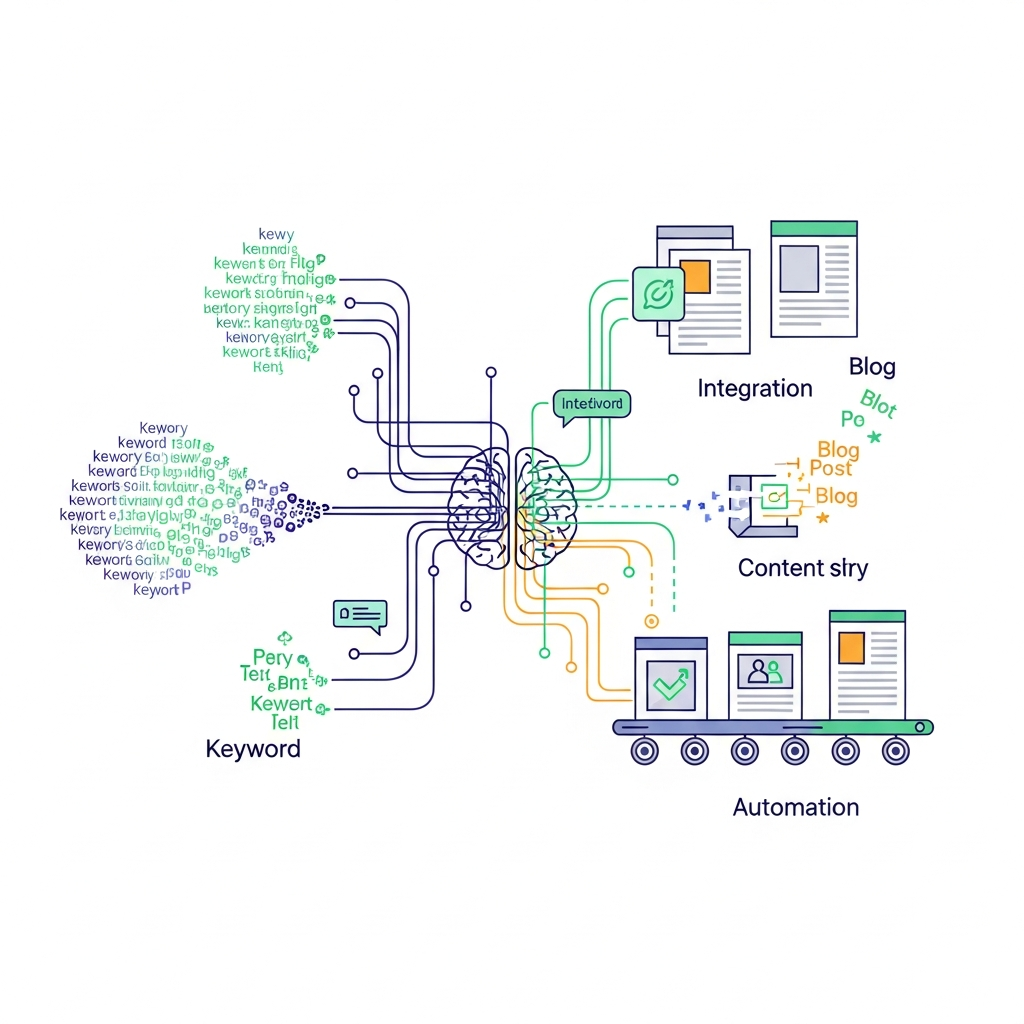
Integrated keyword research and content automation is a holistic approach that links discovery, ideation, and publishing into a single, repeatable workflow. It starts with identifying high-potential keywords through data-driven methods and then automatically turning those keywords into briefs, outlines, and published content. The goal is to create a scalable system that aligns search intent with content output while maintaining quality and brand voice.
For growth teams, this means fewer bottlenecks and faster feedback loops. AI-assisted discovery tools can surface long-tail and intent-rich keyword opportunities, while automation pipelines translate those opportunities into ready-to-publish assets. The outcome is more traffic, better engagement, and a clearer path to ROI across campaigns and sites.
Key phrases you’ll hear in practice include data driven keyword discovery for automation platforms, AI driven keyword discovery tool, and customizable content calendar for SEO automation. Together, they form a loop: discover keywords, brief and create content, publish and measure impact, then refine based on performance data. This loop is essential when you manage multiple sites, languages, or product lines.
Core components and how they fit together
2.1 Data-driven keyword discovery
Data-driven keyword discovery relies on large-scale data signals: search volume, seasonality, user intent, and competitive gaps. It uses automated filters to surface keywords with high potential across the funnel, from awareness to conversion. The output is a prioritized keyword map that informs topics, headlines, and content briefs.
To operationalize this, you’ll want a centralized keyword repository with tagging for intent, difficulty, and expected ROI. This enables downstream teams to align content ideas with business goals rather than operating in silos.
2.2 AI-driven keyword discovery tool
An AI-driven keyword discovery tool accelerates research by analyzing patterns that humans might miss. It can suggest related terms, semantic clusters, and multilingual equivalents that map to buyer journeys. The result is a broader set of opportunities with confidence scores and brief-ready prompts for writers and editors.
When evaluating options, look for transparency in model behavior, data privacy controls, and the ability to tune prompts to your brand voice. AI should augment human judgment, not replace it entirely.
2.3 Competitor keyword analysis automation
Competitor keyword analysis automation helps you identify gaps where rivals outperform you and discovers topics your audience already cares about. Automated gap analyses reveal pages to optimize, topics to target, and potential content you can steal with better optimization and fresh angles.
In practice, you’ll set benchmarks against which your content calendar can be measured. Automation should surface gaps weekly or monthly, so your team can respond with timely content experiments.
2.4 Content automation pipelines
Content automation pipelines convert keyword signals into publish-ready assets. They typically include: topic briefs, outlines, first-draft content, on-page optimization checks, metadata generation, internal linking plans, and automated publishing hooks to CMSs. The aim is to reduce manual steps without sacrificing quality.
Best-practice pipelines integrate editorial calendars, SEO checks, and QA gates. This keeps content consistent with your brand while speeding up production to meet demand swings.
2.5 Customizable content calendar for SEO automation
A customizable content calendar links keyword clusters to publishing timelines, editorial owners, and distribution channels. It should be adaptable to short-term promotions, product launches, and evergreen topics. When the calendar is data-driven, it also surfaces re-purposing opportunities, such as turning a high-performing pillar page into micro-articles or social content.
For teams operating across multiple geographies or CMSs, the calendar must support localization, scheduling cadence, and approval workflows that preserve brand governance.
A practical framework to implement
Adopting integrated keyword research and content automation doesn’t have to be overwhelming. Use a simple, repeatable framework that can scale alongside your business. The steps below provide a concrete path from pilot to full rollout.
- Align goals and define success metrics. Decide which metrics matter most: organic traffic, keyword rankings, content velocity, or revenue tied to search. Establish a baseline and target ROI thresholds for the pilot.
- Create a unified keyword map. Combine data sources (trend data, competitor analysis, and internal analytics) into a single map with intent labels and ROI estimates.
- Set up automated discovery and briefs. Configure AI-driven discovery to surface topical clusters and generate briefs that specify target keywords, angles, and required media assets.
- Build content pipelines with governance gates. Design end-to-end workflows that move from outline to draft to optimization to publishing, with QA checks and sign-offs at each stage.
- Launch a pilot with a controlled scope. Pick a subset of sites or categories to validate the end-to-end process and gather performance data before scaling.
- Measure, learn, and optimize. Use dashboards to monitor ROI, traffic, and engagement. Iterate on prompts, briefs, and the content calendar based on results.
As you move from pilot to scale, continuously refine alignment between keyword signals and content outputs. Consider reading our ROI governance dashboards guide for robust measurement practices and governance tips.
Choosing the right tools and setup
The toolset you select will determine how smoothly integrated keyword research and content automation scales. Focus on three core capabilities: data quality and trust, automation throughput, and governance controls.
- Data quality and signals: Look for a tool that blends search volume, intent signals, and competitive gaps. Ensure you can segment data by geography and language if needed.
- Automation throughput: Prioritize platforms that offer end-to-end content pipelines, from keyword discovery to CMS publishing, with easy integration to WordPress, Webflow, Shopify, or Notion as applicable.
- Governance and security: Enterprise-grade governance includes role-based access, activity logs, SOC 2 compliance, and audit trails for all content activity.
In practice, you’ll often compare an AI-driven keyword discovery tool against a broader keyword research automation platform. The right choice depends on your scale, CMS ecosystem, and whether you need white-label capabilities for agency partnerships. Always pilot with a limited scope before committing to a long-term contract.
Planning, scheduling, and a scalable content calendar
A scalable content calendar bridges your keyword strategy with publishing cadences. It should accommodate weekly sprints, seasonal campaigns, and evergreen content that compounds over time. The calendar becomes a living document that guides briefs, editors, and publishers across teams and geographies.
To operationalize this, create a baseline calendar with 8–12 weeks of content and a clear mapping from clusters to specific publish dates. Include owners, required assets (images, videos, schema), and QA checkpoints. You can accelerate this process by referencing our 30-day content calendar guide, which demonstrates how to jumpstart SEO at scale with automation.
An example workflow might look like this: every Monday, the discovery engine refreshes keyword clusters; by Tuesday, briefs are generated; by Thursday, drafts are created; Friday is for optimization and internal linking, followed by publishing on the configured cadence. This cadence ensures you stay ahead of seasonal shifts and can rapidly capitalize on fresh opportunities.
Measuring ROI, governance, and dashboards
ROI measurement should be baked into your dashboards from day one. Track inputs (content produced, publishing velocity, automation events) and outputs (traffic, rankings, conversions, revenue). The dashboards should translate technical SEO activity into business terms that non-SEO stakeholders can understand. A clear governance model with SLAs, change control, and escalation paths reduces risk as you scale.
Practical tips: set quarterly ROI targets, align dashboards with product or business units, and maintain an auditable trail of decisions. For deeper guidance, consult our ROI and governance post, and adapt the templates to your data sources and KPIs.
For teams exploring multilingual and multi-site deployment, governance becomes even more critical. Enterprise-grade setups should offer centralized dashboards with site-level drill-downs, role-based access, and security controls across regions.
Pitfalls, best practices, and next steps
Even with a strong framework, several common pitfalls can derail progress. First, avoid over-automating content without quality controls. AI can generate drafts quickly, but human editors must curate tone, accuracy, and brand voice. Second, don’t underestimate the importance of data hygiene. Broken signals or stale data will mislead your entire workflow. Third, ensure you have governance at scale. Without clear roles, approvals, and reviews, ROI can fray over time.
Best practices include starting with a tight pilot, maintaining a single source of truth for keywords, and keeping a living playbook that documents learnings and adjustments. Regularly update prompts and briefs to reflect changes in search intent and market conditions. Finally, lean on internal and external case studies to inform your strategy and to demonstrate value to stakeholders.
For teams curious about regional execution, see our São Paulo-focused article on automating publication for e-commerce in Brazil. It provides a regional perspective on localization, language nuances, and local search considerations: São Paulo automation post.
With a thoughtful approach, integrated keyword research and content automation becomes a scalable engine for content-led ROI. The key is to maintain a balance between automation speed and human oversight, continuously aligning keyword signals with valuable, on-brand content that resonates with your audience.