The Growth Marketer's Guide to AI Assisted On-Page Optimization for New Pages: Scale ROI Without Sacrificing Quality
Introduction
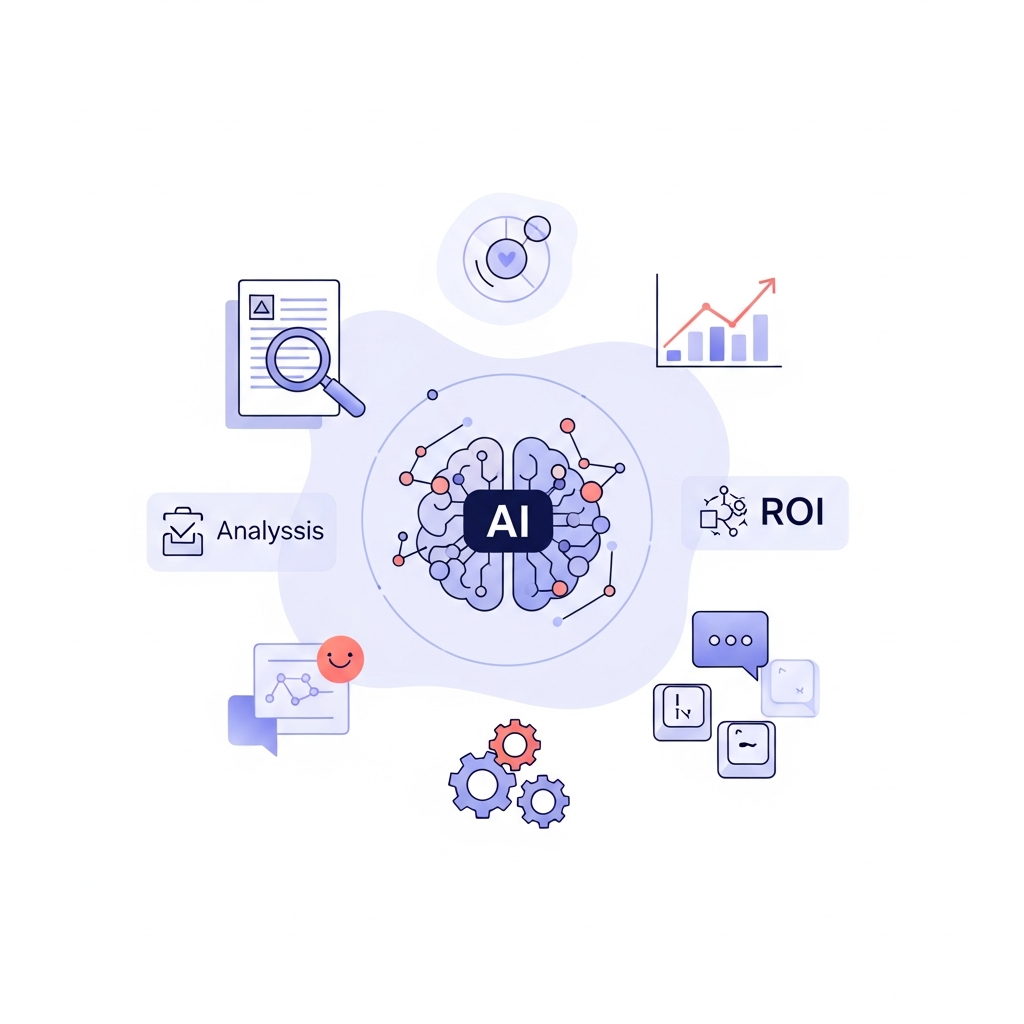
For growth marketers, new pages are opportunities. AI-assisted on-page optimization for new pages can dramatically accelerate how you research keywords, draft compelling content, optimize meta elements, and publish with consistency. The goal isn’t to replace human judgment but to augment it—providing scalable workflows that maintain quality, relevance, and alignment with business goals.
In this guide, you’ll learn how to structure AI-powered on-page optimization so every new page starts with a solid framework: data-informed keyword focus, AI-assisted content briefs, AI-generated draft content that passes editorial review, and governance that keeps publishing fast without sacrificing quality. The framework applies across content teams, agencies, and enterprise marketing programs that manage multiple sites or brands.
We’ll also share practical prompts, governance practices, and a repeatable 5-step playbook to help you move from pilot to production. Along the way, you’ll see how to weave in internal resources and existing assets, while avoiding common traps that erode ROI or undermine brand voice.
AI-Driven Content Generation for New Pages
AI-driven content generation isn’t a magic wand; it’s a productivity engine. Used correctly, it can draft outlines, generate long-form sections, and produce variations for A/B testing while preserving clarity, expertise, and brand voice. The best practice is to couple AI drafting with editorial oversight, fact-checking, and creative control that only humans can provide.
Key approaches include:
- Prompt design that elicits structured outputs (sections, headings, and key points) rather than free-form text.
- Content briefs generated by AI that outline scope, intent, and target keywords for each page segment.
- Editorial review loops where human editors verify factual accuracy, tone, and compliance with brand guidelines.
For example, a draft prompt might request a 1,200-word page about a product feature, organized into a 6-section outline with 2-3 subpoints per section. The AI produces a draft, and editors refine it for accuracy, tone, and call-to-action alignment. This approach accelerates production while preserving quality and trust with readers.
To balance speed and quality, create a content calendar that combines AI-generated drafts with scheduled human reviews. See how a 30-day content calendar can jumpstart SEO at scale in this industry-leading post: 30-day content calendar for SEO at scale.
AI-Optimized Meta Tags and Keyword Generation
Meta tags remain a practical lever for on-page SEO, especially on new pages where crawl budgets and user signals are still being established. AI can assist in generating meta titles and descriptions that balance search intent, readability, and click-through potential. Importantly, human oversight should ensure accuracy, brand voice, and alignment with product or topic nuances.
Practical steps include:
- Define primary and secondary keywords early in the planning phase.
- Use AI to craft multiple meta title variations and descriptions that target user intent while avoiding keyword stuffing.
- Test distinct title and description combinations in SERP snippet previews to understand potential CTR impacts.
Beyond meta tags, AI can assist with on-page elements such as header optimization and schema markup hints. As with content, governance and QA are essential to prevent mislabeling or incorrect data being surfaced on rich results.
For governance-oriented insights on ROI and dashboards, explore this article about measurable governance dashboards: ROI-focused governance dashboards.
Integrated Keyword Research & Content Automation
AI-enabled keyword research can run at scale, surface long-tail opportunities, and prioritize keywords by expected impact and difficulty. The real value comes when keyword discovery is integrated with content automation so that briefs and outlines are anchored to real opportunities discovered in your data.
Recommended workflow:
- Start with a seed keyword list aligned to your product pages, category pages, and top landing pages.
- Let AI expand the list into related terms, questions, and semantic variants across intent types (informational, navigational, transactional).
- Generate content briefs automatically for each target keyword set, including suggested headings, FAQs, and internal link opportunities.
To see a practical example of governance dashboards for automated SEO, read about how to measure ROI and governance in automated dashboards: ROI-focused governance dashboards.
Content Strategy Driven by AI for SEO
AI can help you design a scalable content strategy that aligns with your business goals. Start with a content framework built on pillars and topics that map to your products or services, then extend into subtopics tailored to user intent and regional needs. Ensure that all AI-generated drafts reflect the intent of the page—whether it’s to educate, compare, or convert.
Best practices include:
- Establish editorial standards and a brand voice matrix that AI prompts reference during drafting.
- Develop a content calendar that ties to product launches, seasonal campaigns, and market expansions.
- Incorporate localization and localization workflows early to support multilingual sites and regional markets.
For deeper insights on scalable content calendars, you can review our 30-day calendar resource linked above. Additionally, consider cross-linking to related posts on governance dashboards for a data-driven approach to content strategy.
Workflow Automation for Content Creation & Optimization
AI shines when it’s wired into end-to-end workflows. A typical automation stack might look like this: prompt-driven AI drafting, editorial review, SEO checks, metadata optimization, publishing, and post-publish performance monitoring. Coupling AI with a centralized workflow manager reduces handoffs, speeds up publication, and provides a transparent trail for governance.
Key components include:
- Validated prompts and templates for outlines, sections, and meta elements.
- Editorial QA checkpoints for factual accuracy, brand voice, and compliance.
- Auto-generated internal linking suggestions that align with your site structure and user journeys.
- Automation-ready publishing pipelines that integrate with your CMS and analytics tools.
To see how to leverage governance dashboards to prove value in automated workflows, explore the ROI-focused governance article: ROI-focused governance dashboards.
5-Step Playbook to Implement AI on New Pages
Use this playbook to move from pilot to production when applying AI to new pages. Each step is designed to be repeatable and auditable, with clear ownership and gates for quality assurance.
Align page objectives with business KPIs (traffic, engagement, conversions). Establish a threshold for acceptable content quality and a publishing cadence. Compile seed keywords, audience intents, and brand voice guidelines. Create prompt templates for outlines, sections, meta tags, and QA checks. Use AI to produce outlines and first drafts, then convert them into structured content briefs for editors and subject-matter experts. Editors refine tone, verify facts, add trust signals, and refine internal linking strategies. Implement meta tag variations and schema notes. Schedule publish dates, enable analytics tracking, and monitor performance. Document learnings for future iterations.
In practice, this playbook helps teams scale new-page publication while maintaining brand quality and governance. It also creates a repeatable path for onboarding new editors and content creators.
Measuring ROI & Governance
ROI for AI-assisted on-page optimization isn’t only about direct conversions. It includes content velocity, incremental organic visibility, and the efficiency of your content workflows. Governance ensures consistency, security, and auditability across multiple pages and sites.
Recommended metrics include:
- publishing velocity (pages published per week) and delivery cadence,
- keyword ranking movements for target pages and clusters,
- CTR and engagement metrics on new pages, and
- content quality signals such as dwell time, scroll depth, and return visits.
Governance practices should cover access controls, data privacy, versioning, and SLA terms for automation tools. For a practical example of governance dashboards that prove value, read the post on measuring ROI and governance in automated SEO dashboards: ROI-focused governance dashboards.
Best Practices, Pitfalls, and Quick Wins
To maximize results and minimize risk, keep a few best practices in mind as you roll out AI-assisted on-page optimization for new pages:
- Maintain editorial guardrails: tone, expertise, and factual accuracy are non-negotiable even when content is AI-assisted.
- Guard against keyword stuffing: prioritize user intent and readability over keyword density.
- Use A/B testing for meta elements and on-page layouts to quantify impact.
- Implement clear QA gates before publishing, including fact-checking and brand alignment checks.
Pitfalls to avoid include over-reliance on automation for crucial competitive pages, neglecting localization needs, and failing to integrate AI outputs with CMS and analytics properly. A disciplined approach, rooted in governance and editorial oversight, leads to durable improvements in ROI.
A Practical Case Study
Consider a mid-market e-commerce site launching a new product line across three geographies. By applying AI-assisted on-page optimization for each product page, the team generated outlines, drafted product briefs, and crafted localized meta tags within a structured workflow. Editors reviewed and refined content in parallel with publishing, ensuring local relevance and brand voice. Over a 60-day window, the site observed faster time-to-publish, improved organic visibility for new products, and more consistent on-page quality across regions. While exact ROI figures depend on traffic mix and conversion rates, the qualitative gains—speed, consistency, and governance—are meaningful indicators of value and scalability.
Organizations can extend this approach to multilingual content, category pages, and long-tail product pages. For inspiration on localizing and automating content for ecommerce, see the Sao Paulo automation post: Sao Paulo automation for ecommerce.
Internal Linking & Site Architecture
Internal linking is a critical part of on-page optimization for new pages. AI-generated content should include thoughtful internal linking opportunities that guide users through relevant context and product journeys. A few practical rules:
- Link to topically related pages and key conversion pages to distribute authority.
- Avoid excessive cross-linking; prioritize relevance and user value.
- Maintain a logical site structure with consistent anchor text that reflects page intent.
As you publish new pages, map them into your site architecture and update the internal linking plan accordingly. For readers seeking a broader perspective on automation-driven content strategies, you can review related resources linked earlier in this article.
Tools, CMS, and Integration
AI-assisted on-page optimization thrives when it’s integrated with your content management system (CMS) and analytics stack. Common CMS integrations include WordPress, Webflow, and Shopify, among others. API access, content calendars, and automated publishing pipelines help maintain a steady cadence while preserving governance and QA controls.
When evaluating tools, prioritize security, data privacy, auditability, and ease of integration with your analytics tools (e.g., Google Analytics, Search Console) and your content calendar. For readers seeking practical examples of automation and governance in action, the linked articles above offer useful patterns and case studies.
To recap, AI-assisted on-page optimization for new pages is most effective when you:
- start with clear goals and a repeatable playbook,
- combine AI drafting with editorial QA,
- optimize meta tags and on-page elements with human-in-the-loop oversight, and
- measure ROI with governance dashboards that demonstrate progress over time.
For further reading on practical automation patterns and ROI governance, you can explore these internal resources: ROI-focused governance dashboards and 30-day content calendar for SEO at scale, plus a case study on localized automation: Sao Paulo automation for ecommerce.