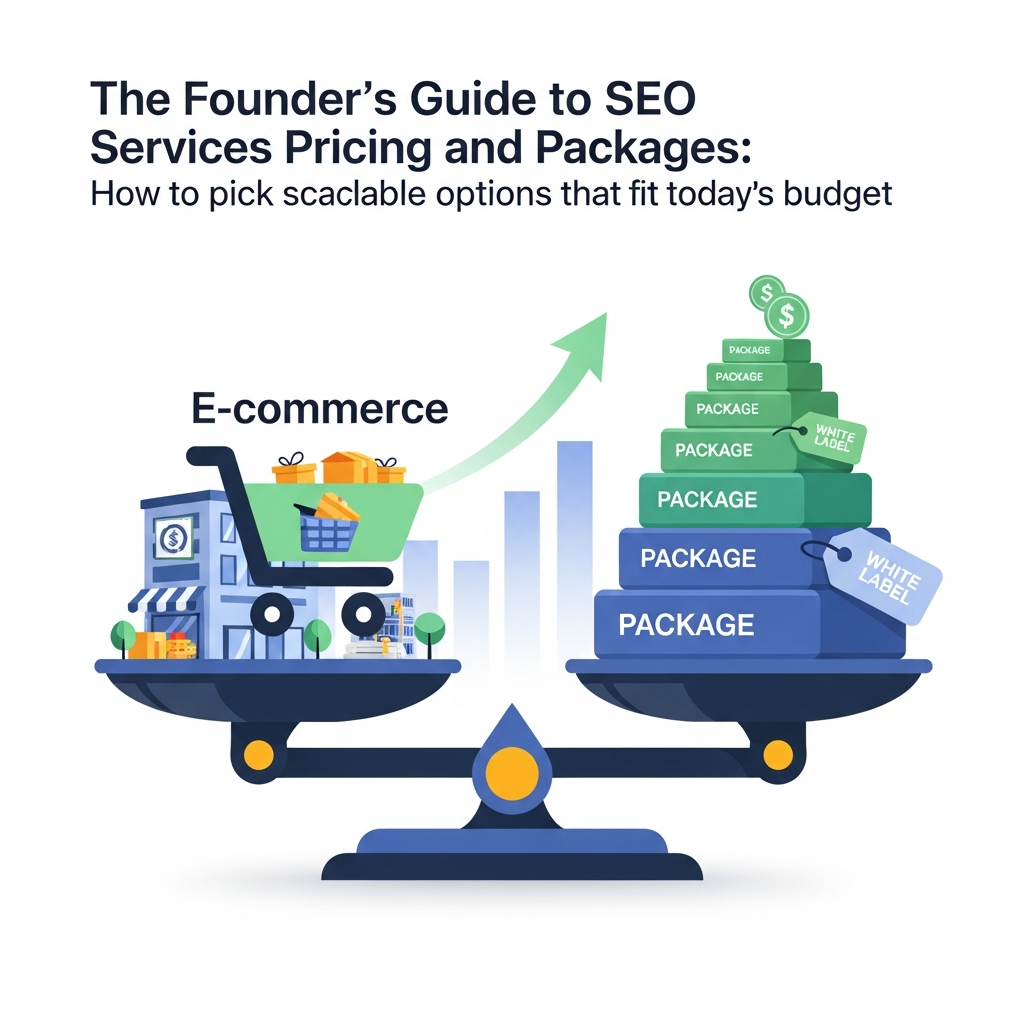
The Founder's Guide to SEO Services Pricing and Packages: How to pick scalable options that fit today's budget
Introduction: Why pricing matters for founders
For founders and product-led growth teams, SEO is a long-game investment. The challenge isn’t just finding a good agency or platform; it’s designing pricing and packaging that scale with your business. You need clarity on what you’ll get, when you’ll see value, and how to avoid noisy fees or scope creep that erodes ROI. This guide breaks down how pricing models work, how to match packages to company size and goals, and how to negotiate terms that protect your roadmap.
Throughout this article you’ll find practical models, blueprint packages, and negotiation playbooks you can adapt to your budget. We’ll also highlight concrete decision points, governance practices, and examples of when to pivot from one pricing model to another as needs evolve. For readers building multi-site or multilingual strategies, you’ll discover how scalability and governance influence pricing choices as well.
To make this real-world, consider integrating your pricing decisions with a simple ROI framework. Look for transparency in deliverables, predictable milestones, and dashboards that quantify impact. If you want a quick bridge to actionable tactics, check our hands-on guides linked in the body for deeper dives into content calendars and ROI governance. For example, our 30-day content calendar post explains how to jumpstart SEO at scale, offering a concrete onboarding path you can adapt to any pricing tier.
Founders should keep in mind that pricing is a proxy for value. A lower monthly fee may hide extra sprint costs or unused capacity. A higher upfront price might unlock robust governance, enhanced security, and a scalable framework that grows with you. The goal is to align price with predictable outcomes: increased organic traffic, higher-quality leads, and a clear path to profitability. The sections below lay out how to assess, compare, and negotiate pricing without sacrificing strategic clarity.
Pricing models in SEO services
Pricing for SEO services typically revolves around four core models. Each has strengths and trade-offs, depending on your growth trajectory, monthly demand, and risk tolerance. The right choice often combines a baseline package with optional add-ons as you scale. Below are common structures, with practical guidance on when and how to use them.
Monthly retainers
Monthly retainers are the most common pricing model for ongoing SEO work. They cover a sustained program—technical audits, on-page optimization, content planning, link-building, analytics, and reporting. For founders, retainers offer predictable cash flow and a predictable set of deliverables. When evaluating a monthly retainer, seek clarity on scope caps, escalation paths, and how frequently you’ll revisit the strategy.
Pros: Predictable budgeting, steady progress, easy governance with dashboards. Cons: Can become overpriced if scope isn’t tightened or if you don’t use the full capacity. Look for packages that include a regular quarterly roadmap and a clear change-management process.
To align with your budget, ask for a transparent breakdown of activities per month, milestone-based reviews, and a documented plan for upgrades as your site and traffic grow. If you’re curious about how to structure a content program and governance around ongoing SEO, see our post on measuring ROI and governance in automated SEO dashboards for a concrete framework that pairs with retainers.
Project-based pricing
Project-based pricing suits well-defined initiatives such as a technical audit, site-wide optimization, a content-creation sprint, or a site migration. You’ll lock in a scope, timeline, and a fixed price. Projects are ideal when you want quick wins or to test a relationship before committing to a longer-term program.
Pros: Clear deliverables and milestones; useful for budget approvals and vendor comparisons. Cons: Value realization depends on scope accuracy and the vendor’s ability to deliver on time. To maximize ROI, pair a project with a long-term roadmap and an understanding of how the results will be handed off into a ongoing program.
When negotiating, insist on a detailed scope, a change-order process, and acceptance criteria. If you’re building out an international or multi-site initiative, you may structure projects as a staged series with performance gates at each stage.
Hourly consulting
Hourly consulting provides flexibility for ad-hoc optimization, training, or expert reviews. It’s often used by teams that want to augment internal resources or run expert audits without committing to a full program.
Pros: Maximum flexibility; pay only for time used. Cons: It’s easy to lose sight of an overarching strategy if hours drift. Use hourly engagements sparingly and require a written scope for each session with tangible outcomes.
Performance-based pricing
Performance-based pricing ties a portion of the fee to specific outcomes—such as traffic growth, keyword rankings, or revenue metrics. While attractive in theory, it can introduce risk for both parties if benchmarks aren’t well defined or if external factors limit performance (seasonality, algorithm updates, etc.).
Pros: Direct alignment with business results; potential upside if goals are exceeded. Cons: Requires rigorous measurement, robust data governance, and clear arbitration if results don’t materialize due to uncontrollable factors. If you consider this model, insist on well-defined KPIs, a measurement window, and a safety-net for baseline measurements.
Package tiers by business size
Packages are most effective when they reflect the realities of different stages: early-stage startups, growing SMBs with ecommerce needs, and large multi-site enterprises. Below are representative tiers designed to be scalable rather than prescriptive. Adapt the scope to your unique needs and budget.
Starter package for small businesses
Designed for local brands or product launches with tight budgets. Core elements include a technical SEO health check, foundational on-page optimization, keyword research for core pages, basic content calendar alignment, and monthly reporting. Add-ons can include CMS integration, faster deployment, or additional blog content as needed.
- Technical audit and crawl fixes
- Keyword research for priority pages
- On-page optimization for 20-40 pages
- Content calendar alignment (monthly cadence)
- Basic analytics and KPI reporting
- One monthly performance review meeting
Expected outcomes: improved crawlability, faster page speed, and early visibility gains for priority products or services. For an actionable blueprint on content calendars, view the 30-day content calendar guide linked in the introduction.
Growth/ecommerce package
For growing brands with ecommerce components, this tier expands content, technical improvements, and authority-building. It often includes product-page optimization, category-level SEO, structured data enhancements, and a more ambitious content marketing plan. A robust link-building strategy and ongoing analytics are included to drive compounding traffic.
- Comprehensive technical SEO optimization across site
- Product-page and category-page optimization
- Structured data and schema implementation
- Content calendar aligned to promotions and seasonal campaigns
- Ongoing content production and optimization
- Authority-building through outreach and content-driven links
- Advanced analytics dashboards and ROI reporting
Expected outcomes: higher product visibility, improved conversion rates, and scalable content operations. For governance best practices in automated SEO dashboards, see our ROI and governance post.
Enterprise package
Enterprise-level needs center on governance, security, multi-brand/multi-site scalability, and advanced integrations. Expect centralized management, SOC2-compliant processes, custom SLAs, and a mature analytics ecosystem. This tier often includes dedicated program management, multilingual localization, and a strategic roadmap across business units.
- Multi-site, multi-brand SEO strategy
- Centralized dashboards with executive reporting
- Security, data privacy, and access governance
- White-label or partner-friendly controls
- Extensive content and link-building programs
- CMS integrations and API access
Expected outcomes: scalable organic growth across markets, stronger governance, and faster time-to-value at scale.
White-label and agency partnerships
For agencies and partner networks, pricing frequently centers on margins, white-label capabilities, and centralized management across clients. The key questions are whether the vendor supports synthetic SLAs, white-label dashboards, and the ability to onboard new clients quickly without duplicating effort. Look for transparent tiering that allows you to resell services with your branding while ensuring you retain control over scope, pricing, and client communication.
To maximize margins, negotiate clear channel terms, API access for your internal tooling, and predictable upgrade paths. A scalable white-label arrangement should let you manage hundreds of sites with a single control plane, while providing your clients with clear, compliant reporting. If you’re curious about practical governance frameworks that pair with scalable pricing, the ROI governance post linked above provides a blueprint you can apply within a white-label program.
ROI, governance, and value
Founders should measure ROI beyond simple traffic; a complete picture includes qualified leads, revenue attribution, and lifecycle value. A strong pricing discussion pairs with a governance framework that defines how results are tracked, who has access to dashboards, and how decisions are escalated. A reliable pricing plan aligns with governance by offering transparent milestones, regular performance reviews, and documented change-management processes.
Key questions to ask vendors include: what metrics are tracked, how data is collected, and how dashboards are shared with stakeholders. Prefer providers that offer integrated analytics and clear KPI dashboards so you can demonstrate progress to your board or investors. For a practical approach to ROI and governance, you can explore our article on measuring ROI and governance in automated SEO dashboards that prove value, which outlines concrete metrics, dashboards, and review cadences.
In addition, consider the TCO (total cost of ownership) perspective. Beyond monthly fees, what are the embedded costs—content creation, technical fixes, and additional assets? Ensure your contract includes explicit milestones and a transparent path to scale, so price adjustments are predictable as your program grows. If you want a regional example of content automation in action, our Sao Paulo automation post offers insights on localization workflows and scaling in specific markets.
What delivers real value (deliverables and features)
High-quality SEO pricing should map to a concrete set of deliverables. A clear package will include technical SEO health checks, keyword research, content planning, on-page optimization, and analytics. For ecommerce brands, include product-page optimization, category-page SEO, and structured data. For multi-brand enterprises, emphasize localization, governance, and centralized reporting.
- Technical SEO audits and remediation plans
- Keyword research focused on core pages and product lines
- On-page optimization for target pages with clear directives
- Content calendar aligned to business goals and promotions
- Content creation and optimization cycles (blogs, product pages, category pages)
- Link-building strategy and outreach with measurable outcomes
- Structured data, schema, and rich results implementation
- Analytics, dashboards, and monthly/quarterly reporting
- CMS integrations and automation hooks for publishing
Choosing a package also means evaluating governance and redundancy. Ensure you have a documented escalation path, regular performance reviews, and an agreed-upon change-management process. For agency partners, a white-label dashboard repository and client-ready reports can significantly reduce time-to-value for your customers. If you’re curious about practical steps to accelerate content publication, check our 30-day content calendar post for scalable guidance that pairs well with these deliverables.
Negotiation tips and common pitfalls
Negotiation isn’t only about price; it’s about scope, governance, and risk. Here are practical tips to protect your budget and ensure you get meaningful outcomes:
- Start with a clearly defined scope and acceptance criteria for every milestone.
- Ask for a change-management and escalation process in writing.
- Request transparent pricing breakdowns by activity (audit, content, outreach, reporting).
- Define SLAs for response times, deliverable quality, and data security.
- Prefer fixed-price milestones for initiatives with well-defined outcomes.
- Guard against scope creep by confirming how new work is priced and approved.
- Ensure data privacy and access controls are documented, especially for multi-region programs.
Pitfalls to avoid include hidden add-ons, exclusivity clauses that lock you into one vendor, and inflated renewal terms without performance justification. If you’re evaluating a multi-site program, insist on a consolidated governance plan that covers all brands, geos, and CMS ecosystems.
For practical guidance on building governance dashboards and ROI-proof dashboards, consider reading our measuring ROI and governance article. If you’re evaluating content automation for ecommerce, the Sao Paulo article linked earlier can offer localization considerations that influence pricing and scope in specific markets.
Implementation, onboarding, and success metrics
Implementation is where pricing translates into real-world results. A documented onboarding plan should include access provisioning, data migrations, CMS integrations, and an initial 30-60 day sprint to establish baseline performance. In this phase, you’ll define success metrics, dashboards, and reporting cadences that matter to your stakeholders.
Key steps include: onboarding setup, baseline metric capture, technology integration checks (GA4, Search Console, CMS), and a short pilot of recommended optimizations. Schedule regular review meetings to validate progress, adjust scope, and unlock additional value. When you see the first meaningful gains—like faster page loads, improved keyword coverage, or higher-quality traffic—you’ll have the early proof that your pricing choice is delivering ROI.
For founders who want to move fast with content automation, leverage a pre-built framework for a 30-day calendar to jumpstart SEO at scale. The linked post provides templates and best practices you can adapt to your program’s scope and budget.
Templates: evaluation and RFP checklists
Prepare for discussions with vendors by using a structured evaluation and RFP checklist. The checklist should cover scope clarity, pricing transparency, governance, security, data ownership, onboarding timelines, and reporting capabilities. A sample checklist might include:
- Scope definition for core pages, blog, and product pages
- Milestones and acceptance criteria for each sprint
- Data privacy and security commitments (e.g., SOC2, data handling)
- CMS integration compatibility and API access
- Auto-publishing, workflows, and localization capabilities
- Reporting cadence, dashboards, and KPI definitions
- Clear renewal terms and upgrade/downgrade options
For a practical reference on content automation and ROI governance, see our linked articles that discuss how to structure calendars and dashboards for value measurement. This approach helps you compare vendors on tangible outcomes rather than promises alone.
Conclusion: choosing a scalable plan for growth
Pricing and packages aren’t a one-time decision. They should evolve with your business, your markets, and your product roadmap. The most durable approach combines a baseline, scalable package with optional enhancements that you can add as ROI becomes evident. By understanding pricing models, aligning them with governance, and anchoring decisions to clear deliverables and dashboards, you can secure an SEO program that grows with you rather than outpacing your budget.
As you evaluate options, remember to ground discussions in value: how much incremental traffic, how many qualified leads, and how quickly revenue impact can be demonstrated. If you’re evaluating white-label options or multi-site strategies, seek partners that offer transparent SLAs, robust security, and centralized dashboards that your executives can understand at a glance. To reinforce your decision with practical, real-world context, you can explore our 30-day content calendar guide, ROI governance framework, and localization best practices via the internal links embedded in this article.
Internal resources you may find helpful include:
- 30-day content calendar for SEO at scale
- Measuring ROI and governance in automated SEO dashboards
- São Paulo ecommerce content automation guide
With a clear pricing framework, you can confidently select a scalable option that fits today’s budget while staying prepared for tomorrow’s growth. The right choice unlocks predictable ROI and a path to sustainable organic growth for your business.