The Agency Leader's Guide to Bulk Article Creation for SEO Campaigns at Scale
Introduction
Bulk article creation for SEO campaigns at scale represents a disciplined approach to content production that aligns with search intent, brand voice, and technical optimization. For agencies facing bandwidth constraints, this model offers a repeatable workflow to publish at velocity without sacrificing quality. The goal is not to replace human judgment but to augment it with reliable processes, governance, and measurable outcomes.
In this guide, you will learn how to design a scalable content engine that supports multiple clients or brands while maintaining consistency. We will cover planning, outlines and briefs, automation workflows, publishing, governance, and metrics. The focus is practical: a framework you can implement in weeks, not months, with clear milestones and accountable roles.
The Case for Bulk Article Creation at Scale
Publishing hundreds of articles per quarter requires more than templates. It requires a structured content calendar, topic funnels, and a governance model that ensures each piece delivers on intent and quality. The benefits are tangible: faster time-to-value, greater topic coverage, and more opportunities for internal linking, schema markup, and rich media integrations.
- Improved visibility across a wider set of long tail keywords.
- Streamlined collaboration between strategy, writers, editors, and QA.
- Consistent publishing cadence that feeds analytics, not guesswork.
- Better scalability for multi-brand or multi-site campaigns with centralized governance.
When executed well, bulk article creation becomes a virtuous cycle: more content yields more data, which informs better keyword targeting, on-page optimization, and internal linking strategies. The result is a compounding effect on organic visibility and a clearer demonstration of value to clients and stakeholders.
Strategic Planning and Goal Alignment
Before writing a single paragraph, establish the objectives and the signals of success for the program. Are you aiming for higher top-funnel traffic, targeted product-page visibility, or more conversions from informational content? Align content targets with client business goals, site architecture, and CMS capabilities.
Key planning activities include:
- Keyword strategy mapping to content topics and funnel stages.
- Tiered content goals (pillar pages, cluster topics, micro posts) to ensure coverage without duplication.
- Editorial guidelines that capture brand voice, tone, and compliance requirements.
- A content calendar that balances quantity with quality, including milestones for drafts, reviews, and approvals.
For agencies, a centralized planning process reduces chaos and accelerates onboarding for new clients. Consider creating a content calendar template that includes author assignments, publication dates, target keywords, and SEO signals such as internal linking opportunities and meta optimization requirements.
Auto-generated Outlines and Briefs
Auto-generated outlines and briefs are the backbone of speed without sacrificing quality. An outline provides a scaffold that ensures coverage of user intent, keyword integration, and logical flow. Briefer AI-assisted drafts enable writers to hit the ground running with a clear roadmap.
What an effective outline includes:
- Primary and secondary keywords mapped to sections and subsections.
- A suggested structure with H2 and H3 headings to guide depth and readability.
- Key data points, examples, and potential internal/external links.
- Specifying the required voice, tone, and any regulatory or brand constraints.
In practice, an outline might start with a short executive summary, followed by a problem-solution section, a practical how-to segment, and a conclusion with actionable takeaways. This structure helps writers stay aligned with intent while giving editors a clear path to review and optimize.
Workflow Automation for Content Creation and Optimization
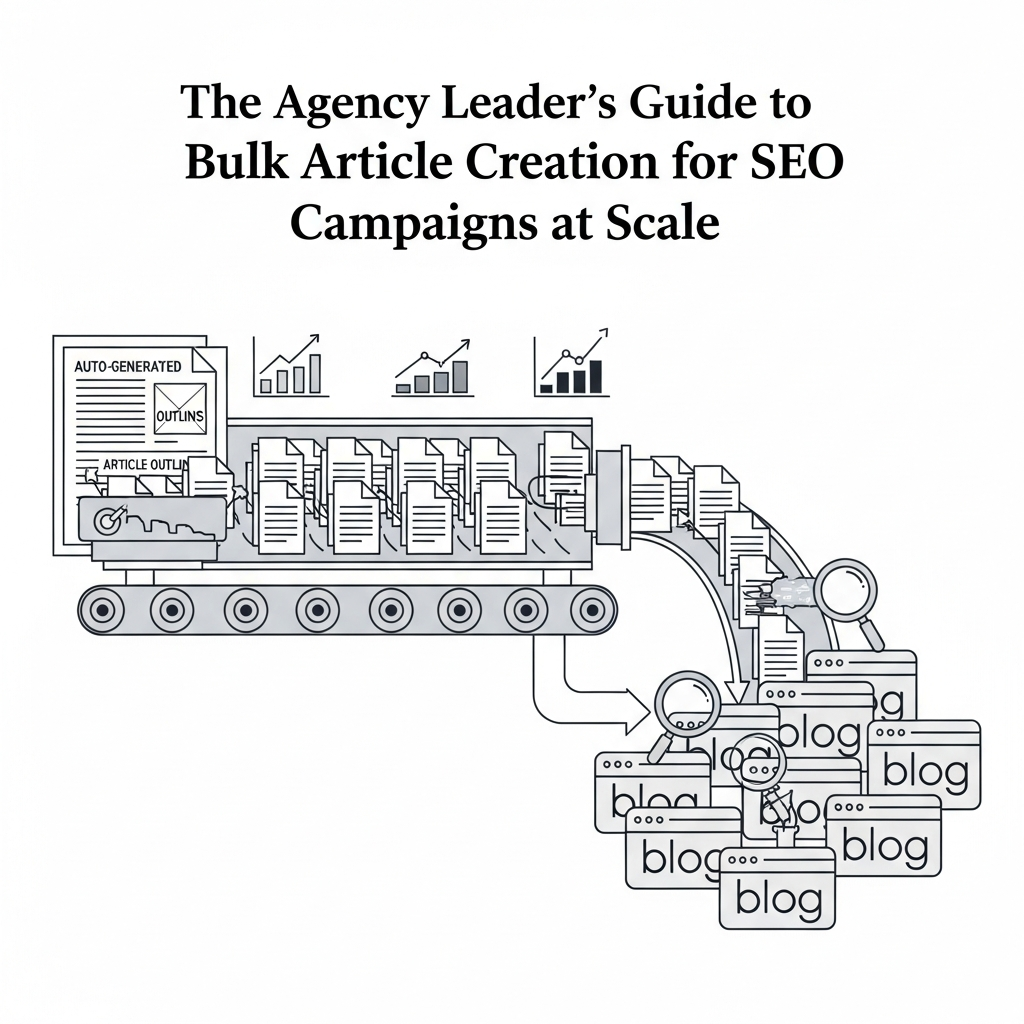
Automation accelerates the production line, but quality control remains essential. A well-designed workflow combines input from strategy teams, AI-assisted drafting, editorial review, and optimization signals such as keywords, readability, and accessibility checks. The typical workflow includes:
- Input phase: topic brief, target keywords, audience personas, and CMS context.
- Outline generation: auto-generated outlines aligned to the brief.
- Draft creation: AI-assisted writing that adheres to brand voice and SEO requirements.
- Editorial review: human refinement for accuracy, tone, and style consistency.
- On-page optimization: meta tags, headings, internal links, and schema where appropriate.
- Quality assurance: final checks for readability, plagiarism, and accessibility.
- Publishing readiness: scheduling, CMS formatting, and localization if needed.
Automation should not eliminate judgment; it should scale it. Establish guardrails such as a minimum quality bar, a review ratio, and clear ownership at each stage. Build feedback loops into the system to learn from editorial corrections and performance data.
Automated Publishing and Distribution
Automated publishing ensures that content goes live on schedule, across multiple sites or CMS instances, while maintaining governance. Scheduling should account for audience behavior, time zones, and cadence, with fail-safes for authoring bottlenecks or quality gates.
Best practices for publishing at scale include:
- Staged publication: publish in batches to monitor impact and adjust cadence.
- CMS integrations: ensure smooth handoffs from drafting to publishing with minimal manual steps.
- Internal linking strategy: auto-suggest links to pillar content and related topics.
- Localization workflows: route content through translation and review if multiple languages are involved.
Visibility into publishing calendars and status is critical for client confidence. Use dashboards that show live progress, upcoming deadlines, and performance signals after publication, such as traffic trends and keyword movement.
Quality Control, Governance, and Brand Voice
Quality is the competitive advantage of scalable content. Implement a governance model that defines who approves what, and how often content should be reviewed. A strong program includes brand voice guidelines, editorial checklists, and automated quality signals to surface potential issues before publication.
Key governance components include:
- Voice and style guidelines codified into the outline templates.
- Editorial checklists that cover accuracy, originality, and accessibility.
- SEO guardrails such as title length, meta description length, and image alt text standards.
- Content audits and regular performance reviews to refine topics and quality controls.
Quality control also relies on human oversight. Writers should receive clear feedback, and editors should be empowered to push back on AI-generated content when it diverges from brand standards. Regular calibration sessions help maintain consistency across a growing library of articles.
Measuring ROI and Governance Dashboards
Visibility into outcomes is essential for ongoing investment. ROI from bulk article creation hinges on the ability to tie content outputs to meaningful business metrics such as organic traffic, keyword rankings, time on page, lead generation, and revenue impact. A robust dashboard should bring together content production metrics and SEO results in a single view.
Recommended metrics include:
- Content velocity: number of articles published per week or month.
- Keyword coverage: density of target phrases and topic breadth.
- Rank movements: SERP performance for priority keywords.
- Engagement signals: dwell time, bounce rate, and pages per session.
- ROI indicators: incremental traffic value, revenue per article, and client-specific KPIs.
Governance dashboards should support drill-downs by brand or site, with exportable reports for stakeholders. When possible, integrate with analytics platforms and CRMs to capture downstream impact. Automated reporting reduces manual effort and improves decision speed for campaigns at scale.
Implementation: A Practical Pilot Plan
Launching a pilot helps teams test the end-to-end workflow with real data and measurable success criteria. A typical 8- to 12-week pilot includes the following phases:
- Phase 1 — Discovery: define success metrics, select target topics, and establish governance.
- Phase 2 — Setup: configure outlines, briefs, and workflow automations; integrate with CMS and analytics.
- Phase 3 — Production: run a controlled batch of articles, with editorial oversight and QA gates.
- Phase 4 — Review: analyze performance, capture learnings, and adjust the process.
- Phase 5 — Scale plan: outline next steps, additional topics, and multi-site rollout.
Success criteria should be specific and testable, such as achieving a target traffic increase from published topics, hitting a cadence, and maintaining quality thresholds. Document lessons learned to accelerate future iterations.
Common Pitfalls and How to Avoid Them
Even with a strong framework, scale introduces risks. The most common pitfalls include overloading the content calendar, diluting brand voice, and underinvesting in QA. Avoid these with guardrails and a clear decision rights matrix.
- Topic saturation: ensure each piece adds unique value and supports a broader content strategy.
- Quality drift: enforce consistent editorial reviews and style checks at every stage.
- Technical SEO gaps: maintain on-page optimization and structured data as a non-negotiable gate before publishing.
- Localization challenges: for multi-language campaigns, separate governance tracks to manage translation quality and cultural relevance.
By anticipating these challenges and building a resilient process, agencies can reap the benefits of bulk article creation without compromising quality or compliance.
Scaling Beyond the First Wave: Localization and Multi-Site Strategy
As content scales, localization becomes a critical lever for global growth. A solid multi-site strategy coordinates topics, localization workflows, and centralized analytics while preserving brand consistency. Localization should be treated as a managed process with dedicated roles, timelines, and review points.
Practical steps for scaling localization include:
- Define language-specific keyword maps and audience personas for each locale.
- Separate outlines and briefs for each language to reflect local search intent and cultural nuance.
- Automate translation workflows with QA checks to ensure accuracy and brand alignment.
- Aggregate performance data across languages to identify high impact markets and topics.
Localization expands the potential reach of bulk content programs, but it requires disciplined governance to maintain quality and consistency across languages and sites.
Conclusion and Next Steps
Bulk article creation for SEO campaigns at scale is a powerful approach for agencies seeking to maximize impact while maintaining control. The framework outlined here emphasizes planning, outlines and briefs, automated workflows, governance, and rigorous measurement. When implemented thoughtfully, this model unlocks faster time-to-value, broader topic coverage, and clearer ROI signals for clients and internal stakeholders alike.
To start, map your goals, assemble a pilot plan, and define governance that can scale with your organization. Remember that automation serves as an amplifier for human expertise, not a replacement. The most successful programs blend AI-enabled efficiency with ongoing editorial judgment to deliver consistent results over time.
Related Resources and Further Reading
For readers seeking concrete examples and practical templates, explore the following resources: