The Agency Growth Leader's Guide to Scaling Content With an Automated SEO Platform
Why an automated SEO platform matters for agencies and multi-site teams
For agency growth leaders, the challenge isn’t just producing more content; it’s delivering consistent quality at scale across many client sites while proving ROI. An automated SEO platform helps you orchestrate content creation, optimization, publishing, and analytics from a single control plane. The result is faster time-to-value, standardized processes, and the ability to demonstrate impact through data-driven dashboards.
Key benefits include central governance, multilingual capabilities, and centralized dashboards that blend on-page optimization with content strategy. Automation does not replace strategy or human expertise; it augments them by handling repetitive tasks, enabling your team to focus on tactical decisions, high-impact pages, and strategic experimentation.
As you explore platforms, prioritize those that offer:
- End-to-end workflow coverage from keyword discovery to publishing and reporting
- Multi-site management with role-based access and audit trails
- SEO-grade content automation that respects brand voice and regulatory constraints
- Clear ROI measurement and governance capabilities
In practice, you’ll want a toolset that can translate your keyword research into scalable content pipelines, while preserving the human editorial guardrails that ensure quality and relevance.
Defining scale for agencies and teams
Scale starts with a clear architectural blueprint. Map your target client mix (new SMBs, mid-market brands, and enterprise portfolios) and design repeatable templates for content calendars, briefs, and on-page optimization. A scalable approach includes:
- Centralized keyword research and content briefs that feed multiple sites
- Standardized content templates aligned to brand guidelines across clients
- Automated publishing workflows with configurable review stages
- Governance, security, and data privacy controls suitable for multi-brand environments
Beyond templates, you should implement a KPI framework that ties content outputs to client outcomes—traffic, keyword rankings, engagement, and conversions—so ROI is visible to leadership and clients alike.
End-to-end SEO automation: from keyword to publish
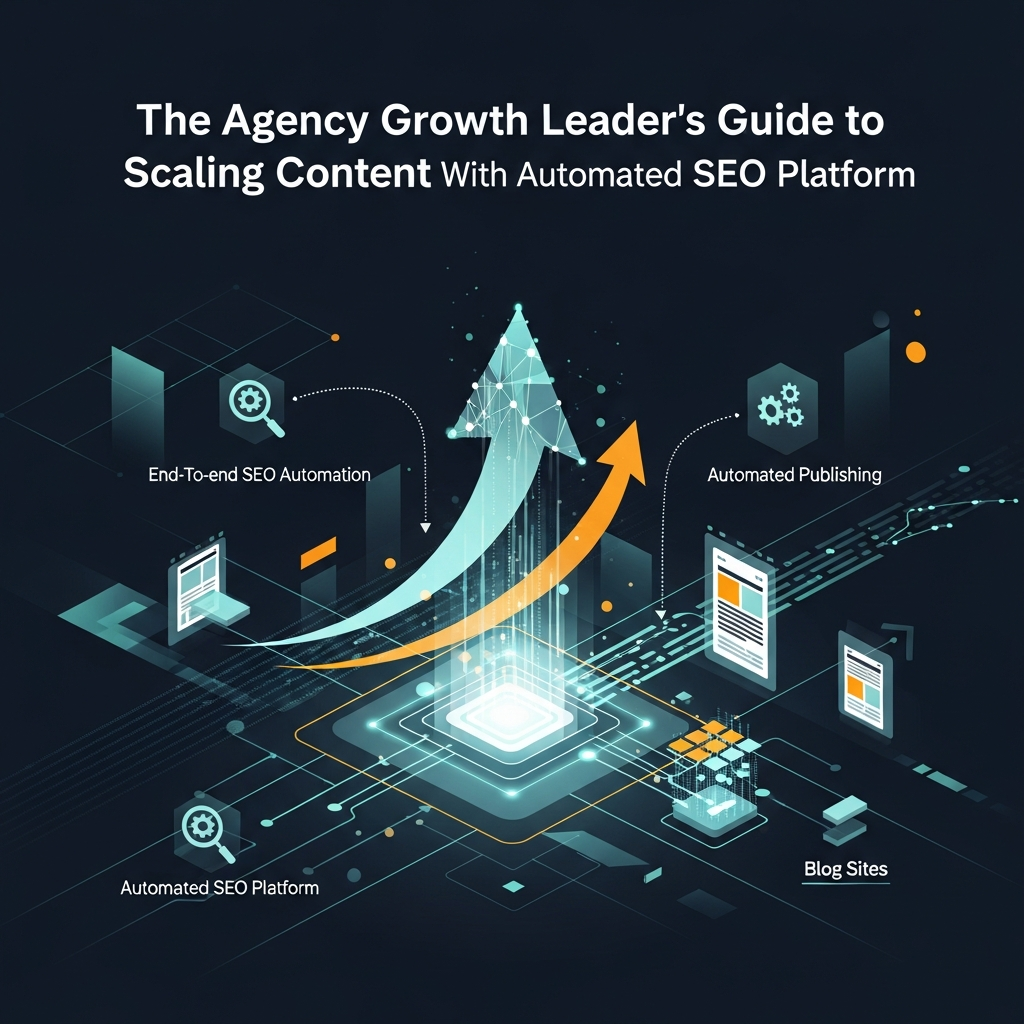
End-to-end SEO automation covers the complete lifecycle of content-powered optimization. The workflow typically looks like this:
- Keyword discovery and clustering using intent signals and competitive gaps.
- Content briefs generated by AI-assisted templates that preserve human-style accuracy and brand voice.
- Draft creation and optimization guidance, including on-page SEO elements and internal linking plans.
- Editorial review and approval, ensuring quality, compliance, and tone alignment.
- Automated publishing to CMSs with versioning and rollback capabilities.
- Post-publication optimization and performance monitoring with dashboards.
With end-to-end automation, agencies can deliver more content in less time without sacrificing quality. The key is to implement guardrails—templates, style guides, and review checklists—that keep output consistent with client brands.
Automated publishing and optimization for blog sites
Blog sites are the workhorses of content-driven SEO. Automating publishing and optimization means turning keyword plans into publish-ready assets on a reliable cadence. Practical steps include:
- Structured content calendars with publish dates, authors, and channel targets
- AI-assisted generation of meta titles, descriptions, and header optimization while preserving voice
- Automated internal linking recommendations and canonicalization checks
- Quality gates (plagiarism checks, readability, and terminology consistency)
- Post-publish performance tracking and automatic iteration plans
A concrete approach is to set a minimum viable cadence for different content tiers (evergreen pages, timely posts, product-focused articles) and let automation scale the rest. For both agencies and teams, this enables faster experimentation cycles and more comprehensive coverage across topics.
Customizable content calendar for SEO automation
A customizable calendar enables teams to align content output with product launches, seasonal campaigns, and audience intent. Build calendars that can be shared across teams, with permissioned edit access and automated reminders. Elements to include:
- Content themes, target keywords, and required assets per piece
- Assigned authors, editors, and review dates
- Publish dates, distribution channels, and performance goals
- Automated adjustments based on performance data and seasonality
As you scale, connect the calendar to a content calendar automation module so that newly identified topics flow into drafts automatically, while still allowing human review before publication.
For a practical reference, explore a detailed, automated 30-day content calendar and how it jumpstarts SEO at scale (see a concrete example).
Multi-site SEO automation with centralized management
Enterprises and growing agencies often juggle hundreds of pages across many domains. Centralized management provides governance, consistency, and scalable performance across sites. Focus areas include:
- Role-based access and audit trails for compliance and governance
- Unified dashboards that aggregate traffic, rankings, and conversions across brands
- Standardized content templates and SEO playbooks for consistent output
- Security controls, data privacy practices, and SOC2-aligned processes
Centralized management also simplifies vendor governance and SLA enforcement, helping you deliver predictable outcomes to clients and internal stakeholders alike.
Integrated keyword research and content automation
Keyword research should feed automated content creation, not sit in a separate silo. An integrated approach marries discovery, clustering, and briefs with automated content production. Practical steps include:
- Automated keyword clustering by intent and possible content formats
- Content briefs that translate clusters into topic maps, POVs, and outline templates
- On-page optimization guidance embedded in briefs and thousands of interlinks planned at scale
- Continuous feedback loops from performance data to refine keyword targets
With integration, teams can move from keyword lists to action, producing pages that are aligned with user intent and market dynamics while preserving editorial standards.
ROI, governance, and security at scale
ROI visibility is the north star for agency leaders and enterprise marketing executives. Establish a governance model that includes clear SLAs, security controls, and transparent metrics. Key considerations include:
- ROI dashboards that tie content output to traffic, rankings, and conversions
- Auditability: version histories, change logs, and approval workflows
- Data privacy and security certifications (e.g., SOC 2, data handling practices)
- Vendor management: contract terms, renewal strategies, and roadmap alignment
When you communicate ROI, present not only the numbers but the narrative: how automation accelerates delivery, improves consistency, and frees time for strategic initiatives like value-driven content experiments and high-ROI pages.
Implementation roadmap and best practices
Transitioning to an automated SEO platform is a journey. A pragmatic roadmap helps mitigate risk and accelerates value realization. Consider this phased approach:
- Discovery and KPI alignment: define success metrics, client onboarding templates, and governance rules.
- Pilot design: select a manageable subset of sites or a single brand to validate workflows and ROI.
- Template and playbook creation: build content briefs, templates, and publishing rules that scale across sites.
- Automation enablement: implement keyword research integration, AI-assisted content generation, and publish pipelines.
- Governance hardening: finalize access controls, SLAs, and reporting cadences.
- Scale and iterate: expand to more sites, refine the content calendar, and optimize based on data.
Common pitfalls include underinvesting in editorial review, over-automating without guardrails, and failing to connect content output to measurable outcomes. A balanced approach—automation paired with strong editorial oversight—delivers sustainable growth.
Putting it all together: practical guidance and next steps
To maximize value, combine the above elements into a repeatable, auditable program. Start with a narrow scope, then expand as you prove ROI. For teams evaluating this path, consider the following actions:
- Document a standard operating procedure (SOP) for keyword-to-publish workflows.
- Implement a content calendar that feeds both evergreen and campaign content.
- Establish a governance model with clear ownership and review cycles.
- Track ROI with dashboards that align to client KPIs and internal goals.
For further reading and concrete examples, you can explore these internal resources:
Conclusion
An automated SEO platform is not a silver bullet, but a powerful enabler for agency growth and multi-site optimization. When properly implemented, it delivers faster content velocity, consistent quality, centralized governance, and measurable ROI across client sites. Use the framework above to design a scalable program that aligns with your clients’ goals, your team’s capabilities, and your business strategy.