Content Marketing and SEO Integration: A Practical Guide for In-House Content Managers
Why integrate content marketing and SEO?
Content marketing without SEO data is often a guessing game. When you fuse compelling content with data-driven SEO insights, you create a powerful engine for scale. Integration helps you prioritize topics that drive meaningful organic visibility, ensure pages are optimized for search intent, and align editorial calendars with keyword opportunities. This alignment is especially valuable for in-house teams that must demonstrate ROI to leadership while maintaining brand voice and quality.
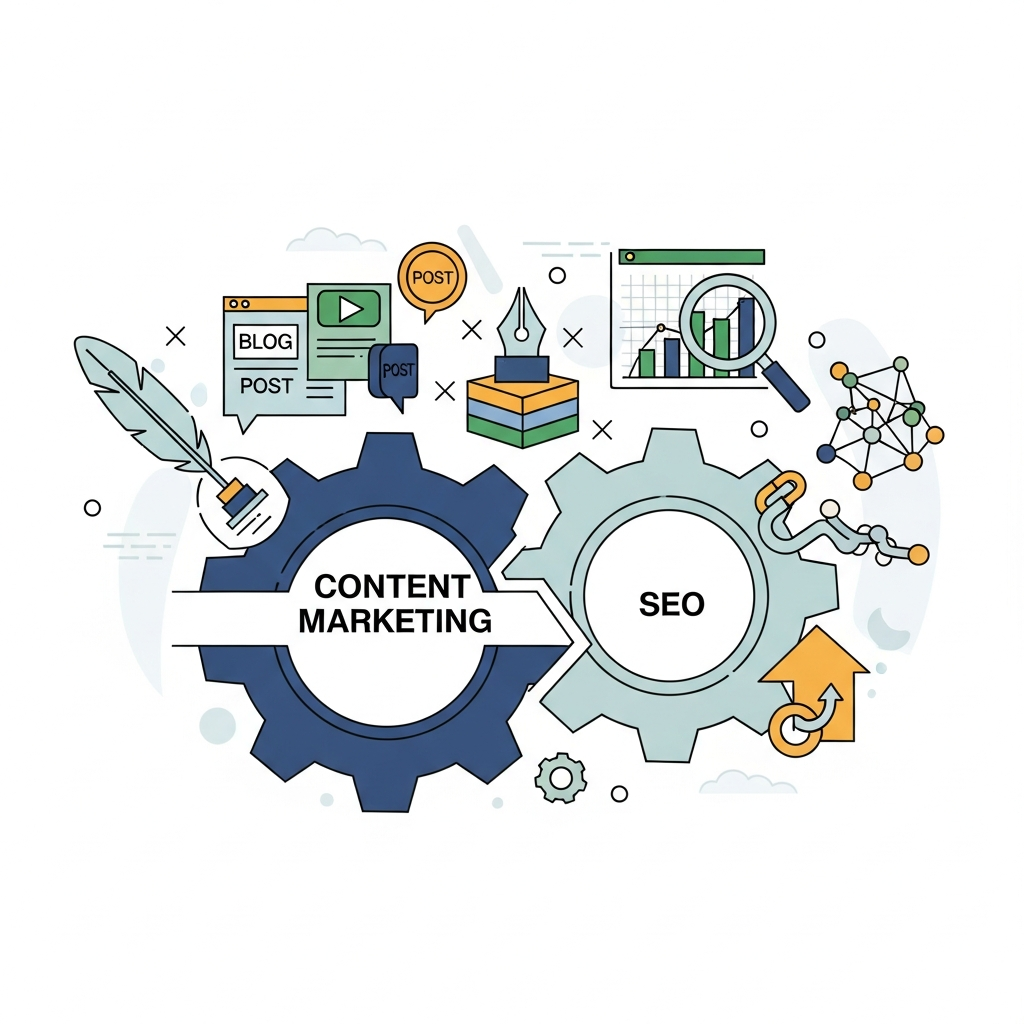
At its core, content marketing and seo integration is about treating search engines as a strategic partner rather than a separate channel. It means planning content with keyword intent, optimizing later, and measuring impact with dashboards that translate clicks into business outcomes. The result is publishing more at scale without increasing headcount, while maintaining relevance, accuracy, and user experience.
A practical framework for integration
Think of the integration as a four-part cycle: discover, plan, publish, and optimize. Each stage relies on data shared across teams, from keyword research to content briefs to performance analytics. Below is a pragmatic framework you can adapt immediately.
- Discover: Use analytics driven seo improvements to identify high-potential topics, questions your audience asks, and gaps in existing coverage. Combine analytics with competitive keyword research to map opportunities across your site.
- Plan: Build an editorial calendar that reflects SEO priorities. Create briefs that embed on-page optimization, structured data requirements, and internal link strategies. Align content with product launches, campaigns, and evergreen pillars.
- Publish: Deploy content through a scalable workflow. Enforce style guidelines, accessibility, and localization where needed. Ensure pages load quickly (site speed and seo performance) and use schema markup where applicable.
- Optimize: After publication, monitor performance, refine metadata, adjust internal links, and iterate on the content based on analytics driven seo improvements. Conduct regular seo audits for websites to catch issues early.
Key takeaway: integration is a loop, not a one-off project. When content planning, production, and optimization share a common data backbone, you unlock compounding gains over time.
Aligning content calendar with SEO data
A scalable approach starts with aligning your content calendar to SEO signals. This means mapping topics to keyword intent, search volume trends, and seasonality. It also means creating a governance process so teams know what to publish, when, and how to measure impact.
Practical steps you can implement today:
- Link your content calendar to a keyword plan that prioritizes high-intent topics with achievable competition levels.
- Embed a clear on-page checklist in each brief: title tag, meta description, headings, internal linking, structured data, and image alt text.
- Set publishing cadences that align with your site's indexation and crawl budget. Consistency beats bursts of activity that aren’t sustainable.
- Use analytics driven seo improvements to adjust priorities quarterly. If a topic underperforms, shift focus to higher-potential areas rather than doubling down on underperformers.
For examples of scalable editorial planning, see our Automated 30-Day Content Calendar post, which demonstrates how to kick off an SEO-first publishing schedule at scale.
Technical foundations: on-page, speed, and structure
Great content also needs solid technical SEO. When you integrate content and SEO, the technical layer becomes a guardrail ensuring pages are accessible, fast, and properly structured for discovery. This includes:
- On-page optimization: title tags, headings, meta descriptions, image alt text, and keyword placement that respects user intent.
- Site speed: optimize front-end performance, compress assets, and leverage caching to improve user experience and rankings.
- Structured data and schema: implement schema markup to improve rich results and enhance relevance in search results.
- Crawlability and indexing: ensure robots.txt, canonicalization, and URL structure support discoverability of the newest content.
Strong technical foundations support analytics driven seo improvements by ensuring that data reflects user behavior rather than technical glitches. Regular seo audits for websites help preserve this alignment.
Scaling content creation workflows
Scale is a common constraint in content programs. The right workflow reduces friction between ideation, writing, editing, optimization, and publication. Consider these best practices:
- Standardized briefs that embed keyword targets, language guidelines, and a checklist of SEO requirements.
- Automated tasks for metadata generation and internal linking opportunities to accelerate production.
- Localization workflows to support multi-regional audiences while preserving brand voice.
- QA gates for quality, accuracy, and alignment with governance standards.
In practice, you can implement a content-automation layer that handles routine optimizations and lets editors focus on strategy and storytelling. A well-designed system reduces cycle times and increases the volume of publishable content without sacrificing quality.
Measurement, dashboards, and ROI
ROI is the north star for in-house teams and agencies alike. Without clear metrics, a scalable program risks becoming a vanity initiative. An analytics framework should cover:
- Traffic and engagement metrics tied to content themes and search intent.
- Keyword rankings and visibility across target pages and topics.
- Content-specific conversions: form submissions, product pages, and revenue contributions from organic search.
- Efficient governance metrics: onboarding time, SLA adherence, and production velocity.
Publishers often use dashboards that consolidate data from analytics platforms with SEO tooling to demonstrate value. For a practical example of governance and ROI dashboards, check our post on Measuring ROI and Governance in Automated SEO Dashboards.
Governance, risk, and governance
Governance is essential when you publish at scale. Establish clear ownership, approval workflows, and quality standards. This minimizes risk, protects brand integrity, and ensures consistency across teams and channels. Embedding governance into the workflow also simplifies reporting for executives and stakeholders.
Key governance practices include:
- Defined roles and responsibilities for content creators, editors, and SEO specialists.
- Approval milestones and version control to track changes over time.
- Compliance checks for data privacy, accessibility, and accuracy.
- Regular audits of internal linking, site health, and schema coverage.
When governance is baked into the process, teams can operate at scale without sacrificing accountability or quality. You can also explore white-label or partner-friendly approaches if you work with external agencies or multi-brand portfolios.
Playbooks, checklists, and templates
Templates are the backbone of scalable content programs. Create reusable playbooks for content briefs, optimization checklists, and validation gates. This ensures every piece of content, regardless of author, adheres to a consistent standard and accelerates onboarding for new team members.
Useful templates include:
- SEO-focused content brief templates that embed target keywords, user intent, and structured data requirements.
- On-page optimization checklists covering title, meta description, headings, internal links, and image attributes.
- Internal linking templates that map content relationships and authority distribution across your site.
- Content localization guides that preserve voice while adapting to regional search terms.
These templates work best when paired with a scalable editorial calendar, ensuring that the content pipeline remains predictable and measurable.
Tools and next steps
The tools you choose should support the integration of content planning with SEO data, rather than create another silo. Look for capabilities around AI-assisted content generation, AI-powered meta tag suggestions, and centralized dashboards for multi-site management. If you’re evaluating tools, consider trials or pilots that let you measure real ROI before committing long-term.
To see scalable automation in action, you can explore related content on our site. For a detailed example of launching scalable publishing, visit Automated 30-Day Content Calendar. For governance-focused ROI case studies, our article Measuring ROI and Governance in Automated SEO Dashboards provides practical metrics. Finally, see a regional example in Sao Paulo automation publication for Brazilian ecommerce to understand localization workflows in practice.
Case studies and real-world examples
Real-world results come from disciplined execution. By combining content strategy with SEO data, teams deliver more publishable content while improving search visibility and conversions. Look for case studies that show quarterly improvements in organic traffic, time-to-value for new topics, and the impact of internal linking and structured data on SERP features.
When evaluating case studies, pay attention to the context: industry, site size, and whether the results came from integrated workflows or isolated optimizations. The most compelling stories highlight repeatable processes, governance, and measurable ROI across multiple markets or brands.
Putting it into practice: a quick-start checklist
To begin implementing content marketing and seo integration today, use this checklist as a starting point:
- Define a shared data model for content and SEO, including keyword intents and performance metrics.
- Create a 90-day editorial calendar aligned with high-potential keywords and product launches.
- Develop briefs that embed on-page optimization, schema, and internal linking guidance.
- Establish a publishing workflow with QA gates and localization steps where needed.
- Set up analytics dashboards that combine traffic, rankings, conversions, and ROI metrics.
- Run a pilot with a limited set of topics to validate ROI before scaling.
As you scale, continually refine your approach based on data. The most resilient programs blend robust processes with creative storytelling, ensuring content remains valuable to readers and visible to search engines alike.
For ongoing guidance, consider reading related resources on our site, including the Automated 30-Day Content Calendar and ROI dashboards mentioned above. If you want to discuss enterprise governance and cross-brand scaling, our team can tailor a plan aligned with SOC2-compliant and governance-ready requirements.