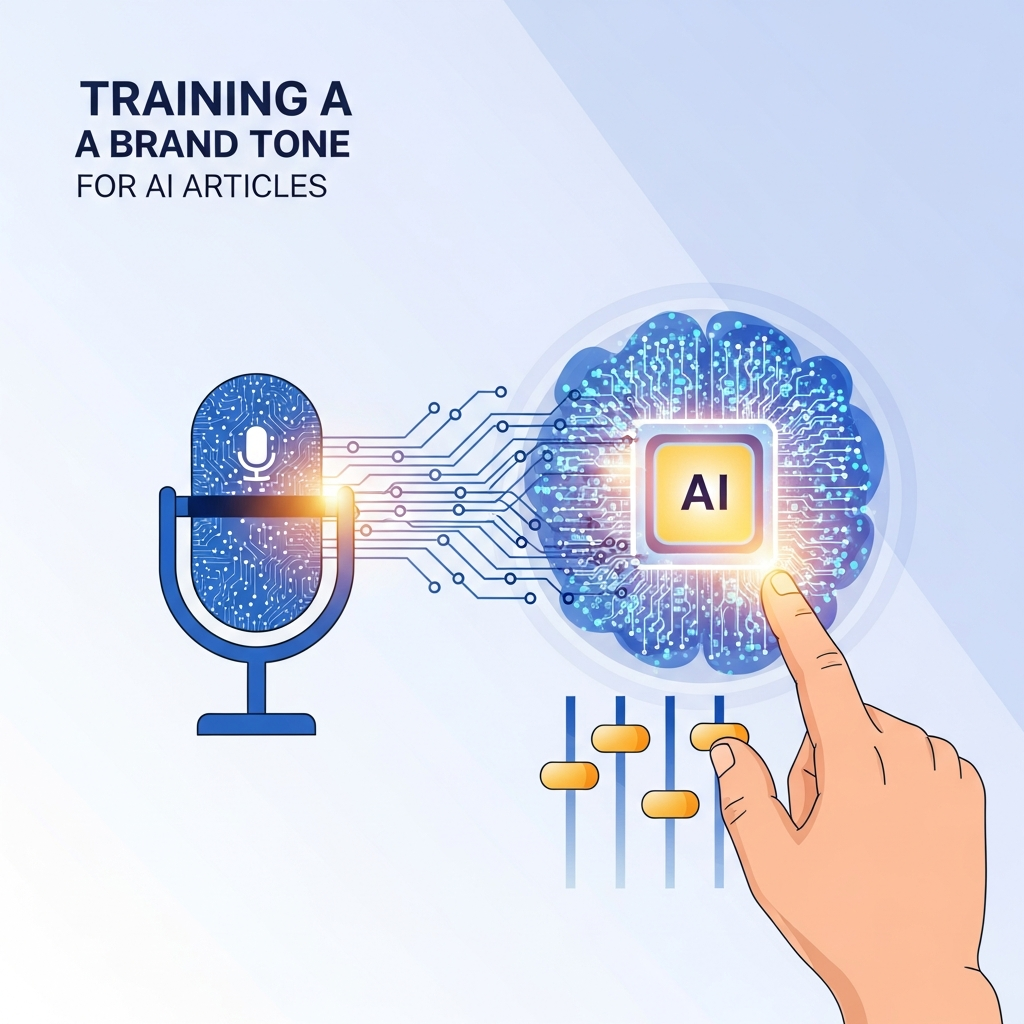
VoiceMatch: Train Brand Tone for AI Articles
1. Why Brand Voice Matters in AI Content
Brand voice is more than a slogan or a logo; it is how a company communicates its values, personality, and expertise. When AI writes articles, the risk of drift increases as models optimize for engagement or speed rather than staying true to the brand. A consistent voice helps readers recognize quality, builds trust, and reduces the cognitive load of consuming content across channels.
Without guardrails, AI content can feel generic, jargony, or misaligned with product stories. For teams that publish at scale—whether for agencies, mid-market brands, or publishers—voice drift compounds quickly. The goal of VoiceMatch is to create a repeatable process that keeps brand identity stable while leveraging AI for efficiency.
To set expectations early: voice consistency improves perception, increases dwell time, and enhances conversion signals when readers feel understood by the content. The investment in a structured approach pays off through cleaner QA, faster approvals, and fewer revisions downstream. Editorial workflows for scale are a natural companion to VoiceMatch, ensuring that AI-generated pieces fit into human editorial processes.
2. Defining Your Brand Voice: The Building Blocks
Before you train an AI model to write, codify the voice you want to see in every article. Start with four building blocks: personality, terminology, sentence rhythm, and emotional cadence.
- Personality: Is the brand confident, approachable, expert, witty, or empathetic? Create a concise one-sentence thesis that captures this persona.
- Terminology: List preferred terms, product names, and any forbidden phrases. Include brand-specific acronyms and style quirks.
- Sentence Rhythm: Define preferred sentence length, punctuation usage, and paragraph structure. Decide when to favor short, punchy lines or longer, explanatory paragraphs.
- Emotional Cadence: Decide the emotional impact you want readers to feel—assured, inspired, curious, or reassured. Align this with content goals (education, conversion, or support).
Documenting these blocks yields a quick reference for editors and AI prompts alike. It also clarifies expectations for stakeholders who review AI-generated drafts. A practical approach is to turn the blocks into a brand voice brief that sits alongside your AI prompts and datasets. For reference, a well-maintained voice brief reduces revision cycles and speeds up publishing timelines.
As you define voice, consider how it varies by channel. An article on a technical blog may lean more formal than a social post or email nurture. VoiceMatch helps you map tone shifts across channels while preserving core identity.
3. Create a Practical AI Content Style Guide
A style guide translates the brand voice into concrete rules AI can follow. Build a living document that covers grammar, punctuation, formality, and content structure. Include examples of correct and incorrect sentences to illustrate the guidelines clearly.
Key areas to cover include
- Voice and tone per content type (blog, product page, support article)
- Terminology usage and preferred spellings
- Sentence length targets and rhythm
- Typography and formatting rules (headings, bullets, lists)
- Compliance and safety considerations (disclosures, disclaimers, privacy)
Publish the guide in a centralized content operations hub that AI can access at runtime. When the guide is machine-readable, prompts can reference the exact rules, reducing ambiguity. You can also attach the guide to your CMS metadata so editors see the same standards during review.
Hint: include a style-compliant prompt library that maps common writing briefs (e.g., product overview, feature comparison, how-to article) to the appropriate voice settings and constraints.
4. Train Data and Prompts: Curating Datasets
Training AI to replicate your brand voice starts with curated data and well-constructed prompts. Use a mix of human-authored exemplars, treated as “gold” responses, and AI-generated drafts that pass editorial QA. Over time, this creates a robust feedback loop that reduces drift.
Practical steps to build your datasets:
- Collect high-quality samples that embody the brand voice across multiple channels and formats.
- Annotate each sample with intended channel, audience, and objective.
- Create prompt templates that mirror real content briefs (topic, audience, format, length, required sections).
- Define success metrics for each prompt (tone match, accuracy, readability, and brand alignment).
Prompts should be modular. Start with a base prompt that captures voice and intent, then layer constraints for style guide compliance. For example, a base prompt might be: “Write a 900-word blog post in the brand voice described by the style guide. Use plain language, avoid jargon, and include three practical steps with bullet points.” Then add a compliance layer that enforces the voice rules and formatting standards.
Versioning prompts matters. Track changes to prompts and the corresponding outputs. When you update the style guide, re-score older drafts using the new rubric to identify latent drift and adjust the prompts accordingly.
Internal linking opportunity: pair prompts with canonical references to ensure content stays on-brand and contextually rich. For example, anchor sentences that discuss “best practices” to internal resources such as the editorial workflow guide.
5. Tone Calibration: Prompts, Examples, and Scoring
Tone calibration is the ongoing process of tuning AI outputs to align with the brand’s emotional cadence. A practical framework named VoiceCalibration can help teams standardize this effort.
VoiceCalibration Framework
- Define target tones for each content type (e.g., authoritative for tutorials, friendly for onboarding).
- Create exemplar prompts that elicit those tones and collect the best-performing responses.
- Develop a scoring rubric covering voice, clarity, accuracy, readability, and formatting.
- Run regular calibration cycles: compare new outputs to exemplars, adjust prompts, and re-run QA.
Examples of prompts and scoring rubrics can be included in your style guide. A simple prompt template might be: “Produce a 600-word article about topic X in the brand voice ‘confident but approachable,’ including 3 concrete tips and practical examples.” Pair outputs with a scoring sheet that rates tone match on a 1–5 scale and flags deviations from the style rules.
To operationalize calibration, implement a lightweight governance loop: editors review a fixed sample of AI outputs weekly, annotate voice deviations, and push adjustments to prompts or constraints. This keeps drift from creeping into published content.
6. Guardrails and Governance for Consistent Output
Guardrails are the set of rules that prevent undesired outputs from slipping through. They include style constraints, subject-matter boundaries, and ethical considerations. Guardrails work best when embedded in both prompts and post-publish QA checks.
Key guardrails to implement:
- Brand-specific terminology and prohibited phrases enforced by prompt constraints.
- Channel-appropriate tone gating to avoid formality gaps across articles and social posts.
- Content completeness checks (sections, bullets, summaries, and CTAs) to prevent under- or over-structured outputs.
- Accuracy safeguards such as factual checks and references to trusted sources.
- Accessibility and inclusivity constraints (simple language, inclusive examples, alt text for images).
Governance also means documents for editors and reviewers that outline escalation paths when AI content falls out of spec. A lightweight approval workflow that requires minimal human intervention for most drafts can dramatically reduce time-to-publish while preserving quality.
7. QA and Evaluation: Measuring Alignment
Quality assurance should be baked into every publish cycle. The QA process should answer: Does this article reflect the brand voice? Is it accurate? Is the structure consistent with our style guide?
Recommended QA steps:
- Voice match check: a quick rubric scores a piece against the brand voice attributes (tone, vocabulary, rhythm).
- Content accuracy check: verify claims with reliable sources and internal data where possible.
- Structure and formatting check: ensure sections, headings, bullets, and CTAs align with the guide.
- Localization and accessibility check: verify multilingual variants and accessibility guidelines are met.
- Editorial alignment: compare with the author’s intent and product messaging to ensure consistency.
Automating parts of QA with checklists and machine-readable rules reduces human effort. Consider a simple scoring model that triggers a human review if a piece scores below a threshold on voice or accuracy.
Continuous improvement comes from logging deviations and analyzing frequent failure modes. Over time you’ll notice which prompts consistently underperform and refine them accordingly.
8. Implementation: Workflows to Scale Brand Voice
Scale requires end-to-end workflows that connect ideation, drafting, review, and publishing. A typical setup includes a content brief template, an AI drafting stage, a human QA stage, and a CMS publishing pipeline. The goal is to reduce manual toil while ensuring every publish maintains brand integrity.
Practical steps to implement the workflow:
- Establish a central style guide and a library of prompt templates linked to content types.
- Integrate prompts with your CMS so AI drafts can be generated from a unified content brief.
- Set up an automated QA pass with voice and accuracy checks before scheduling or publishing.
- Monitor performance with real-time analytics and adjust prompts based on outcomes.
Internal links can help readers explore related resources and reinforce brand topics. For example, our blog hub houses a growing library of editorial playbooks, including the agency-scale workflow article that aligns with VoiceMatch principles. You can also refer readers to a disclaimer page for policy context: disclaimer.
9. Common Pitfalls and Myths
Even well-intentioned teams fall into traps when training AI for brand voice. Here are some common myths and how to avoid them:
- Myth: More data always yields better results.
Reality: Quality and representativeness matter more than sheer volume; curate exemplars that truly reflect the brand across contexts. - Myth: AI will replace editors.
Reality: AI accelerates content production, but human QA remains essential for nuanced judgment and final polish. - Myth: Tone is universal across all channels.
Reality: Channel-specific tone requires careful calibration; map tone per channel in the style guide. - Myth: Guardrails alone guarantee brand safety.
Reality: Guardrails work best as part of a broader governance model, including continuous monitoring and feedback loops.
Be mindful of drift across multi-location or multilingual programs. Regular calibration and localized prompts help preserve brand identity globally.
10. Next Steps: Operationalizing VoiceMatch
To start training AI to embody your brand voice, assemble a small cross-functional team including a writer, a product marketer, and an AI/ML liaison. Begin with a pilot: select two content formats, apply the VoiceMatch framework, and measure impact on tone consistency, time-to-publish, and editorial workload.
Key actions you can take today:
- Draft a concise brand voice brief covering personality, terminology, rhythm, and emotional cadence.
- Compile a library of exemplar articles that demonstrate the desired voice.
- Create modular prompts and a style guide that AI can reference at drafting time.
- Set up a lightweight QA rubric to catch drift before publishing.
For teams already using automated content workflows, consider integrating VoiceMatch with your editorial processes to further reduce human effort and improve consistency. If you’d like practical guidance tailored to your organization, you can explore resources in our blog hub or consult our capabilities page for editorial automation strategies. Editorial workflows for scale and our blog contain hands-on playbooks to accelerate adoption. You can also review policy boundaries at disclaimer.