Editorial Workflow for Agencies: Planning, Writing, and Publishing at Scale
- Why editorial workflow matters
- Core components of a content workflow automation
- Designing the scalable workflow for agencies
- Building an editorial calendar that scales
- Creating clear content briefs
- Automating CMS publishing without losing quality
- Maintaining brand voice consistency
- Measuring success: metrics, dashboards, and ROI
- Pitfalls and best practices
- 30-day playbook
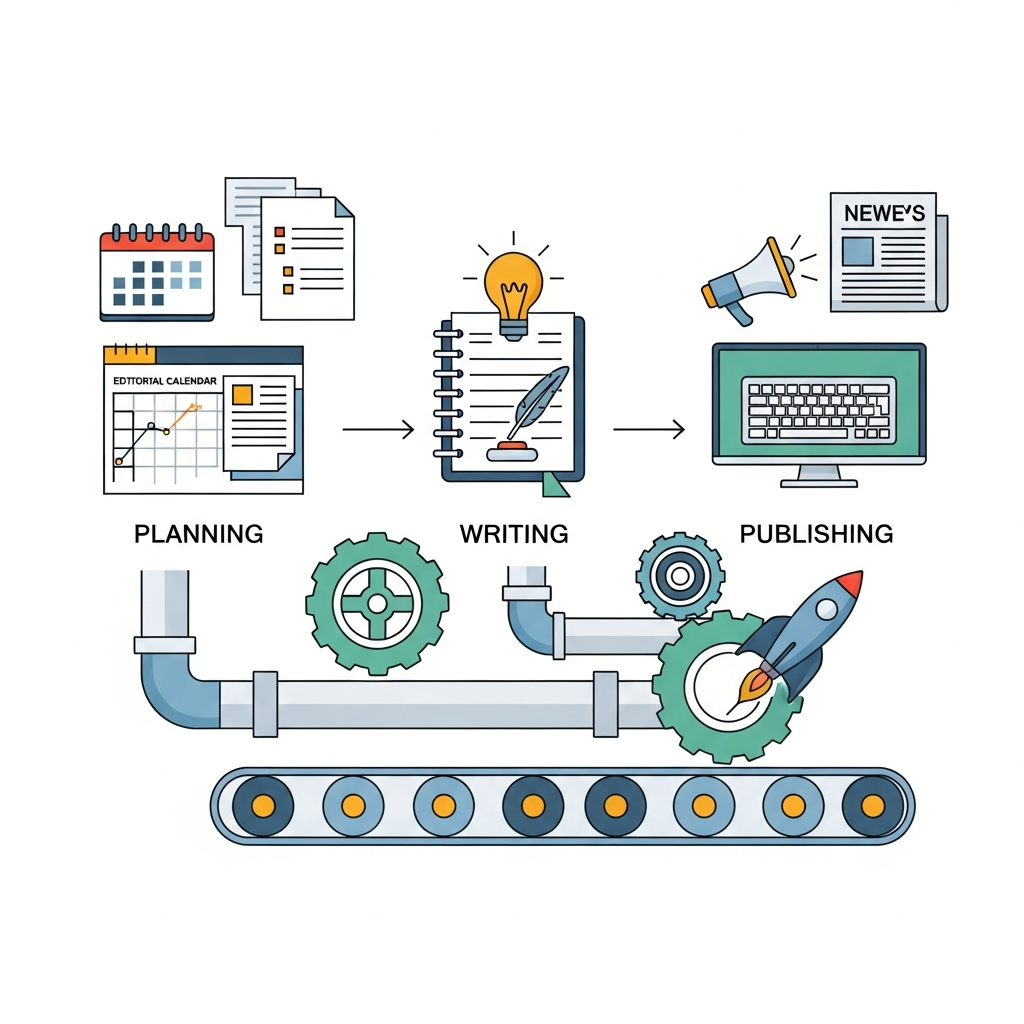
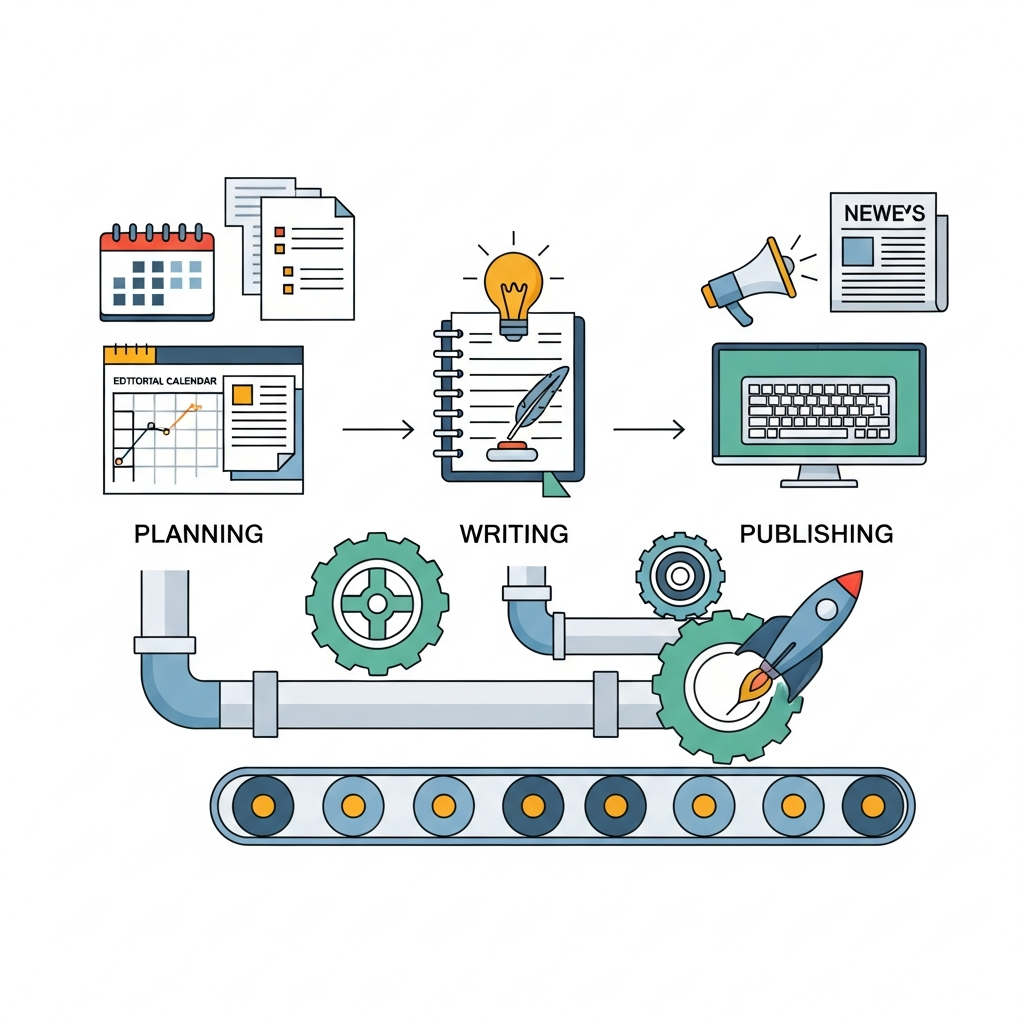
In a world where content is both the fuel and the product, agencies must deliver SEO-optimized material at scale without sacrificing quality or brand integrity. This guide lays out a practical, repeatable framework for planning, writing, and publishing content across multiple clients and channels. The approach centers on content workflow automation to align editors, writers, designers, and SEO specialists into a single, high-velocity machine.
Why editorial workflow matters
Editorial workflows are the backbone of consistency. Without a clear process, teams waste energy on rework, misaligned briefs, and scheduling conflicts. For agencies managing several clients, the absence of a scalable workflow translates directly into missed deadlines, uneven brand voices, and inconsistent SEO performance.A robust workflow does three things well: (1) it standardizes inputs and outputs so every piece of content starts from a solid brief, (2) it automates repetitive, high-lift tasks such as metadata generation and internal linking, and (3) it provides visibility and accountability through dashboards and SLAs. When executed well, this reduces cycle times, increases output quality, and makes ROI traceable across clients.
Core components of a content workflow automation
Effective automation rests on a few interlocking components. Each piece should be designed to plug into the next, creating a smooth handoff from idea to publish. The most critical elements are a living editorial calendar, well-structured content briefs, seamless CMS publishing, brand voice governance, and a collaborative environment that scales with your team.
2.1 Editorial calendar
An editorial calendar is not a calendar at all—it's the operating system for your content program. It coordinates topics, owners, deadlines, and distribution channels. A strong calendar links to briefs, status workflows, and SEO targets so every asset has a clear path to impact.
2.2 Content briefs
Content briefs define the scope, intent, audience, and success criteria for each piece. When briefs are machine-readable and tied to SEO objectives, writers can produce output that aligns with search intent while preserving brand voice. A good brief answers: audience persona, primary keyword, secondary keywords, required sections, length, tone, formatting, and any technical constraints such as schema or accessibility requirements.
2.3 CMS publishing
Publishing to a CMS at scale requires reliable, repeatable pipelines. A one-click publishing flow reduces manual steps, while automatic metadata generation, canonical tagging, and schema markup ensure pages are optimized from the moment they go live. CMS integrations should be two-way: editorial systems push content to the CMS, and CMS feedback (e.g., performance data) feeds back into the editorial process.
2.4 Brand voice consistency
Brand voice is the personality of your content. At scale, maintaining it across writers, editors, and clients becomes challenging. A centralized tone guide, a living style sheet, and automated checks help ensure every paragraph, sentence structure, and word choice aligns with the brand стандарт.
2.5 Team collaboration
Collaboration at scale means explicit role definitions, clear handoffs, and transparent status updates. Task assignments, comment threads, and review queues reduce friction. When teams work as a cohesive unit, quality improves and velocity increases without sacrificing accuracy.
2.6 SEO content optimization
SEO optimization should be baked into the workflow, not bolted on after drafting. This includes keyword planning, internal linking, structured data, image alt text, and canonical URLs. Automated checks help ensure each asset satisfies SEO best practices while preserving readability and user value.
Designing the scalable workflow for agencies
To scale effectively, build a repeatable operating model that works across clients. Start with roles, responsibilities, and documented processes. Then layer in automation to handle repetitive tasks, freeing human teams to focus on strategy, ideation, and high-quality storytelling.
3.1 Role mapping and workflow roles
Define a minimal viable team for scale: Editorial Lead, Content Strategist, Copywriter, Editor, SEO Specialist, and CMS Publisher. Assign ownership for topics, briefs, and publish cycles. Create a RACI map (Responsible, Accountable, Consulted, Informed) for major steps to minimize overlap and miscommunication.
3.2 Templates: Briefs, checklists, style guides
Templates are the DNA of a scalable system. Develop a standard Brief Template, an Editorial Checklist, and a Brand Style Guide. Each template should be modular so you can swap in client-specific details without rewriting the whole document. Version control is essential so teams always work from the latest guidance.
3.3 Automation stack: tools and integrations
Choose a tightly integrated stack that covers planning, briefs, collaboration, CMS publishing, and SEO checks. Automation should occur at the edges of human work, not in the middle of creative thinking. Prioritize CMS integrations (WordPress, Webflow, Shopify, etc.), structured data support, and robust analytics feeds.
3.4 Data model: content lifecycle states, metadata, taxonomies
Model content as a lifecycle: Idea → Briefed → Draft → In Review → Approved → Published → Archived. Attach metadata like target keywords, intent, publish date, author, and client. A shared taxonomy for topics, topics clusters, and personas makes cross-client reuse possible and reduces cognitive load for writers.
Building an editorial calendar that scales
The editorial calendar is where planning meets execution. A scalable calendar tracks themes across clients, ensuring coverage of priority topics while avoiding content cannibalization. It should surface dependencies such as asset availability (images, data), reviewers, and interlinking opportunities.
4.1 Cadence and capacity planning
Forecast capacity by sprint or month. Align publishing cadences with seasonal client campaigns and product launches. Use a buffer for urgent briefs and unplanned opportunities, but keep a hard limit to prevent burnout and long lead times.
4.2 Topic ideation and briefing pipeline
Balance big, evergreen topics with timely, trend-driven pieces. Create a steady stream of briefs that are ready for writers, with clear success metrics and SEO targets. A consistent briefing rhythm reduces last-minute rewrites and improves quality over time.
4.3 Scheduling and publish windows
Schedule publish dates with buffer periods for QA and last-mile optimizations. Consider time zones for international clients and channel-specific constraints (blog, FAQ, product pages, and social content). Automated reminders keep everyone aligned without micromanagement.
Creating clear content briefs that drive quality
Content briefs are the contract between strategy and execution. They ensure writers deliver what editors expect and SEO teams can optimize effectively. A robust brief reduces rework and accelerates speed to publish.
5.1 Brief template and required fields
Include: purpose, primary keyword, secondary keywords, audience, search intent, tone, structure, required sections, word count, formatting rules, linking guidance, media requirements, and accessibility notes. Tie the brief to measurable outcomes such as target traffic or ranking goals.
5.2 Quality gates and review loops
Implement three levels of review: writer self-review, editor pass, and SEO checks. Use checklists for each gate and time-bound SLAs. Automated checks should flag missing schema, alt text, or canonical tags before human review.
Automating CMS publishing without losing quality
Publishing automation should accelerate delivery while preserving control. A one-click publish flow should validate the piece meets format and SEO standards, push to the CMS, and signal downstream distribution channels if applicable.
6.1 One-click publishing workflows
Design a pipeline that moves a content asset from Draft to Published with a single action. Include preflight checks, metadata ingestion, and a post-publish audit. If content requires localization or syndication, incorporate those steps into the same flow.
6.2 Meta, schema, and accessibility
Ensure meta titles, descriptions, canonical URLs, and structured data are generated automatically or semi-automatically. Accessibility checks (contrast, alt text, semantic heading order) should be baked into the publish flow to avoid last-mile issues.
Ensuring brand voice consistency across teams
Brand voice consistency protects client identity and audience trust. A living brand guide coupled with automated checks keeps tone, terminology, and style aligned across writers and editors.
7.1 Brand voice document and style guide
Maintain a central, searchable tone guide. Include examples, preferred vocabulary, and disallowed terms. Link this guide to briefs so writers can reference it during drafting.
7.2 AI-powered consistency checks
Leverage AI to flag deviations from tone, style, and terminology. Use confidence scoring to decide when human refinement is necessary. Ensure human editors retain final say for brand-critical content.
Measuring success: metrics, dashboards, and ROI
Measurement turns a process into a strategy. Define metrics that reflect both efficiency (throughput, cycle time) and impact (rankings, traffic, and conversions). Dashboards should cut across clients and channels, offering actionable insights in real time.
8.1 SEO metrics and content metrics
Track keyword rankings, organic traffic, click-through rate, and on-page optimization signals (schema completeness, internal linking density, image alt text usage). Content-level metrics include time on page, scroll depth, and engagement signals to assess quality.
8.2 ROI calculation and case studies
Estimate ROI by comparing incremental organic traffic and conversions against content production costs. Use multi-client case studies to illustrate time-to-value, publish velocity, and SEO improvements achieved through automation.
Pitfalls and best practices
Scale without losing quality by avoiding common traps: under-allocating time for briefs, neglecting brand voice, or over-optimizing for search at the expense of readability. Invest in governance, maintain strict SLAs, and continuously refine templates based on outcomes.Best practices include iterative testing of briefs, modular templates for reuse, and quarterly audits of metadata and schema coverage. Regularly refresh keyword strategies to reflect evolving search intent and competitor activity.
Getting started: A 30-day playbook
Week 1 focuses on governance: define roles, set SLAs, and establish templates. Week 2 centers on pilot client content: run briefs, publish a small set, and collect feedback. Week 3 scales to a second pilot and refines the process. Week 4 accelerates across more clients, with dashboard rollouts and ROI tracking.For quick wins, start with a single client and a single content pillar. Build out briefs, test one CMS publishing flow, and implement a basic SEO checklist. As you gain confidence, scale toward multi-brand and multilingual content, always preserving brand voice and accessibility standards.
Legal and compliance note
As you implement automation across clients, review legal terms and disclosures. For reference, see our Disclaimer and Terms & Conditions for guidance. Regular compliance checks should be part of your publishing workflow.In summary, a scalable editorial workflow for agencies rests on a disciplined intersection of planning, writing, and publishing with automation at its core. When designed thoughtfully, it turns a chaotic content machine into a predictable engine that consistently delivers SEO-optimized results for multiple clients across channels.To learn more about integrating these practices into your current stack, explore how a unified platform can streamline editorial planning and CMS publishing. For practical guidance tailored to your agency’s needs, consider booking a consult and mapping your own 30–60–90 day plan. For compliance references, review the links above.Legal note: This article references internal workflow concepts and standard industry practices. Always tailor the framework to your exact client requirements and regulatory environment. See the linked Disclaimer and Terms & Conditions for organizational guidelines.