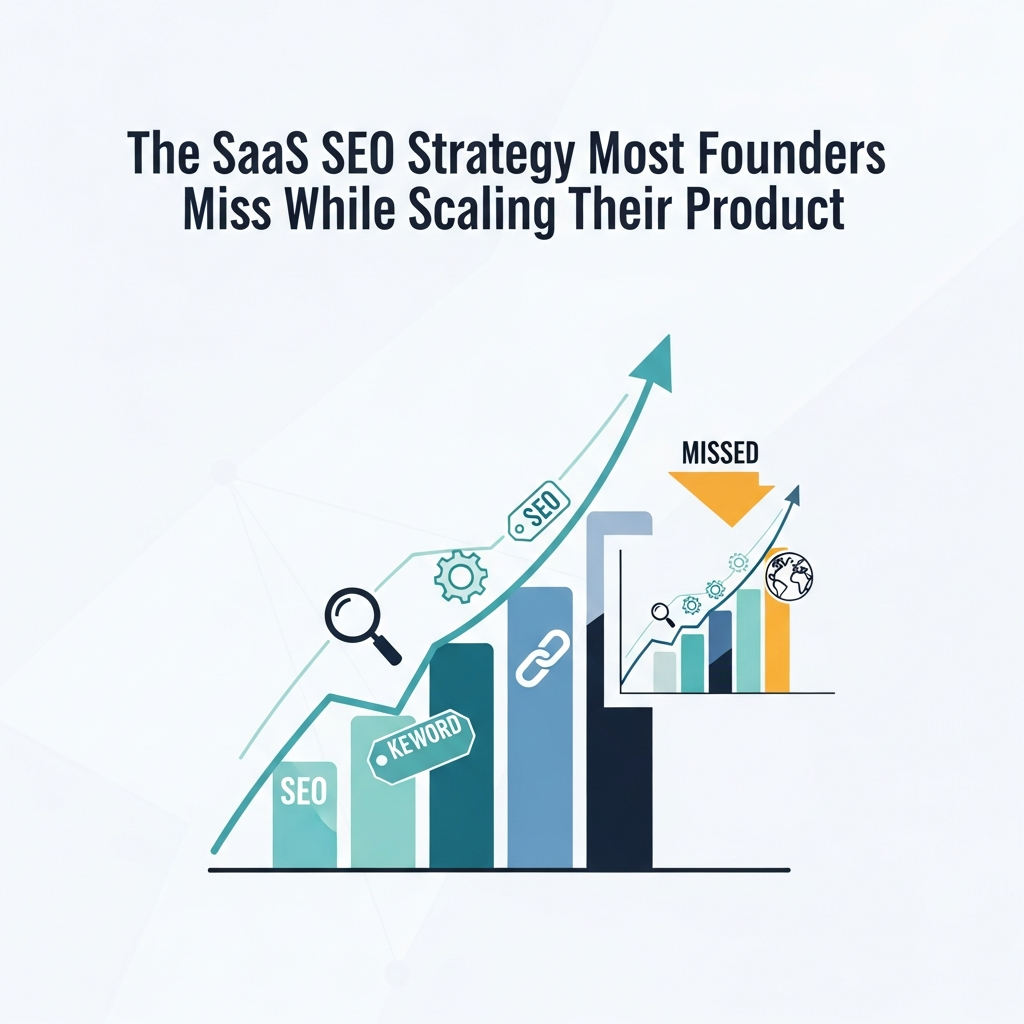
The SaaS SEO Strategy Most Founders Miss While Scaling Their Product
As SaaS products scale, founders often assume their SEO strategy will follow the same growth curve as their product roadmap. In reality, the most impactful SEO work happens behind the scenes: scalable architecture, automated internal linking, and crawl-friendly patterns that accelerate discovery without human tinkering page by page.
This guide outlines a pragmatic, programmatic approach to a SaaS SEO strategy designed for scale. It blends architectural discipline with automation so you can grow organic traffic as you release new features, expand to new markets, and deepen your content ecosystem. The goal is to make your site easier for search engines to crawl, index, and rank—without turning every page into a manual project.
Why founders miss this strategy
Founders often prioritize product-market fit, feature velocity, and conversion optimization. SEO tends to be viewed as a separate function rather than a system that scales with product growth. As a result, the early-stage site grows through a handful of pages, and the internal linking graph remains small and manual.
When teams scale, the risk is twofold: crawl inefficiency and content fragmentation. Without programmatic internal linking and a governed site architecture, search engines struggle to understand the relative importance of pages, and important signals get buried deep in the site. The outcome is slower indexation, weaker topical authority, and missed opportunities from product category pages, feature pages, and multilingual versions.
A practical antidote is to treat internal linking as a strategic asset, governed by templates, rules, and automation. For teams exploring editorial workflows and scalable publishing, see how others are planning writing and publishing at scale in editorial workflows for agencies.
You can also map editorial output to your internal linking targets as part of a centralized strategy. Our example pipeline draws on insights from scalable content programs documented in our blogs hub and showcases templates that scale beyond a few dozen product pages. See how automation can speed up publishing and linking across a multi-language catalog in global ecommerce automation.
Foundations of a scalable SaaS SEO architecture
A scalable SaaS SEO program starts with a well-defined site architecture that mirrors how users explore your product. Think hub-and-spoke structures where core product categories act as hubs and feature pages, case studies, pricing, and integrations are spokes. The key is to ensure every important cluster has a coherent internal linking strategy that signals relevance to search engines.
Begin with a crawl-friendly taxonomy: group related pages by intent (awareness, consideration, conversion) and create clear pathway signals between them. Use breadcrumb schemas, maintain consistent URL patterns, and implement canonicalization where appropriate to avoid content cannibalization. This creates a durable framework that supports automation and scale.
Automation is not a substitute for a thoughtful strategy. It is a mechanism to implement repeatable patterns at scale. The goal is to transform manual tasks into templates and rules while preserving brand voice and accuracy.
For a concrete example of editorial automation in action, review the workflow templates discussed in editorial workflow templates and consider how they could become part of your site’s linking logic. You can also explore how a scalable content calendar can align with a linking strategy in our blog hub.
Programmatic SEO for internal linking at scale
Programmatic SEO is about turning linking opportunities into repeatable processes. It involves creating standardized linking templates, URL schemas, and anchor text rules that apply across large page sets without manual edits. The result is a robust, crawl-friendly graph where important pages consistently gain signal strength.
Start with a link graph that maps each page to a primary topic and a set of secondary signals. Build templates that answer common user intents—for example, a product page linking to feature tutorials, case studies, and integration docs. The templates guide automated linking while preserving context and user experience.
A practical approach is to implement internal linking rules that are versioned and auditable. For instance, you can define thresholds for link depth, frequency of internal links per page, and anchor text variations by topic. This minimizes cannibalization and helps search engines prioritize the most authoritative pages.
As you scale, keep a human-in-the-loop for quality control. Automated linking should surface issues for review, not replace human judgment. If you want a real-world reference to editorial automation at scale, see the examples in editorial workflows for agencies.
To see how programmatic linking interacts with content production, explore how automation platforms assist with cross-linking, canonical management, and structured data; these capabilities are often bundled in modern SEO automation suites like those described in industry analyses such as global content automation for ecommerce.
Crawl budgeting and technical SEO for scale
Traffic from search engines depends on how efficiently they crawl and index your site. As you scale, crawl budget becomes a real constraint if internal linking is inconsistent or if you create many low-value pages. The remedy is a disciplined technical baseline complemented by programmatic signals that guide crawlers to the highest-value pages.
Practical steps include ensuring you have a clean robots.txt, well-structured XML sitemaps, and a page-by-page health check that prioritizes indexation for key product pages, category hubs, and high-ROI blog content. Regularly review 404s, orphan pages, and redirect chains that complicate crawling. These activities benefit from automation that flags issues and suggests fixes without replacing your QA process.
Use canonical URLs to avoid duplicate content across localized versions, and maintain consistent hreflang annotations for global sites. A well-managed schema strategy—such as product, article, and FAQ structured data—helps search engines understand intent and context, accelerating indexation for relevant pages.
For inspiration on editorial automation and site health checks, you can browse editorial workflow articles and related content in our blog hub, which demonstrates how teams manage scale with automated checks and processes.
Editorial workflow and content automation
A scalable SaaS SEO program requires a repeatable content workflow. This means a governance model for topics, a standardized brief, and a published review process that preserves voice while enabling rapid production. Automation should support, not replace, editorial judgment.
Build a content calendar anchored to product launches, feature updates, and customer use cases. Align editorial output with the internal linking plan so new content automatically slots into the right clusters and pages. An integrated workflow reduces friction between product, content, and SEO teams.
Consider outsourcing or augmenting production for scale, but retain a centralized QA gate. This ensures that the content is accurate, on-brand, and optimized for the right keywords. For practical templates and examples, explore the documented workflows in editorial workflow for agencies and the broader content automation discussions in our blog hub.
A robust approach also involves automatic internal linking suggestions during the drafting phase. This reduces post-writing edits and ensures new content automatically contributes to topical authority. If you’re exploring the intersection of content production and linking, you might also be curious about how automated posting to CMS works in practice in localized publication in ecommerce.
Internal linking patterns and site architecture
A healthy internal linking pattern mirrors how users explore your product. Start with anchor text that clearly signals intent and aligns with topical clusters. Use diverse but consistent anchor phrases to avoid keyword stuffing while reinforcing authority for core pages.
Practical patterns include: contextual links within product feature pages to related tutorials, category hubs to use-case case studies, and cross-links between localization pages to support language-specific signals. Cataloging linking targets in a living document helps ensure consistency as the site grows.
As you scale, consider a programmatic approach to linking: templates that automatically insert contextual links from high-signal pages to relevant deeper pages, governed by topic maps and page-level signals. This reduces manual labor and keeps the linking graph coherent across large catalogs.
For a grounded example of scalable editorial architecture, read about editorial workflows used by agencies to plan and publish at scale, which provides practical context for implementing programmatic linking in a real-world setting (see editorial workflows).
Measurement, KPIs, and ROI
A scalable SEO engine requires clear metrics and a feedback loop. Key performance indicators should include crawl indexation speed, page-level index status, internal linking coverage, and signal distribution across clusters. Track organic traffic growth, but also measure how internal linking improvements affect page rankings for target keywords.
Use dashboards that combine content production velocity with linking health. A practical approach is to measure the delta in time to index high-priority pages after launch and the change in rankings for core product terms and product-category pages. Transparent reporting helps communicate value to leadership and stakeholders.
When evaluating tools, look for features that consolidate keyword discovery, content planning, linking automation, and real-time SERP insights in one place. A unified platform reduces tool fragmentation and makes it easier to demonstrate ROI over time.
8-week implementation roadmap
This plan is designed to help a SaaS site begin to scale its internal linking and crawl optimization with minimal risk. Week 1 focuses on architecture and data mapping; Weeks 2–3 establish templates; Weeks 4–6 automate linking and content production; Weeks 7–8 tune, measure, and iterate.
- Week 1: Define clusters, topic maps, and core pages. Map each page to a primary topic and list potential internal links. Establish governance and a change-log for linking rules.
- Week 2: Create linking templates and anchor text guidelines. Document scenarios for product pages, category pages, and resources.
- Week 3: Implement technical baselines: robots.txt, sitemaps, canonicalization, and hreflang where applicable.
- Week 4: Launch programmatic linking rules in a staging environment. Run QA checks and adjust thresholds.
- Week 5–6: Start automated content creation and publishing with linking hooks. Verify internal linking signals on new content.
- Week 7: Begin live monitoring dashboards. Track indexation speed, crawling patterns, and initial ranking changes.
- Week 8: Optimize based on data. Refine templates, add new clusters, and plan ongoing sprints.
If you want to see how this plays out in a real program, check out the automation and editorial planning approaches used by agencies in editorial workflow for agencies.
Pitfalls and best practices
Common mistakes include over-optimizing anchor text, creating low-value pages that dilute signal, and letting automation run without ongoing QA. To avoid these, maintain a minimal viable linking framework with guardrails, measure impact before expanding, and keep content quality at the center of automation decisions.
Always balance automation with human oversight. Automated systems should surface opportunities and enforce consistency, while editors ensure accuracy, tone, and product relevance. Use a staged rollout approach to catch issues before they affect live traffic.
Finally, ensure you have a long-term plan for multilingual and multi-location reach. Programmatic linking should respect localization nuances and maintain consistent signals across markets. If you’re exploring broader automation capabilities, you can see how automation platforms approach multi-language publishing in related case studies and guides within the industry.
Conclusion and next steps
The SaaS SEO strategy that founders often miss is not a single tactic but a scalable system. By treating internal linking, crawl signals, and content production as programmable assets, you unlock sustainable growth that scales with your product. This approach aligns with a modern marketing stack that values automation, governance, and measurable impact.
Start by codifying your site architecture and linking templates, then layer in editorial workflows that can operate at scale. As you implement, use the internal linking patterns and crawl optimization practices outlined here to drive faster indexing and stronger topical authority.
If you want to explore practical tooling and authentication-free paths to automation, consider looking into CMS-integrated solutions and editorial automation employed by agencies. For broader context and additional templates, revisit our editorial workflow articles and related resources in our blog hub and the home page.
To kick off a programmatic linking initiative, you can start by evaluating a scalable automation tool that supports internal linking automation, structured data, and cross-channel publishing. This can dramatically reduce manual effort while preserving quality and brand voice, accelerating your path to higher SaaS rankings.