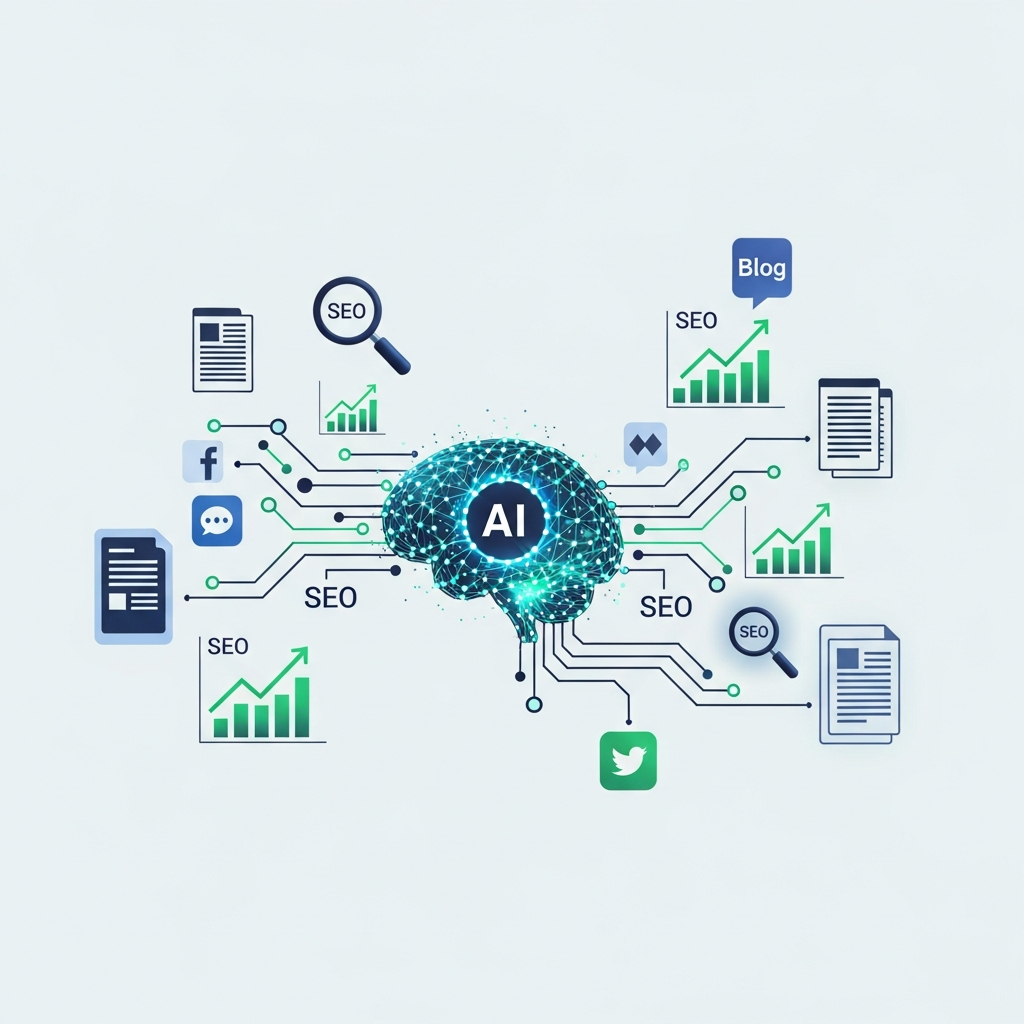
The In-house Content Manager's Guide to AI driven content generation for SEO campaigns: Scale Daily Publishing Without Hiring More Writers
Overview
For in-house content teams, AI-driven content generation for SEO campaigns offers a path to scale daily publishing without adding headcount. The goal is to blend speed and quality, so AI serves as a force multiplier rather than a replacement for human editors. This guide explores practical frameworks, governance, and workflow patterns that help you maintain brand voice, produce data-driven content, and demonstrate tangible ROI.
Whether you manage a single site or a multilingual multi-site portfolio, the core challenge is to align automation with your content strategy driven by AI for SEO goals. You want consistent output, responsible cost, and auditable results. The following sections provide a blueprint to get there, with concrete steps, templates, and safeguards.
How AI-driven content generation works for SEO
AI-driven content generation relies on large language models and structured prompts to draft outlines, sections, and even full articles. The intent is to deliver SEO-friendly content that respects brand voice and editorial standards. The process typically involves three layers: discovery, drafting, and optimization.
Discovery includes keyword research, topic briefs, and competitor benchmarking. Drafting converts briefs into coherent text with logical structure. Optimization adjusts headings, meta elements, internal links, and readability to maximize search visibility and user satisfaction.
In practice, the best results come from humans and machines working together. A human editor provides final polish, tone alignment, and factual verification, while AI accelerates page generation, iteration speed, and testing throughput. This collaboration is central to scaling daily content responsibly.
As you adopt AI, you’ll want to codify integrated keyword research and content automation into your workflows, ensuring that each piece of content contributes meaningfully to your SEO objectives and brand standards.
Building an AI-powered content calendar
A robust content calendar anchors AI-enabled production. It translates your long-term SEO strategy into a repeatable, auditable daily workflow. Start with a quarterly macro plan, then map weekly topics, keywords, and publishing cadences. AI helps fill gaps, generate topic clusters, and propose optimization angles for each piece.
Step-by-step approach:
- Define core topics and clusters aligned with your primary keyword: AI driven content generation for SEO campaigns.
- Run a keyword map to assign search intent, volume, and priority to each topic.
- Generate topic briefs that include target keywords, suggested angles, and an outline skeleton.
- Leverage AI to draft outlines and first-pass content, then assign human editors for polish.
For a practical blueprint you can adapt, explore our 30-day content calendar approach and tailor it to your team’s bandwidth. This structure helps you publish consistently while testing hypothesis-driven content.
Creating a content calendar with AI
Begin with a templated calendar that outlines daily posting slots, topics, and owners. Use AI to propose supplementary topics when gaps appear, but keep a strict editorial gate to prevent content gaps or overlapping topics. Schedule regular reviews to adapt to performance data and seasonal shifts.
Scheduling and publishing pipelines
Establish a publishing pipeline that includes content creation, editorial review, optimization, and final scheduling. Automate status updates to your content calendar and dashboards, while ensuring that brand voice checks are applied before content goes live. If your system supports CMS integrations, leverage automated workflows to publish to multiple sites from a single queue.
Brand voice and quality control
AI can generate compelling content, but brand voice and factual accuracy require guardrails. The most effective setups combine clear style guides, prompt engineering, and human review at critical touchpoints. A strong framework includes language tone, terminology, audience personas, and prohibited phrases to prevent drift.
Practical guardrails include:
- Standardized style guides embedded in prompts and templates
- Editable tone profiles that calibrate formality, enthusiasm, and readability
- Editorial checklists covering factual verification, vendor and product mentions, and tone alignment
To illustrate, you can craft a set of prompts that produce a first draft with placeholders for verified data and quotes. A human reviewer then fills the data gaps and finalizes the copy, ensuring consistency across many articles and languages. This approach preserves brand integrity while maintaining scale.
For teams exploring localization, AI can assist with multilingual content workflows, provided you have robust translation or localization processes in place. See how localization workflows scale in regional markets with our localization-focused post about ecommerce publishing in different locales.
SEO optimization with AI
Beyond drafting, AI excels at on-page SEO: meta tag generation, keyword distribution, header optimization, and internal linking recommendations. A well-designed AI workflow analyzes user intent, SERP features, and competitor pages to tailor content structure for better ranking potential.
Key optimization practices include:
- AI-generated meta titles and descriptions aligned with target keywords and user intent
- Strategic keyword distribution across headings and sections without keyword stuffing
- Structured data and schema suggestions to enhance rich results visibility
- Internal linking suggestions that spread authority to relevant pages
When coupling AI with analytics, you can test variations and measure their impact on click-through and engagement. If you’re exploring practical examples, review how automated dashboards can track the ROI of AI-driven content strategies in our governance article.
In addition, you can leverage AI to generate image alt text and accessibility-friendly content, which also contributes to SEO quality and user experience. Remember to verify factual claims and maintain up-to-date references to ensure accuracy.
As you expand to multilingual contexts, ensure that keyword strategies adapt to local search behavior. The integration of keyword research and content automation is especially powerful for regional markets and international SEO.
Scaling daily publishing
Daily publishing requires disciplined processes, role clarity, and a governance model that scales with your organization. Automating the majority of drafting and optimization is only half the battle; you must also manage human review, QA, and brand governance at scale.
Best practices for scaling include:
- Clear ownership: assign editors, reviewers, and approvers for each content category
- Version control and audit trails for every article
- Standardized QA checklists covering accuracy, tone, and accessibility
- Performance-based gating: content that underperforms may be deprioritized or revised
To maintain quality while publishing at pace, consider a hybrid model where AI drafts are quickly iterated, then routed through a human editorial pipeline. This approach keeps productivity high while preserving brand standards.
For teams seeking a practical workflow template, our post on measuring ROI and governance in automated SEO dashboards discusses how to quantify outcomes and govern ongoing use of automation across teams.
Measuring ROI and governance
ROI measurement is essential to justify AI investments in content. A rigorous approach combines activity metrics (production volume, time saved) with outcome metrics (traffic, engagement, conversion). Governance dashboards provide visibility to executives and stakeholders, ensuring transparency and accountability.
Recommended metrics include:
- Content production velocity (articles per week, cycle time)
- Publish-to-traffic uplift by topic and cluster
- Click-through rate (CTR) and average time on page
- Keyword ranking movement for target terms
- Cost per piece of content and overall content ROI
For a hands-on exploration of governance and ROI, see our dedicated guide that walks you through setting up automated dashboards and governance models that prove value to stakeholders.
If you’re evaluating the impact of content automation on multi-site performance, you may also find value in case studies and dashboard templates that demonstrate cross-site visibility and ROI across language markets.
For example, you can study how automated dashboards can consolidate insights across sites and languages, which is particularly relevant for enterprise-scale SEO programs.
Bonus: consider linking to practical ROI experiments and pilot programs described in our ROI-focused article to guide your own rollout.
Integrating AI content into your tech stack
AI content generation works best when integrated with your existing tech stack. CMS platforms (WordPress, Webflow, Shopify) and analytics tools (GA4, Search Console, Data Studio) should complement the AI workflow rather than hinder it. Establish APIs, authentication, and data governance to ensure secure, scalable operations.
Practical integration tips include:
- Define data inputs and outputs for AI drafts (briefs, keywords, performance signals)
- Automate publishing queues with CMS webhooks or API integrations
- Link AI-generated content to your analytics suite for real-time performance monitoring
Localization and localization workflows are crucial for global teams. For example, localization workflows in ecommerce markets like Brazil illustrate how AI can support regional content production while maintaining brand voice. Learn more about this approach in our regional publishing article.
Finally, always keep a human-in-the-loop for critical content to safeguard accuracy and brand alignment. Automation should accelerate, not degrade, content quality.
To see practical localization examples, you can read about São Paulo ecommerce publication automation in our Brazilian-focused case study article linked in the notes above.
Internal linking tip: connect this integration guide with the 30-day content calendar post to see how automation and CMS integrations can streamline daily publishing at scale.
Pitfalls and best practices
AI-driven content generation for SEO campaigns offers speed, but it also introduces risks. The most common pitfalls include over-reliance on AI, misalignment with brand voice, and insufficient governance. With deliberate best practices, you can minimize risk and maximize value.
Best practices to follow:
- Establish a strict editorial gate for tone, accuracy, and compliance
- Maintain a living content style guide embedded in prompts and templates
- Use a staged publishing process with human review at key milestones
- Track and analyze performance; adjust prompts based on data rather than opinions
- Document decisions and maintain auditable records for executive governance
Common mistakes include failing to assign clear ownership, neglecting multilingual localization, and skipping QA steps. A disciplined approach reduces these risks and helps you realize the full potential of AI-driven content generation for SEO campaigns.
As you implement, consider a pilot program: start with a single content cluster, set a time-bound goal, and measure the impact before expanding. Our ROI and governance guide provides templates and checklists to support this pilot.
Internal links for quick reference: for a practical, ready-to-use calendar and governance templates, consult the linked posts in this article and the dedicated governance piece.