Multilingual SEO Automation: Scale Global Reach Without Increasing Headcount
Overview of Multilingual SEO Automation
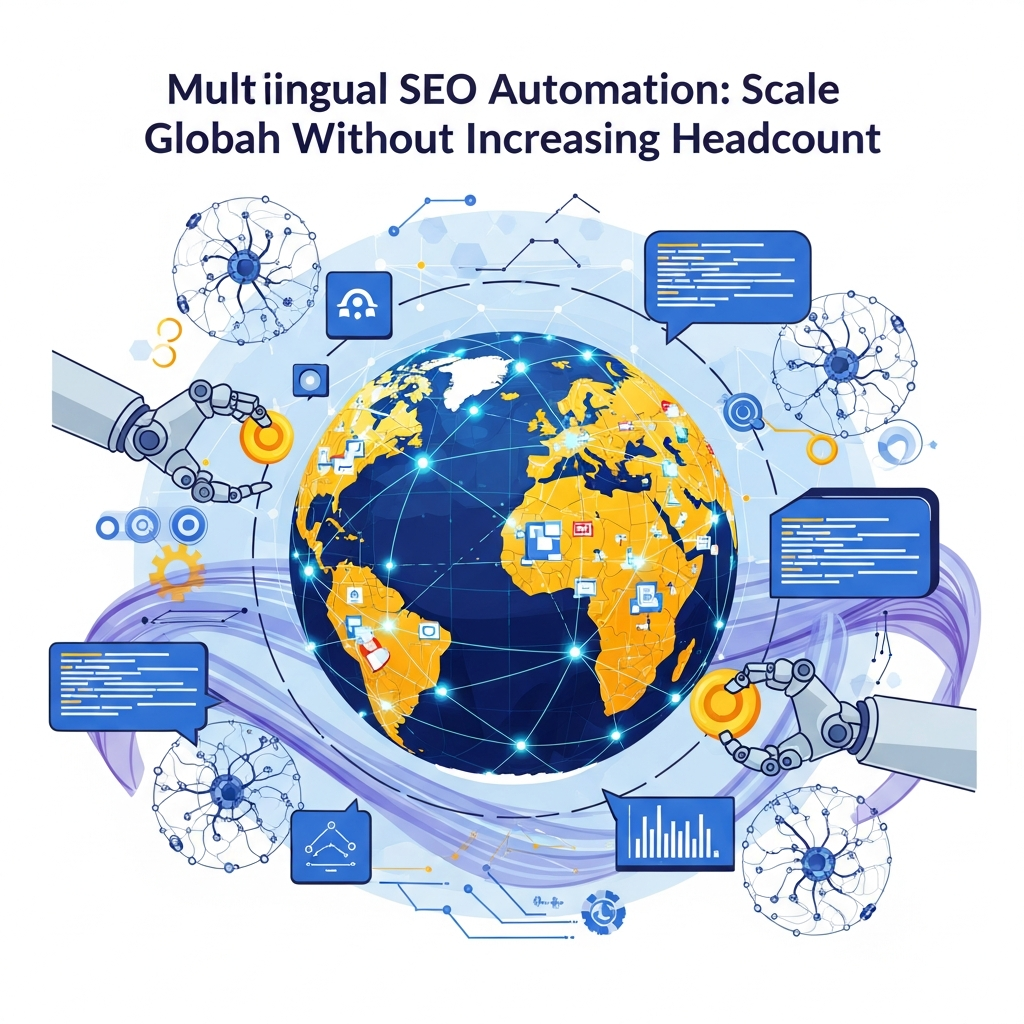
Global brands increasingly need to reach diverse audiences across languages and geographies without multiplying headcount. Multilingual SEO automation brings together AI-assisted content generation, localization workflows, hreflang management, and CMS publishing to create scalable, consistent, and high-quality language variants. The goal is not to replace human oversight but to shift repetitive, data-driven tasks into automated pipelines that free editors and strategists to focus on strategy, localization nuance, and quality control.
In practice, multilingual SEO automation touches several disciplines: keyword research in multiple markets, language-aware content creation, multilingual on-page optimization, structured data for multiple locales, and cross-site governance. When done well, it yields faster time-to-market for new locales, more consistent international experiences, and clearer visibility of global performance metrics.
Why Multilingual SEO Automation Matters for Global Reach
The search landscape varies by language, country, and dialect. Automated processes help teams scale to dozens of locales while preserving brand voice and quality. Key benefits include consistent meta tagging and structured data, faster publication cycles, and centralized analytics that reveal which markets drive the most value.
Automation also reduces the risk of human error in translation-related tasks, such as hreflang annotations, canonical tags, and locale-specific schema. While human translation remains essential for nuance, automation accelerates the initial drafting, enabling localization teams to focus on perfecting tone, cultural relevance, and user intent alignment.
Core Pillars of Multilingual SEO Automation
AI-Driven content generation for multilingual pages
AI can draft base articles and landing pages in multiple languages, then human editors refine localization and cultural nuances. A robust workflow uses language-specific prompts, translation memory, and glossary references to maintain a consistent brand voice across locales. The result is a scalable content backlog that supports editorial calendars without sacrificing quality.
Hreflang automation and international publishing
Hreflang tags tell search engines which pages correspond to which language and region. Automating hreflang reduces mislabeling and indexing issues, especially when new locales are added. A centralized system can generate and validate hreflang across all pages, handle regional variants, and auto-close gaps where content is missing in a locale.
CMS multilingual publishing and localization workflows
CMS integrations are critical. Automated pipelines should push localized drafts into the CMS with proper metadata, ensure language-specific URLs, and trigger localization QA checks. This reduces manual handoffs and helps maintain consistency in internal linking, schema, and navigation across languages.
Implementation Blueprint: From Strategy to Execution
Begin with a concrete plan that maps markets, content types, and localization depth. A practical blueprint includes these stages:
- Define target locales and business goals for each market (traffic, revenue, or leads).
- Map content types to localization depth (e.g., product pages vs. thought leadership).
- Choose a CMS and automation stack that supports multilingual publishing, localization QA, and analytics integration.
- Establish localization workflows, including translators, editors, and reviewers, with SLAs.
- Set up AI prompts, translation memory, and glossary terms to maintain brand voice.
- Launch a pilot in a small set of languages before expanding.
Internal links to reference material can help teams distill best practices. For a practical guide to editorial workflows, see this resource: Editorial workflow for agencies planning, writing, and publishing at scale. If you want localization context from real-world campaigns, explore this Sao Paulo automation post: Sao Paulo automation for Brazilian ecommerce. Finally, validate structured data with a handy schema tool: free schema validator tool.
Automation Workflow Design
Designing an effective multilingual automation workflow involves data, content, and governance layers working in concert. A typical workflow includes:
- Global keyword research: identify language-specific search intents and regional priorities.
- AI content generation: language-aware prompts that reflect local nuances.
- Localization QA: linguistic review, cultural fit, and regulatory considerations where applicable.
- On-page optimization: title tags, meta descriptions, header structure, and schema customized per locale.
- Publication and localization review: CMS publishing with localization queues and versioning.
- Internal linking strategy: cross-linking across locales to improve crawlability and user discovery.
Prompts are the backbone of AI-driven content. Examples include prompts that specify audience personas, regional terminology, and content depth. A well-documented prompt library helps keep outputs consistent and auditable across languages. For teams evaluating AI-driven workflows, consider a staged approach: draft, review, localize, and publish, with automated checks at each step.
Measurement and Governance: How to Track Global Performance
Measuring multilingual SEO performance requires locale-aware analytics and governance. Key metrics to track include:
- Organic traffic by language and region, with trend analysis over time.
- Language-specific keyword rankings and click-through rates.
- URL health and crawlability across locales (site errors, hreflang coverage, canonical status).
- Engagement metrics per locale (average session duration, pages per session, bounce rate).
- Revenue or goal conversions segmented by language/geo.
- Publish cadence and time-to-live for localized content (velocity of localization).
Dashboards should consolidate data from GA4, Search Console, and CMS analytics. A governance layer ensures that localization owners have visibility into SLAs, content quality, and release calendars. If you’re expanding to multiple markets, a centralized analytics framework helps compare performance across regions and informs where to invest next.
Pitfalls and Best Practices
What to watch out for—and how to avoid common missteps:
- Over-automation: automation should augment, not replace, localization quality. Reserve human review for cultural nuance and brand voice.
- Inconsistent hreflang implementation: validate tags across all pages and locales periodically.
- Content divergence: keep core topics aligned while localizing phrasing to fit local search intent.
- Unclear ownership: define a localization boss for each market and establish SLAs with clear KPIs.
- SEO tag drift: maintain meta titles/descriptions that reflect locale intent and character limits.
- Regulatory and accessibility gaps: ensure locale-specific compliance (privacy, accessibility) where required.
Best practices emphasize an iterative approach: start small, measure impact, and refine prompts, templates, and QA processes. Regular audits using a schema validator or SEO health checker can catch issues before they scale. For teams seeking practical validation, experiment with a schema-focused test, then expand to multilingual pages as confidence grows.
Getting Started: A 60-Day Pilot Plan
A structured pilot minimizes risk while proving ROI. A sample plan might look like this:
- Week 1–2: Define locales, choose CMS integrations, and assemble a localization team with SLAs.
- Week 3–4: Build a glossary and language-specific prompts; run a small batch of pages through the automation pipeline.
- Week 5–6: QA by linguistic reviewers; fix issues related to translations, hreflang, and structured data.
- Week 7–8: Publish localized pages, set up dashboards, and monitor initial performance signals.
- Week 9–10: Expand to additional locales based on early wins and refine processes for scale.
During the pilot, maintain a clear channel for feedback from regional teams. Use the pilot results to justify investment in broader automation, additional CMS integrations, and more languages. If you want additional context on scalable editorial workflows, refer to the resource linked earlier, and consider using the schema validator to ensure your new pages are compliant.
Governance and Scale: Extending to Dozens of Localizations
Scaling multilingual SEO automation requires governance that aligns with enterprise needs. Consider these elements:
- Roles and responsibilities across global regions, including localization owners and content editors.
- SLAs, data privacy, and security controls appropriate for enterprise users.
- Version control and audit trails for all localized assets.
- Vendor management, integration with analytics tools, and API access for automation extensibility.
- Localization governance that balances speed with linguistic quality and cultural relevance.
As you expand, prioritize localization quality and consistency, ensuring that each locale remains faithful to the brand while resonating with local audiences. Regularly revisit your keyword strategy, topical relevance, and content calendars to keep pace with evolving search intent across markets. For ongoing education and insights, explore the broader blog catalog on Asimpletool's site and stay aligned with best practices in multilingual publishing.