Multilingual SEO Automation: A Practical Ramp Manual
Why multilingual SEO automation matters
Global brands publish in multiple markets to meet local intent, but scaling content without diluting SEO signals is a common challenge. Manual workflows quickly break under volume, and language-specific optimization can become a bottleneck. Multilingual SEO automation provides a repeatable, scalable approach that preserves brand voice, ensures consistent on-page signals, and accelerates time-to-market for international pages.
At its core, multilingual SEO automation aligns content strategy with technical SEO, localization, and publishing operations. It helps teams deliver localized pages that compete on local search terms while maintaining a single source of truth for taxonomy, internal linking, and markup. The payoff is not only higher rankings but also a more cohesive brand experience across languages and regions.
Key benefits include faster time-to-market, consistent schema and internal linking across locales, and reliable hreflang signals that prevent duplicate content issues. For agencies and in-house teams alike, automation lowers manual friction and improves the predictability of SEO outcomes in multilingual markets.
For teams ready to automate, the first steps are to define a scalable content model, choose a CMS-friendly translation approach, and establish governance that keeps multilingual pages aligned with the parent site’s architecture.
Internal reference: Editorial workflow for agencies and local publishing in Portuguese.
Architecture and a global content model
A practical multilingual model starts with a global content taxonomy and language map. Each language variant should be a clearly defined locale under a shared content hub, using language-specific slugs and metadata. The structure should support:
- Distinct URL paths per language and country
- Language-specific metadata and structured data that reflect local intent
- Clear canonical and alternate/hreflang relationships
There are two common patterns you can adopt depending on your CMS and scale: central translation memory with per-language variants, or automated content clones with localized adjustments. The latter is often faster but requires strict QA to avoid content drift across locales.
When you design the architecture, consider how internal linking will behave across languages. A well-planned interlanguage linking strategy improves crawlability and helps search engines associate the right language with the right audience.
Practical tip: set up a language-agnostic content blueprint for core pages (home, product/category pages, and blog posts) and then add locale-specific variants as needed. This helps you preserve brand voice while delivering locale-relevant signals.
Translation and localization workflow
Automation should not replace human judgment entirely. A robust workflow blends machine translation with human QA to protect accuracy, tone, and cultural nuance. A practical pipeline usually includes:
- Content extraction and language tagging from the master language
- Machine translation with a post-editing step by professional translators
- Localized optimization for each target audience (keywords, intent, and user expectations)
- QA, including linguistic quality checks and functional checks for links and media
- Publishing to CMS with automated metadata and hreflang signals
Translation memory (TM) and glossaries help maintain brand voice and consistency across all locales. Store TM segments centrally so updates propagate cleanly across languages when a term or policy changes.
Best practice: define per-language editorial guidelines that align with your brand voice, and house these rules in a shared policy document linked to the automation platform. This minimizes drift and ensures consistent tone across languages.
Recommended approach: automate content creation and translation for flat or widely searched terms, then reserve human editors for high-visibility pages and regional campaigns. This balance speeds production while preserving quality where it matters most.
Hreflang, canonical signals, and indexing
Hreflang tags help Google serve the right language version to the right user. A disciplined hreflang strategy reduces duplicate content concerns and improves click-through rates in target markets. Pair hreflang with canonical URLs to avoid indexing conflicts and ensure that authority is consolidated correctly within each locale.
Key considerations:
- Declare language and region codes with precise values (e.g., en-us, es-es).
- Provide a default language page with an x-default hreflang value for landing pages.
- Ensure you publish language variants with correct canonical references when necessary.
Automation helps keep hreflang annotations up to date as you add locales, but QA checks are essential after major site changes or migrations. A practical cadence is monthly hreflang audits aligned with quarterly content expansions.
Tip: maintain a centralized hreflang matrix in your CMS or a lightweight database. This enables one-click exports for sitemaps and testing in staging environments.
CMS and publishing automation at scale
The publishing workflow should be consistent whether you publish a blog post in English or a localized product page in French. A scalable CMS publishing process typically includes:
- Language-aware templates with locale-aware metadata blocks
- One-click locale creation and content cloning
- Automated sitemap updates and per-language indexing controls
- Scheduled publishing and recurrence for evergreen content
Automation does not mean exposing the brand to risk. Implement QA gates at three levels: linguistic QA, structural QA (URLs, internal links, and media), and SEO QA (metadata, schema, and canonical tags).
In practice, tie your CMS directly to your translation platform and content authoring tools so that a single button can push approved translations through to all relevant locales. If your CMS supports webhooks or API-driven publishing, you can trigger publication cycles automatically based on content readiness and approval statuses.
Internal reference: Editorial workflow for agencies provides a deeper look at scalable publishing patterns. For localized publishing approaches, see regional publishing workflows.
Internal linking and site structure across languages
Internal linking guidance becomes more complex when content exists in multiple languages. The goal is to build a crawlable, logical network that helps search engines discover language variants and page families while reinforcing topic authority across locales.
Practical practices:
- Maintain consistent anchor text patterns across locales for core topics.
- Link related language variants where appropriate, but avoid overlinking across language boundaries that may confuse crawlers.
- Automate internal linking suggestions using semantic signals that reflect language-specific intent.
Automation can generate cross-link maps that preserve topical depth while respecting locale boundaries. Review and approve auto-generated links to ensure relevance and avoid broken paths after translation updates.
Quality, indexing, and signals management
Quality is the multiplier of automation. You should monitor across three layers: content quality, technical signals, and indexing health. Content quality means accuracy, tone, and alignment with local search intent. Technical signals include structured data, canonical usage, and proper hreflang. Indexing health covers sitemap coverage and crawl budgets per language.
Checklist for quality:
- Validated translations with brand voice checks
- Correct hreflang declarations and per-language sitemaps
- High-quality media assets with localized alt text
- Structured data optimized for each locale
Tracking indicators such as international impressions, click-through rate by locale, and page-level rankings help you gauge impact. Regular audits reduce misrouting and ensure that international pages contribute to overall domain authority.
Measurement, dashboards, and governance
Effective multilingual SEO automation requires transparent dashboards that aggregate data across locales. Establish a governance cadence that includes quarterly reviews of localization quality, regional performance, and ROI. Use a mix of language-specific KPIs (impressions, clicks, conversions) and global KPIs (overall organic growth, domain authority, and site health).
Recommended metrics:
- Localized organic traffic growth by language
- Indexing status and sitemap coverage by locale
- Hreflang correctness and crawl statistics
- On-page SEO signals per language (title tags, meta descriptions, header structure)
Ensure data integrity by validating data sources, refreshing translation memories, and reconciling multilingual analytics views. A dashboard-driven approach helps stakeholders see progress without chasing separate reports for each language.
4-week ramp plan and quick-start checklist
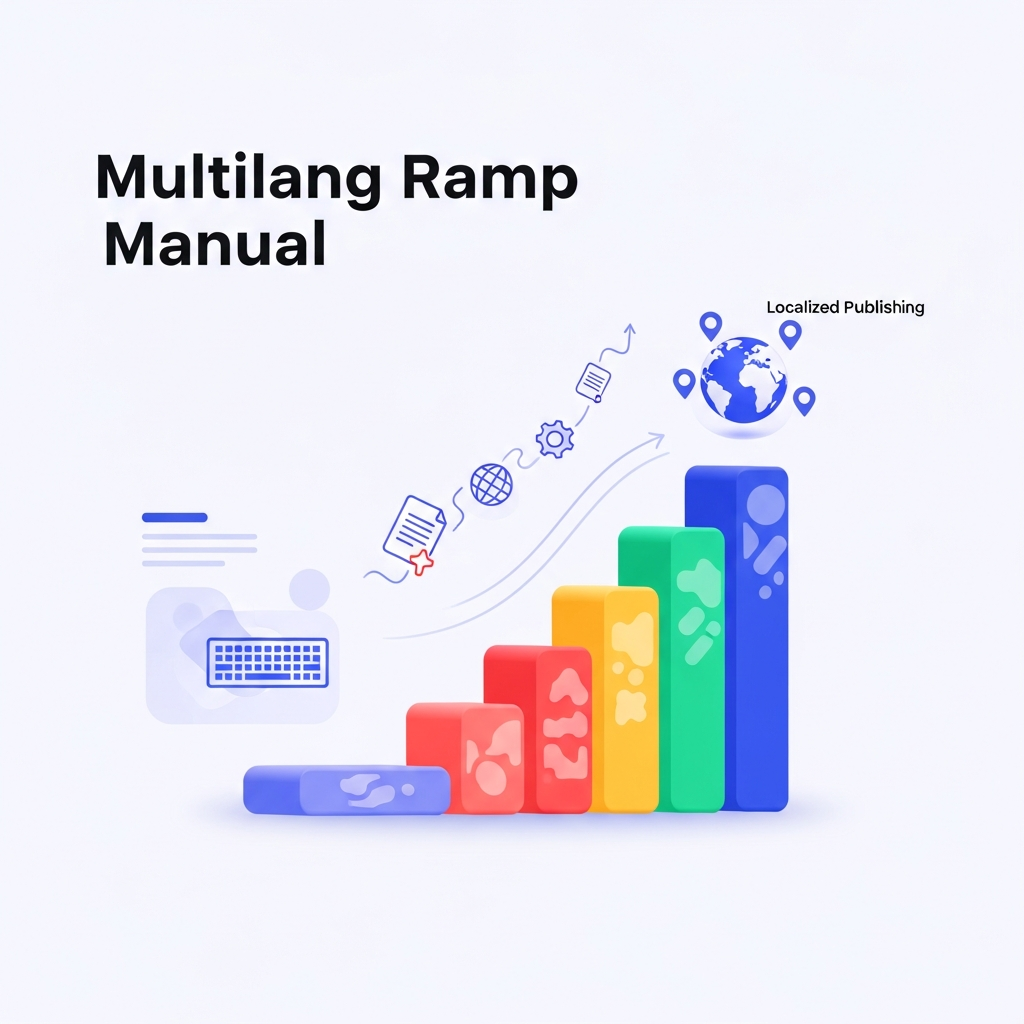
Use this ramp to kick off a multilingual automation program without overwhelming your team. Each week focuses on a system, not just a single language project.
Week 1: align and model
- Map translation workflows and identify required QA gates.
- Set up hreflang matrix and per-language sitemaps.
Week 2: implement pipelines
- Connect CMS, translation platform, and publishing system.
- Establish templates and language-specific metadata blocks.
- Publish first localized content tranche and perform QA.
Week 3: scale and automate
- Enable automated publication calendars and recurring posts per locale.
- Implement automated internal linking suggestions and canonical controls.
- Start tracking international KPIs and adjust keyword strategy by locale.
Week 4: optimize and govern
- Review localization quality and refine translation memory terms.
- Audit hreflang accuracy and sitemap coverage.
- Publish a regional content plan for the next quarter.
Quick-start checklist:
- Define locales and content taxonomy
- Set up translation–QA–publish gates
- Configure hreflang and sitemaps
- Connect CMS with translation tools and publish automation
For ongoing reference and deeper dives, explore related processes in our reference posts: editorial workflows and regional publishing patterns.
Internal references to onboarding resources: Editorial workflow for agencies and regional publishing in Brazil.
Conclusion: ramping with confidence
Multilingual SEO automation is not a one-off project; it is a continuous capability that scales with your business. Start with a clear content model, combine automation with quality human review, and integrate your CMS and translation stack for smooth publishing. As you scale, maintain consistent brand voice, precise hreflang signals, and robust measurement to sustain rankings across languages.
Take action by outlining your locale strategy, selecting a CMS-friendly automation approach, and setting up a 90-day plan for localization cycles. The result is faster global content delivery, improved regional visibility, and a stronger overall organic presence.
Suggested reading: Editorial workflow and regional publishing.