Multiformat Content Mapping
Why multiformat content mapping matters
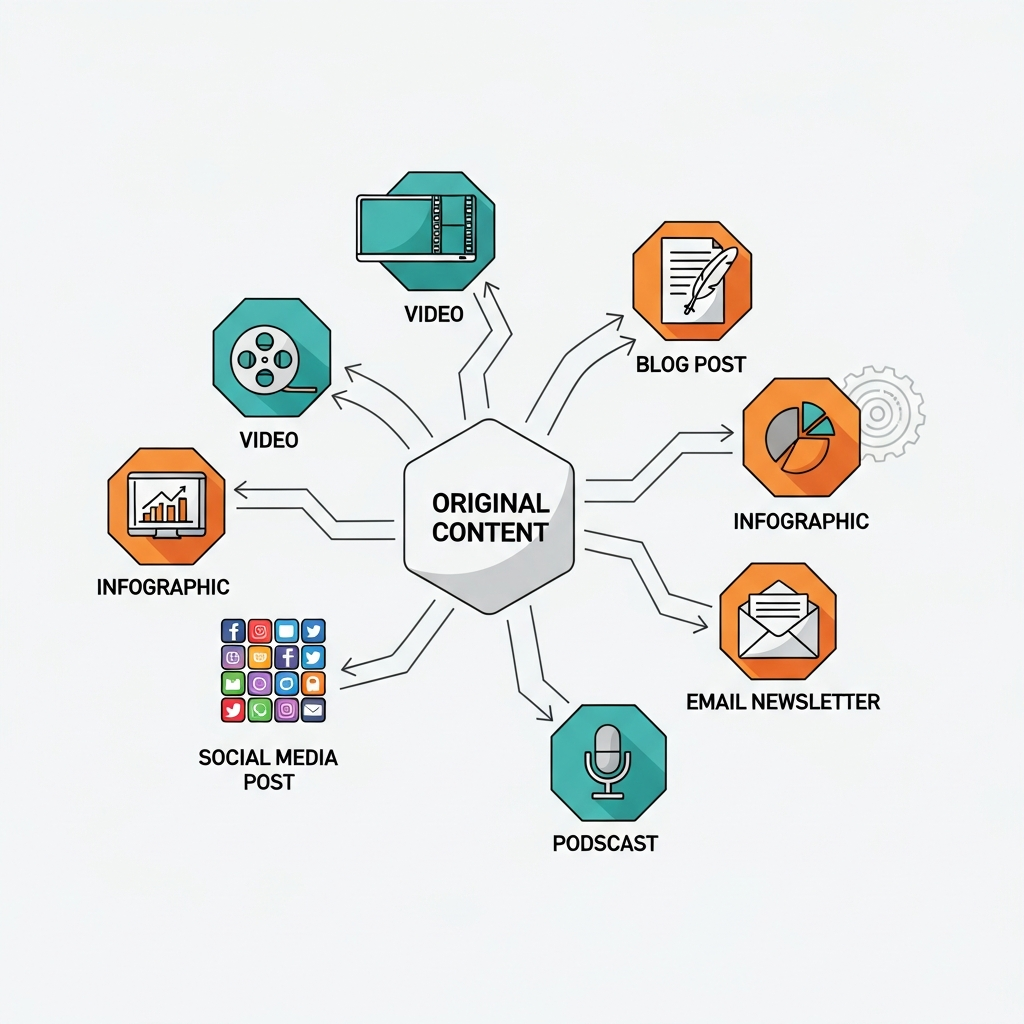
In today’s digital landscape, a single article can power dozens of formats. A well-designed multiformat content mapping strategy unlocks reach across platforms without reinventing the wheel for every channel. By starting with a strong core article and then atomizing it into bite-sized, channel-ready assets, teams can maintain brand voice while expanding distribution velocity. This approach aligns with a content repurposing strategy that many high-growth brands rely on to maximize impact with finite resources.
Content teams often struggle with bottlenecks: creating fresh assets, maintaining consistency, and coordinating publishing across blogs, social feeds, video channels, and product pages. Multiformat mapping helps reduce manual toil, speeds up time-to-market, and provides a repeatable framework for scaling. It also makes quality control easier, because the core message remains aligned as it travels through each format.
For readers, this is not just about efficiency; it’s about accuracy and cohesion. When a single source article informs multiple formats, readers experience a unified narrative. That consistency translates into stronger brand recognition, better SEO signals, and more confident audience engagement across touchpoints.
To see practical examples and templates, explore our editorial workflow hub and our broader blog index for implementation ideas. You can also verify schema best practices with our schema validator.
Core principles of a content repurposing strategy
A robust content repurposing strategy rests on a few core principles: clarity, modularity, and automation. Clarity means the core article establishes a precise message and a set of audience-aligned goals. Modularity means breaking the article into reusable molecules that can be recombined into different formats. Automation ensures repeatability without sacrificing quality.
First, define your core article as a source of truth. This content should encapsulate a strong value proposition, supported by data points, examples, and a brand voice that resonates with your audience. Next, treat your article as a living asset that can be atomized into pieces: headlines, subheadings, pull quotes, image captions, video scripts, and social posts. Finally, map each format to a channel: long-form blog posts, short-form social snippets, video chapters, and product-focused content for landing pages. This mapping is the backbone of the content repurposing strategy, often called multichannel publishing in practice.
Key design decisions include where to start (blog, video, or product pages), how to maintain voice consistency, and how to automate publishing while preserving editorial control. The goal is to establish a repeatable, scalable system that produces consistent outcomes across all formats and channels.
The mapping framework: from article to formats
The mapping framework rests on three pillars: molecule creation, format recipes, and channel templates. Each pillar is designed to be reused across topics and industries, enabling teams to scale without rebuilding the wheel for every new article.
Molecule creation: turning a core article into reusable atoms
Start by extracting three to five core molecules from the article. A molecule is a tightly scoped unit with a single idea, example, or insight that can stand alone in a different format. Examples include a data point, a customer story, a step in a process, or a teachable framework. These molecules become the building blocks for blog alternates, social posts, and video segments. When done well, molecules maintain semantic cohesion across formats and reduce the cognitive load for editors and writers.
For instance, a piece about a content repurposing strategy might yield molecules such as: (1) the value proposition of repurposing content, (2) a step-by-step framework for converting a long article into a video, (3) a checklist for ensuring accessibility in social snippets, and (4) an outline for an SEO-optimized product page adaptation. Each molecule can be expanded, trimmed, or recombined as needed.
Format recipes: turning molecules into proven formats
Each molecule is paired with an editorial recipe that defines the structure, length, cadence, and optimization required for a given format. Recipes act as micro-instructions for writers and editors, ensuring consistency regardless of who produces the content. Common recipes include a video script sliced into chapters, a blog post section rewritten as a series of social posts, and a product page section expanded into FAQ-style content. Over time, these recipes become a library that accelerates production and reduces uncertainty.
To illustrate, a molecule about “why content repurposing saves time” can be turned into a 3- to 4-minute video, a 500–800 word blog post, and a set of 5–7 social posts with accompanying visuals. Each format shares a core message but adapts to audience needs and platform constraints. This alignment improves message recall and supports cross-channel discovery.
Channel templates: aligning formats with distribution channels
Channel templates translate recipes into publish-ready assets tailored to each channel’s audience and constraints. For example, a video script might be adapted into on-screen slides, a voiceover, and a captioned cut for social platforms. A blog post can be sliced into a carousel for social channels, a newsletter snippet, and an in-page FAQ for product pages. By defining templates for each channel, teams reduce friction during publishing and ensure each asset meets channel-specific best practices.
Templates should also consider localization needs, accessibility requirements, and SEO signals. Local audiences may respond better to culturally relevant examples, while accessibility considerations ensure content is usable by a wider audience. The channel templates are the operational muscle of the mapping framework, enabling consistent output at scale.
Workflow and automation: from article to publish
Automation is the lever that makes the mapping framework practical at scale. The ideal workflow starts with a single source article and cascades through a controlled pipeline that touches writing, editing, metadata, internal linking, and publishing across formats and channels. Automation should not eliminate editorial judgment; it should accelerate it, maintain brand voice, and reduce repetitive tasks.
AI writing and editing: producing first drafts that spark refinement
AI-assisted drafting handles the heavy lifting of initial content creation. Writers then apply brand voice, factual checks, and nuance. The combination speeds up delivery while preserving quality. Effective AI workflows include guardrails for accuracy, tone consistency checks, and a review cycle that ensures alignment with audience expectations. A well-tuned AI editor can refine structure, tighten arguments, and improve readability without replacing human oversight.
Metadata generation is also automated at this stage. Auto-generated titles, meta descriptions, and alt texts ensure SEO signals are consistent with the article’s intent. Quality control checks, including readability, factual accuracy, and brand compatibility, should run before any asset moves to publishing.
Autopublish and scheduling: coordinating cross-channel distribution
Publish automation connects your content engine to your CMS and social channels in a controlled, auditable way. Recurring publishing schedules ensure consistency, while manual overrides allow for timely adjustments. A transparent, auditable log helps teams demonstrate reliability to stakeholders and clients.
In practice, you would schedule the blog article to publish on a chosen date, release a video chapter weekly, and post a set of social snippets across platforms within a content calendar. Automated checks verify that internal links point to relevant pages, and canonical URLs remain correctly configured. This approach not only saves time but also reduces the risk of publishing outdated or inconsistent content.
To explore practical publishing workflows and governance, our team often references the broader editorial workflow for agencies and the blog index.
SEO and governance for scalable content
Scaling content without sacrificing SEO requires disciplined governance. Internal linking, structured data, canonical tags, and consistent keyword signals all need to be managed at scale. Automation should enforce linking rules, content hierarchies, and schema markup across materials derived from the core article. A well-implemented governance layer helps preserve crawlability and ensures each asset strengthens overall site authority.
Internal linking automation is a critical capability. It guides search engines and readers through related topics, increasing engagement and improving time-on-site metrics. A scalable approach includes automated anchor text targeting, contextual link placement, and periodic audits to remove broken links or outdated references.
Schema and structured data are equally important for multiformat content. Automatically injecting appropriate schema on blog posts, videos, and product pages improves rich results chances and helps search engines interpret the relationship between formats. A schema-validator check during the production process reduces risk and keeps pages compliant with evolving search engine guidelines.
For practical best practices, see our resources on schema validation and cross-channel optimization. You can also browse the schema validator for validation tasks and ensure ongoing compliance across formats.
Tools and tech stack for a repeatable system
Building a repeatable system requires choosing tools that integrate smoothly with your CMS, channels, and editorial process. Begin with an AI content generator for long-form draft creation, paired with an AI editor for polishing voice and ensuring factual accuracy. Pair these with a publishing pipeline that supports one-click or scheduled deployment to your CMS and social platforms.
Automation benefits from a centralized dashboard that exposes real-time performance metrics, including rankings, engagement, and traffic lift from each asset. A robust system includes a customizable internal linking engine, a canonical URL manager, and access controls for white-label or multi-brand deployments if you operate an agency or work with clients.
When selecting tools, consider CMS integrations such as WordPress, Shopify, Wix, or Webflow, and assess the ease of creating channel-specific templates to support consistent output. The goal is to minimize manual handoffs and maximize reliability across formats.
Best practices and common pitfalls
Best practices include starting with a strong core article, clearly identifying the audience for each format, and maintaining a consistent publication cadence. Use a small set of well-defined molecules to ensure coherence across formats and reduce drift in tone or messaging. Regular audits of internal links, image assets, and metadata prevent technical issues from derailing performance.
Common pitfalls include over-optimizing for one channel at the expense of others, neglecting accessibility, and allowing automation to outrun editorial oversight. It is better to err on the side of quality and human review, particularly for product pages and pages that represent your brand voice. A staged rollout with a feedback loop helps teams refine templates and improve outcomes over time.
Engage early with your content and marketing teams to refine your molecule library and channel templates. Documented playbooks reduce ramp time for new editors and ensure that onboarding is fast and consistent. Periodic reviews of performance data help identify which formats deliver the best ROI and should be scaled first.
Getting started: a practical 14-day plan
-
Day 1–2: Define the core article and molecules.
Choose a high-potential article and extract 3–5 core molecules. Write concise brief notes for each molecule that describe its value and potential formats.
-
Day 3–5: Create format recipes and channel templates.
Develop templates for blog, video, social posts, and product pages. Define length, structure, and optimization rules for each format. Map each recipe to the channel’s best practices.
-
Day 6–7: Set up the automation pipeline.
Configure AI writing, editing, metadata, and autopublish workflows. Establish guardrails for tone, factual accuracy, and QA checks. Integrate the CMS and social channels.
-
Day 8–10: Produce pilot assets.
Generate one core article into a blog post, a video outline, and a set of social snippets. Perform quality checks and adjust templates as needed.
-
Day 11–12: Publish and measure.
Publish pilot assets across channels and monitor initial performance. Review analytics to identify quick wins and any bottlenecks in the workflow.
-
Day 13–14: Iterate and scale.
Refine molecules and recipes based on feedback. Plan the next 2–4 articles to scale the framework across topics and formats.
For ongoing inspiration and deeper guidance, explore our editorial workflow resources and related content on the site. The mapping framework described here is designed to be adaptable for agencies and brands alike, helping teams achieve a repeatable, scalable content velocity.
As you pursue multiformat publishing, keep your users front and center. Always consider readability, accessibility, and relevance when adapting content for each channel. When done well, multiformat content mapping accelerates growth without sacrificing quality or brand integrity.