Lagos Fintech Growth: Automate Blog Posts to Acquire Users
Lagos fintech growth context
The Lagos fintech scene has emerged as Africa’s startup heartbeat, combining regulatory ambition with rising consumer demand for digital financial services. For marketers in Lagos and across Nigeria, the challenge is clear: scale user acquisition without sacrificing trust or compliance. Automated content publishing, when implemented thoughtfully, can accelerate audience growth while maintaining brand credibility and regulatory alignment. This approach is not about churning out low-quality posts; it’s about generating high-value, localized content at scale, then distributing it with precision across channels that Lagos users trust.
Local relevance matters as much as volume. Searches tied to Lagos and Nigeria often reflect needs around payments, lending, savings, and regulatory guidance. By aligning topics with these needs and delivering timely, compliant messaging, fintech brands can reduce customer friction and improve onboarding convert rates. The goal is to create a repeating content engine that serves users where they are, when they need it, with language and references that feel native to Lagos markets.
To practitioners in Lagos, automation should be viewed as an enabler—not a replacement for human quality. The right system handles idea generation, drafting, optimization, scheduling, and publishing, while humans retain control over brand voice, risk management, and final approvals. In practice, this means clear governance, review loops, and guardrails that ensure every published piece meets local compliance expectations. As you’ll see, the payoff comes when automated workflows free time for strategic experimentation and more targeted user acquisition campaigns. Our blog hub and the broader editorial workflow guide provide concrete patterns you can adapt for Lagos.
Key takeaway: in Lagos, a scalable content program should combine local relevance, regulatory awareness, and a one-click publishing flow that supports recurring campaigns and multilingual storytelling where appropriate.
Automated content publishing architecture for Lagos
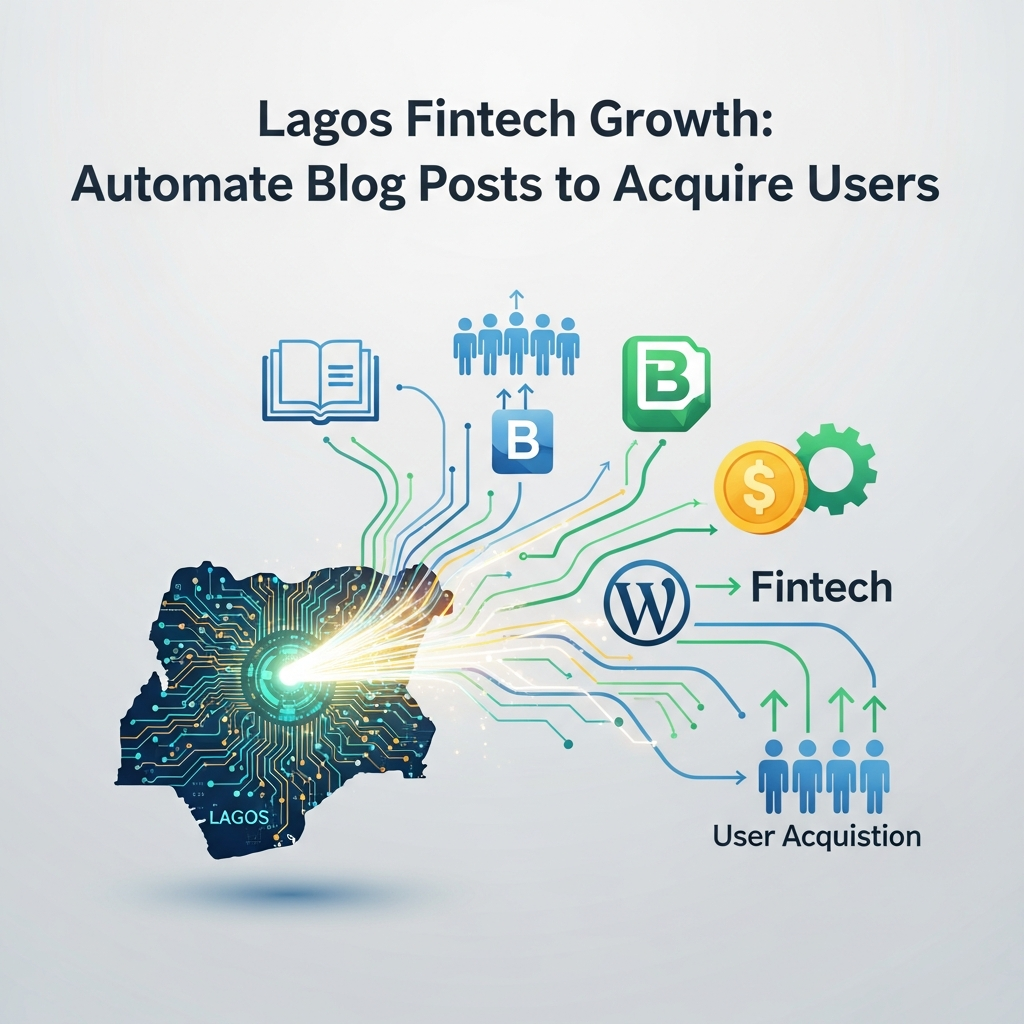
At its core, an automated publishing system for Lagos fintech aims to publish consistently, optimize for search, and preserve brand trust. A practical architecture includes four layers: strategy, content creation, optimization and governance, and distribution with analytics.
- Strategy layer: Define priority topics that map to Lagos user journeys, aligning with onboarding goals and regulatory disclosures. Build a content calendar that ties posts to product launches, feature updates, and education around compliance standards.
- Content creation layer: Use AI-assisted drafting to generate long-form posts, how-to guides, and local updates. Pair AI drafts with human editors for voice, accuracy, and brand safety. Include multilingual variations where needed to reach a broader Lagos audience.
- Optimization and governance layer: Implement on-page SEO, internal linking, and schema markup at scale. Enforce a lightweight content review workflow to ensure accuracy and regulatory alignment before publishing.
- Distribution and analytics layer: Schedule posts to publish to your CMS with one click, then syndicate across social and email channels. Use dashboards to monitor performance, revise topics, and optimize future content velocity.
In Lagos, WordPress is a common CMS choice, but the principles remain CMS-agnostic. The automation stack should plug into your CMS with a single-click publish, manage internal linking across large article catalogs, and insert structured data to improve SEO signals. For a practical deep-dive into editorial workflows at scale, check our editorial workflow guide and explore how teams consolidate planning, writing, and publishing into a unified process.
Local considerations matter: Lagos publishers often rely on English and local dialects for broader reach. The architecture should support multilingual content where appropriate and provide governance over localization quality. A robust system also includes a content repository that tracks versions, authoring provenance, and compliance notes so auditors can verify published materials quickly.
Operational note: to enhance speed and reliability, consider an automation platform that offers WordPress or other CMS integrations, one-click publishing, and real-time SEO optimization. See how similar automation platforms position themselves in the market with features like autoblog, AI-assisted editing, and schema automation to help you compare options more efficiently.
Internal links to practical resources can help your team ramp up faster: Editorial workflows for agencies; the blog hub.
Compliance-friendly messaging in fintech content
Fintech in Lagos operates under a dense regulatory environment that emphasizes consumer protection, data privacy, and transparency. Automated content publishing should never sacrifice clarity or compliance. Build guardrails into your process to ensure every post includes required disclosures, privacy notes, and accessibility considerations. Content templates can embed standard disclaimers and regulatory pointers, while AI-assisted drafting should be constrained by a compliance checklist before human review.
Practical steps include: standardizing voice and risk disclosures, verifying product claims against official guidelines, and maintaining audit trails for content revisions. In Lagos, where consumer trust is critical, even routine blog posts about features or promotions should link to official terms, privacy policies, and regulatory notices. This approach helps reduce the risk of misinterpretation and builds trust with potential users who value predictable, compliant messaging.
To support this discipline, pair your automation with a content governance playbook. It should specify which teams approve posts, how to handle multilingual variants, and when automatic scheduling is appropriate. For organizations expanding into multiple Nigerian markets, establish a centralized compliance review while enabling locale-specific customization to reflect local regulations and user expectations.
For broader perspectives on content compliance and quality in automated workflows, see our general guidelines and related resources in the blog hub.
Local SEO and multilingual considerations for Lagos
Local SEO in Lagos means optimizing for queries that signal intent tied to a specific geography. Ensure your business name, address, and phone number are consistent across pages and directories, and use Lagos-focused terms in headings and meta content. Local content should answer questions typical of Lagos users, such as how fintech features address local payment habits, regulatory updates, and city-specific onboarding flows.
Beyond basic optimization, leverage multilingual content where appropriate. In Lagos, English remains dominant, but there is value in Nigerian Pidgin and local languages for outreach to diverse communities. When creating multilingual content, implement proper hreflang tags, maintain high translation quality, and ensure local references remain accurate and culturally relevant. Automated workflows can manage multilingual draft creation, but human verification remains essential for tone and accuracy.
Local link-building and citations support visibility in Lagos searches. Seek partnerships with credible Lagos-based sites and fintech community hubs to earn high-quality mentions. Always prioritize white-hat approaches to earning links and references that withstand scrutiny from search engines and regulatory bodies.
As you scale local content, monitor performance with location-specific dashboards. Track metrics such as local organic traffic, local bounce rates, and conversions from Lagos visitors. For broader insights into automated SEO strategies compatible with local markets, explore the blog hub and related guides.
Internal links to further reading: local SEO resources, editorial workflow.
A practical 6-step playbook for Lagos fintech content automation
- Define acquisition and trust goals: Identify target user journeys, onboarding milestones, and regulatory disclosures that must accompany every post. Align content topics with feature launches, education on compliance, and trust-building narratives.
- Build a topic framework and templates: Create topic clusters around Lagos-user needs (payments, remittances, lending, account security) and design post templates that include standard sections, disclaimers, and calls-to-action aligned with your goals.
- Set up CMS-ready publishing workflows: Establish one-click publish to WordPress or your preferred CMS, with recurring scheduling for evergreen content and time-bound campaigns. Ensure internal linking and canonical tags are applied consistently.
- Incorporate multilingual considerations: Decide where translations are necessary and implement a controlled workflow for locale-specific content. Maintain language-specific keyword targets to maximize reach in Lagos markets.
- Governance and quality control: Implement a lightweight review process for tone, accuracy, and compliance. Use automated checks for schema, alt text, and accessibility, with human sign-off before publication.
- Monitor, iterate, and optimize: Track local performance metrics, refine topics based on real data, and scale successful patterns across the Lagos ecosystem. Use findings to inform future content calendars and campaigns.
For practical inspiration and step-by-step patterns, review our broader editorial resources and the Lagos-focused content strategies in the blog hub.
Additional reading and context can be found in our guide on editorial workflows and content planning. Editorial workflows for agencies and the blog hub offer reusable templates you can adapt.
Pitfalls and best practices for automated publishing in Lagos Fintech
Best practices emphasize accuracy, compliance, and a human-in-the-loop approach. Relying solely on automation can lead to misstatements, outdated information, or tone drift. Establish guardrails that require human review for regulatory-sensitive topics, product claims, and pricing disclosures. Maintain an accessible design and ensure content remains readable on mobile devices common among Lagos users.
Common pitfalls include over-automation, misalignment between content and product realities, and publishing without sufficient localization checks. To mitigate these risks, implement a content approval workflow, maintain a clear editorial calendar, and continuously audit published posts for accuracy and relevance. Regularly schedule content refreshes to reflect regulatory changes and evolving product features.
Key best practices include: maintain consistent branding, ensure accurate internal linking across the site, and use structured data to aid search engines in understanding page context. The combination of governance, localization, and rigorous testing will help you sustain growth without compromising trust.
For more on scalable editorial practices, see our broader editorial guides in the blog hub and related resources.
Measuring ROI and metrics for Lagos-based automated publishing
When evaluating automated content publishing in Lagos, define a clear set of success metrics that tie content output to user acquisition and trust. Typical metrics include organic traffic growth, time-to-publish, on-page engagement, conversion rate from content-driven visits, and the velocity of content production.
Track both top-funnel indicators (impressions, clicks, session duration) and bottom-funnel outcomes (signups, applications, or loan inquiries). Use a dashboard that surfaces location-specific data so you can see how Lagos campaigns perform relative to other markets or segments. Establish targets such as a 20–40% increase in organic visits to Lagos pages within 90 days, along with improved completion rates on onboarding flows triggered by content.
ROI is driven by efficiency and quality. Measure time saved in publishing workflows, reductions in manual editing time, and improvements in content quality scores after governance. Combine these with incremental lift in qualified leads to determine overall value. For deeper ROI context and benchmarks, explore our broader SEO automation resources and case studies in the blog hub.
To align with the Lagos market, set locale-specific targets and periodically reassess language mixes, posting cadence, and keyword focus. The goal is a reproducible, transparent model that demonstrates value to executives and regulatory stakeholders alike.
Real-world examples and next steps
Real-world adoption of automated content publishing often begins with a pilot that pairs a limited topic set with a single CMS. The pilot allows teams to validate governance, measure early impact, and refine localization before scaling. Lagos-focused pilots should emphasize local language considerations, compliance disclosures, and clear calls-to-action aligned to product onboarding.
Finally, when you are ready to compare vendors or platforms, look for features like one-click CMS publishing, white-label reporting, multilingual content support, and transparent analytics. These attributes help ensure your Lagos strategy remains scalable, auditable, and aligned with local trust expectations. For further exploration of platform options and practical patterns, you can consult our blog hub or the integration guides linked below.
Internal references for deeper exploration and context:
As you move from planning to execution, consider scheduling a consultation to tailor an automated publishing approach to Lagos fintech goals. A focused assessment can help define the right mix of content templates, localization strategies, and governance rules to accelerate user acquisition while maintaining regulatory trust.