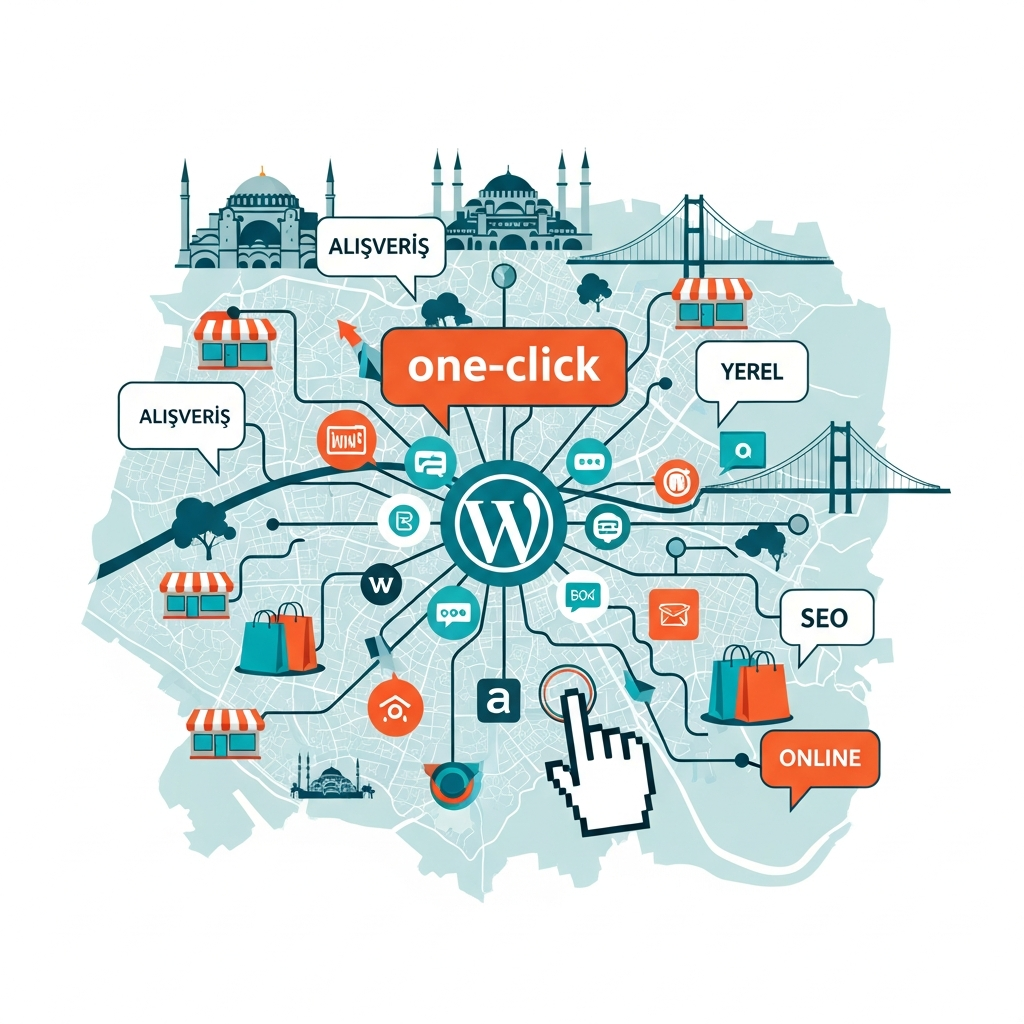
Istanbul Retail Surge: One-Click Posting to Boost Local Sales
Why automation matters for Istanbul retailers
Istanbul is a city of neighborhoods, seasons of tourism, and a vibrant blend of local shoppers and international visitors. Retail brands that publish consistently across languages and channels stand out in local search results and capture traffic from both nearby residents and tourists. Manual content production across Turkish and English, plus location-specific pages, simply cannot keep pace with demand in a dynamic market. Automation changes that dynamic by turning a single integration into a steady stream of optimized content and discoverable pages.
The core idea is straightforward: publish multilingual, SEO-ready content with one action, then let the system manage the rest—translations, metadata, internal linking, canonicalization, and scheduling. The outcome is better local rankings, more in-store visits, and higher online conversions. Importantly, this approach aligns with the needs of both local store managers and marketing leads who want predictable results without juggling multiple tools.
In practice, this means you can target Turkish-speaking neighborhoods like Kadıköy or Beşiktaş while also reaching tourists who search in English. The end goal is to improve visibility for core product categories, seasonal promotions, and neighborhood-specific campaigns so shoppers discover your stores when they search within Istanbul or while they’re on the move.
For a deeper look at scalable content workflows, see our guide on editorial workflows for agencies: editorial workflow for agencies and our broader approach to content planning on our blog.
How one-click publishing works across languages and CMSs
One-click publishing is not magic; it’s an orchestrated workflow that combines content creation, localization, SEO optimization, and CMS delivery. The basic flow starts with a language-aware authoring template and a content brief that defines user intent, local nuances, and product details. When you click publish, the system routes content to the appropriate Turkish and English pages, applies multilingual SEO best practices, and sets up internal linking and structured data to maximize discoverability.
The architecture typically involves a central content hub connected to your CMS (WordPress or others) via a secure API. You’ll define locale rules, brand voice, and hierarchy (category pages, location pages, product pages). Translations can be human-posted or AI-assisted with human review, depending on quality targets. You can also schedule recurring publishing for new campaigns, seasonal offers, and neighborhood spotlights.
Practical benefits include faster time-to-market for promotions, more consistent multilingual output, and improved control over on-page signals such as meta titles, descriptions, and canonical URLs. You can pair this with a content calendar to ensure you’re always aligned with local events and tourism patterns.
For a deeper dive into editorial automation and one-click publishing, explore our blog post on editorial workflows linked above and consider how a single platform could replace multiple tools in your stack.
Multilingual publishing: Turkish and English in harmony
Multilingual SEO is more than translating words; it’s about preserving intent, local relevance, and searcher behavior across languages. Turkish and English searches in Istanbul can diverge in terms of keywords, intent signals, and even the local mapping of neighborhoods to products. A robust solution uses language-aware translation, hreflang annotations, and localized metadata to ensure pages rank appropriately in both Turkish and English search results.
Key considerations include keyword localization, avoiding duplicate content across language variants, and maintaining a consistent brand voice across Turkish and English pages. The translation workflow should include glossary terms for product names and neighborhood references to prevent drift in meaning. A well-tuned system also supports Turkish diacritics and Turkish date formats so that content reads naturally to Turkish shoppers.
In Istanbul, multilingual content unlocks a wider audience. Tourists often search in English, while residents may search in Turkish. Combining Turkish and English pages in a unified architecture enables you to capture both segments efficiently and improves your chances of ranking for localized queries like Kadıköy coffee shop near me or beşiktas cheese shop Istanbul.
For further context on multilingual content generation with SEO considerations, consult resources on multilingual SEO best practices and schema usage. This approach also aligns with the Turkish market’s expectations for fast, mobile-friendly pages, which improves user experience and conversion rates.
CMS integration in Türkiye: WordPress and beyond
Turkish retailers increasingly rely on WordPress for its flexibility, plugin ecosystem, and multilingual capabilities. A one-click publishing workflow should integrate smoothly with WordPress Türkiye setups, enabling catalog updates, landing page creation, and neighborhood pages to publish with minimal friction. Beyond WordPress, consider CMSs common in Türkiye’s retail ecosystem, ensuring the integration supports multilingual metadata, structured data, and internal linking automation.
Important CMS considerations include: robust API access, secure authentication, support for dynamic content blocks, and reliable translation workflows. You’ll also want to manage canonical URLs and avoid content cannibalization across Turkish and English pages. A well-integrated CMS ensures a consistent storefront experience across in-store digital touchpoints and online channels.
If you’re evaluating options, a practical starting point is to map your current CMS capabilities to the requirements of automatic content publishing Istanbul, the ability to publish Türkçe and English pages concurrently, and the capacity to manage locale-specific product data—without compromising page speed or accessibility. For architectural reference, our editorial workflow guide is a good starting point.
Internal linking and structured data become easier when your CMS is connected to a centralized publishing hub. A standardized approach helps you maintain consistent navigation, improve crawlability, and support local discovery in Istanbul’s diverse neighborhoods. See our recommended references and sample workflows in the links above.
Building a retail content calendar for Istanbul
A neighborhood-focused content calendar helps you align with Istanbul’s seasonal rhythms, tourism peaks, and local events. Start by identifying a core set of pillar pages—neighborhood guides, product category pages, and city-wide promotions. Then schedule localized posts that highlight street-level promotions, collaborations with local merchants, and neighborhood-specific discounts.
A practical 12-week content calendar might look like this:
- Weeks 1-2: Kadıköy and Beşiktaş neighborhood spotlights with local promotions
- Weeks 3-4: Turkish-language product spotlights and translations of top sellers
- Weeks 5-6: English-language content for tourists—maps, directions, and shopping tips
- Weeks 7-8: Seasonal campaigns tied to Turkish holidays or tourism cycles
- Weeks 9-10: Local influencer collaborations and UGC-driven content
- Weeks 11-12: Year-end recap and upcoming promotions for Istanbul shoppers
The calendar should be data-driven: track which neighborhoods drive foot traffic, which product categories perform best in-store, and which pages convert visitors to customers. Regularly refresh content cadence based on seasonality and changing local trends.
For more on editorial cadence and automation, our blog provides detailed examples of scalable workflows and calendars. See also the editorial workflow reference linked earlier.
To keep a sense of continuity, you can reference past posts and reuse evergreen assets, while ensuring that new content remains fresh and relevant to Istanbul’s market conditions. Linking to related content—both internal and external—helps search engines understand the topical breadth of your Istanbul strategy.
Quick access points: editorial workflow for agencies, and a broader overview on our blog.
Architecture and trade-offs: what to decide early
When you design a system for automatic content publishing Istanbul, you’re balancing speed, quality, and control. A practical architecture typically features a central content repository, multilingual translation pipelines, a CMS connector, and a set of SEO automation rules for titles, meta descriptions, canonical URLs, and schema markup. Trade-offs to consider include language translation quality vs. speed, human review requirements, and the level of automation for internal linking.
Speed-optimized configurations may rely more on AI-assisted drafting with human review, while fully automated pipelines require strict governance to maintain brand voice and accuracy. In Turkish markets, where local language nuance matters, you may choose a hybrid approach: AI-generated drafts reviewed by editors for Turkish copy and localization nuance.
Key architectural components:
- Content intake and briefs that reflect Turkish and English intent
- Translation/localization module with glossary support
- SEO automation layer: metadata, schema, canonical URLs
- CMS integration for one-click publishing and scheduling
- Internal linking and site-wide SEO health checks
Pitfalls to avoid include over-translation of non-critical content, duplicative pages, and inconsistent schema usage. Regular audits and a clear review process keep the system reliable and search-friendly.
Implementation roadmap: phased success plan
Phase 1 — Discovery and pilot: Define the top 3–5 neighborhoods and product categories to start. Map Turkish and English search intents, identify the core multilingual keywords, and pilot a small set of pages with one-click publishing. Establish governance: who approves translations, who reviews metadata, and how we measure success.
Phase 2 — Scale across locations: Expand to additional neighborhoods and product lines. Implement a content calendar pipeline, improve internal linking at scale, and optimize for local search signals like local business listings, store hours, and maps integrations. Begin cross-channel publishing to social and other channels if relevant.
Phase 3 — Optimization and governance: Tune translation quality, refine keyword clusters for Turkish-English searches, and introduce advanced analytics. Consider white-label reporting if you’re servicing multiple stores or partners. Your ongoing goal is a repeatable, ROI-driven process that keeps content fresh and aligned with Istanbul’s market dynamics.
As you scale, keep the local consumer in focus: neighborhood relevance, proximity signals, and tested CTAs that drive foot traffic and online orders. A strong content calendar anchored in real-world store data helps you maximize each publishing cycle.
Pitfalls and how to avoid them
Common missteps include publishing too many pages with thin content, failing to localize intent, and neglecting mobile performance. Turkish pages should be mobile-friendly, fast, and accessible, with concise meta descriptions that mirror user intent. If you rely too heavily on AI without human validation, you risk misalignment with brand voice or factual inaccuracies—a risk you mitigate with periodic editorial reviews.
Another pitfall is inconsistent canonical and hreflang implementation, which can confuse search engines and dilute rankings. A disciplined approach to URL structure, canonicalization rules, and language attributes reduces this risk and improves crawlability.
Don’t underestimate the importance of local content quality. Neighborhood guides, seasonally relevant content, and user-generated insights from Istanbul shoppers can drive engagement and signals that improve rankings. Always pair content with clear, measurable goals—traffic, dwell time, or conversion metrics.
To stay aligned with best practices, consult your content governance playbook and ensure your team regularly reviews translation quality, metadata accuracy, and page performance.
Real-world scenarios: what success looks like
Consider a mid-size retailer with a growing Istanbul footprint and a bilingual customer base. By adopting a one-click publishing workflow, the retailer created Turkish and English landing pages for Kadıköy and Beşiktaş, synchronized campaigns around neighborhood events, and published weekly content with localized promotions. Within a few months, local search impressions increased, and in-store visits rose as shoppers encountered consistent, multilingual offers that matched their intent.
A related case involved a local fashion retailer expanding to online sales with multilingual product descriptions. The automated process ensured product descriptions were translated and localized, metadata was optimized for Turkish and English, and pages linked to nearby stores. The result: smoother user journeys, higher engagement, and improved product page rankings.
These examples illustrate how automated content publishing Istanbul can compound value when combined with strong local relevance and a well-structured information architecture.
Next steps: turning automation into growth
If you manage retail marketing in Istanbul, start by mapping your most valuable localization opportunities. Identify a few neighborhoods, product bundles, and seasonal promotions that will benefit most from multilingual content and one-click publishing. Establish a small pilot to test the end-to-end workflow—content creation, translation, metadata, and CMS delivery.
As you move from pilot to scale, consider integrating editorial governance, analytics dashboards, and partner tools for long-term ROI. The goal is a repeatable process that consistently improves local visibility and drives in-store and online sales.
For detailed best practices and ongoing updates, you can delve into related resources in our blog and editorial workflow guide, linked earlier in this article. And if you want to see a hands-on methodology tailored to your store network, you can explore our services and reach out for a consultation.
Reminder: you can read more about editorial workflows at editorial workflow for agencies or browse additional insights on our blog.
If you need a formal disclaimer and policy reference, see disclaimer.