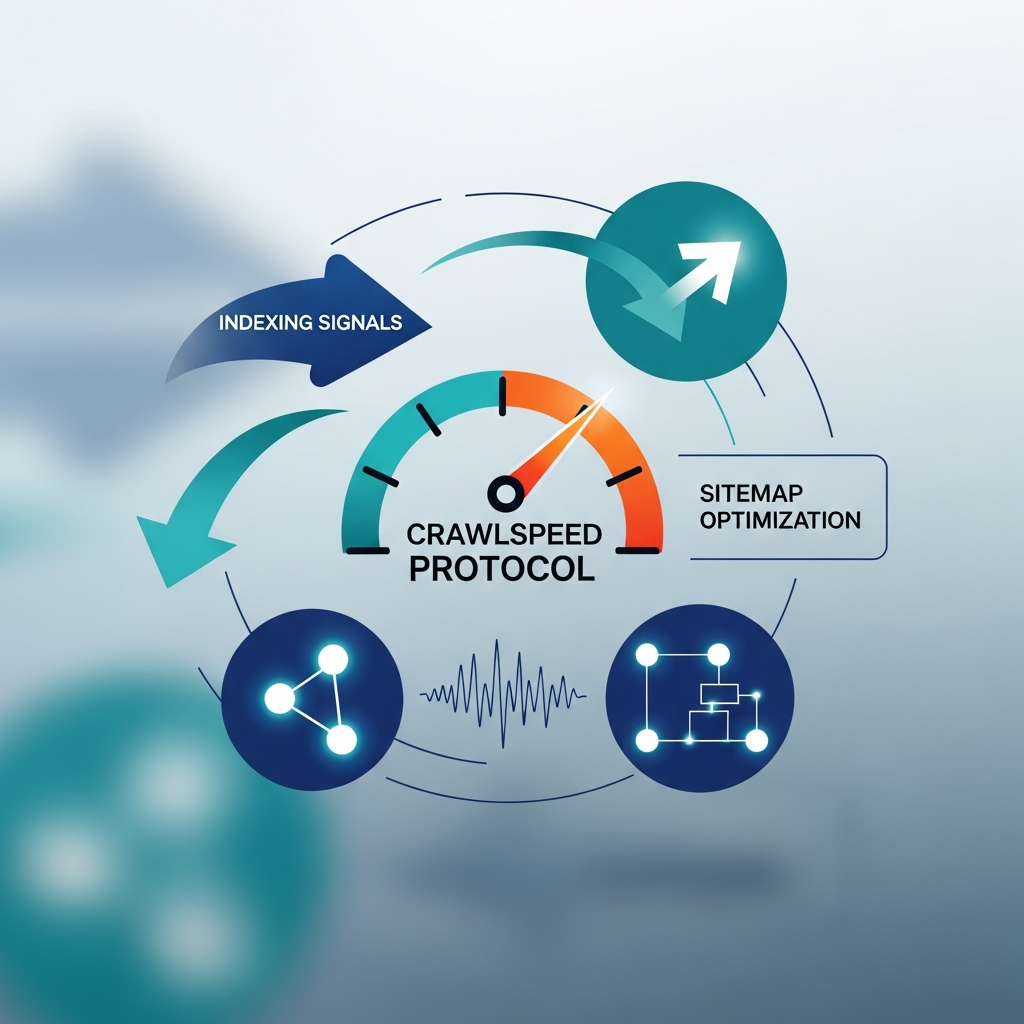
CrawlSpeed Protocol: Speed Up Indexing Signals
Why speed up indexing matters
When you publish new content, the clock starts ticking for crawling and indexing. The faster search engines discover and index fresh pages, the sooner you can appear in search results, gain visibility, and start driving qualified traffic. A slow indexation cycle can dull even the best content strategy, while rapid indexing enhances the early signals that influence rankings. The goal of speed up indexing is not to rush low-quality pages but to accelerate the legitimate discovery of high-value content.
Think of crawl speed like a factory line: if new pages aren’t fed into the crawl queue efficiently, they sit idle while older pages consume the limited crawl budget. By optimizing discovery signals, you help search engines allocate their resources toward your newest, most relevant content. This is especially important for time-sensitive topics, product pages, and evergreen posts that deserve timely indexing to capture seasonal traffic and long-tail queries.
There are no silver bullets. Speeding up indexing requires a structured approach across discovery, validation, and governance. In practice, it means improving how pages are found (internal and external signals), ensuring pages are crawlable and valid, and guiding search engines to prioritize your content without triggering spammy shortcuts. The CrawlSpeed protocol outlined here focuses on sustainable, compliant methods that work with major search engines and CMS ecosystems.
To deepen your understanding of editorial workflows and scalable publishing, you can explore our Editorial workflow guide for agencies. It provides a framework for planning, writing, and publishing at scale that complements speed up indexing efforts. Editorial workflow guide for agencies is a practical companion. Also, our blog hub offers a broad reservoir of optimization strategies you can explore: our blog hub.
Understanding indexing signals
Indexing signals are the cues search engines use to decide which pages to crawl and index first. These signals include how quickly a page is discovered, whether it’s linked from other pages, the freshness of the content, and the overall health of the site. Strong indexing signals can shorten the time between publication and appearance in search results.
Key indexing signals you should actively manage include internal link depth, crawl accessibility, sitemap accuracy, page-level signals (title, meta, headers), and schema markup that clarifies content intent. By strengthening these signals, you guide search engines to prioritize your new content and to understand its relevance within your site architecture.
In practice, you’ll want to combine well-structured internal linking with clean technical foundations. This involves using topic clusters, ensuring canonical URLs don’t conflict with indexation, and avoiding pages that waste crawl budget (thin or duplicate content, low-value categoricals, or blocked resources). For a broader perspective on process optimization, see our Editorial workflow guide for agencies. Editorial workflow guide for agencies and our blog hub for ongoing ideas: our blog hub.
Sitemap optimization for faster discovery
Your sitemap is a map that tells search engines what to crawl and in what order. A well-tuned sitemap can dramatically speed up indexing for new content, especially when your site uses dynamic pages or a heavy taxonomy. Start with a clean sitemap.xml that lists only the canonical, indexable URLs and excludes pages that shouldn’t be indexed (like duplicate filtered views or admin areas).
Best practices include keeping the sitemap up to date with fresh content, including a prioritized mix of new pages and evergreen assets, and ensuring all URLs are accessible (no blocks in robots.txt or server errors). If you manage multiple sites or media types, consider a sitemap index that aggregates individual sitemaps so search engines can crawl efficiently across your portfolio.
Size matters. Large sitemaps can slow processing, so segment by content type and Geo/locale when appropriate. Regularly audit sitemap entries for 404s, redirects, and non-canonical pages. A practical step is to ping Google after updates to the sitemap to accelerate re-crawling: ping Google with your sitemap.
For a broader process overview and practical validation, check out our schema validator tool: free schema validator.
Submitting pages to Google: best practices
Submitting new or updated pages to Google using official channels is a reliable way to expedite indexing. Start with Google Search Console (GSC) and use the URL Inspection tool to request indexing for each important page after you publish or update. This is especially effective for time-critical pages such as product launches or editorial posts tied to promotions.
Beyond individual submissions, ensure your sitemaps are current and submitted in GSC. If you publish a batch of new pages, consider updating the sitemap and resubmitting it through the Console. Link-building and internal linking also play a role: when a high-visibility page links to a new post, it improves discoverability and crawlability for the linked content.
Be mindful of content quality and canonical signals. If you publish multiple similar pages, consolidate them with canonical URLs to avoid ranking conflicts and indexing confusion. For deeper context on content workflows and scaling, refer to our Editorial workflow guide for agencies and the broader blog hub we maintain. Editorial workflow guide for agencies • our blog hub.
Crawl priority tactics
Crawl priority is about teaching search engines where to spend their limited resources. Prioritize pages that are most critical to your business goals: new product pages, category hubs, high-traffic landing pages, and content with time-sensitive relevance. Use internal linking to surface these pages to search engines quickly, and consider robots.txt signals to prevent less important pages from draining crawl budget.
Practical tactics include creating topic-linked clusters so new content is reachable within two or three clicks from pillar pages, ensuring fast-path crawl routes, and avoiding orphaned pages that aren’t linked from anywhere on the site. You can also implement lightweight, server-side health checks that confirm pages render correctly for crawlers (no blocked resources, clean canonicalization, and proper status codes).
Operationally, set up a cadence for reviewing crawl stats and index coverage in Google Search Console. If you’re managing multiple brands or locales, a centralized dashboard helps you spot under-indexed properties and re-prioritize work quickly. For broader practitioner guidance, see our Editorial workflow guide for agencies and the blog hub for additional optimization ideas: Editorial workflow guide for agencies • our blog hub.
Technical gotchas and common mistakes
Even well-intentioned speed up indexing efforts can fail if technical basics are overlooked. Common mistakes include returning 404s for new pages, broken redirects that create chains, and inconsistent canonical tags that confuse crawlers. Another pitfall is overusing noindex or blocking important pages via robots.txt, which can inadvertently hide valuable content from indexing.
Large sites with dynamic content often suffer from slow discovery due to crawl throttling or insufficient internal linking. If you frequently update product catalogs or publish time-sensitive posts, keep a tight cadence between publication, sitemap updates, and index requests. Finally, ensure your CDN and server configurations don’t introduce latency or blocking rules that impede crawlers.
To deepen your understanding of scalable content workflows and to avoid missteps, explore our Editorial workflow guide for agencies. Editorial workflow guide for agencies and remember to consult our blog hub for ongoing best practices. our blog hub.
Step-by-step speed-up checklist
- Audit your sitemap: ensure only indexable, canonical URLs are listed.
- Validate internal linking: make sure fresh pages are reachable within 3 clicks from a top-level hub.
- Submit updated sitemaps to Google Search Console and ping the sitemap when you publish.
- Publish with clean meta data and structured data to clarify page purpose.
- Inspect robots.txt and avoid blocking essential pages or resources.
- Request indexing for high-priority pages after publication or major updates.
- Monitor crawl stats and index coverage weekly in GSC.
- Avoid duplicate content and improper rel canonical signals that dilute indexing signals.
- Use data-driven localization and ensure geo-targeted pages are properly configured.
- Regularly audit for 404s, redirects, and server errors that disrupt crawling.
For a deeper dive into scalable editorial processes, check out our Editorial workflow guide for agencies and browse our blog hub for related topics: Editorial workflow guide for agencies • our blog hub.
Measuring impact and ongoing improvements
Success is not a single metric; it’s a combination of crawl rate, index coverage, and ranking momentum. Track time-to-index for new content, changes in indexation status, and the speed at which pages begin ranking for target queries. Use Google Search Console to monitor impressions, clicks, and average position, and pair those signals with crawl stats (pages crawled per day, crawl errors, and crawl demand) from the same toolset.
Establish a quarterly review cycle to assess which tactics moved the needle and which require adjustment. Maintain a living playbook that documents changes to sitemaps, crawl priorities, and indexing requests. If you manage multiple sites or locales, implement a governance model so teams share lessons learned and reuse proven patterns across properties.
Beyond internal metrics, consider qualitative signals like content freshness relevance and user engagement. High-quality pages that answer user intent and stay up to date are naturally favored by indexing signals over time. For a practical reference to scalable content workflows and ongoing optimization, see our Editorial workflow guide for agencies and the blog hub: Editorial workflow guide for agencies • our blog hub.
As you implement these steps, you can validate your progress with tools your team already uses. If you’re curious about how automation and structured publishing can fit into this plan, consider exploring our blog hub and free schema validator to ensure your pages are primed for indexing. our blog hub • free schema validator.