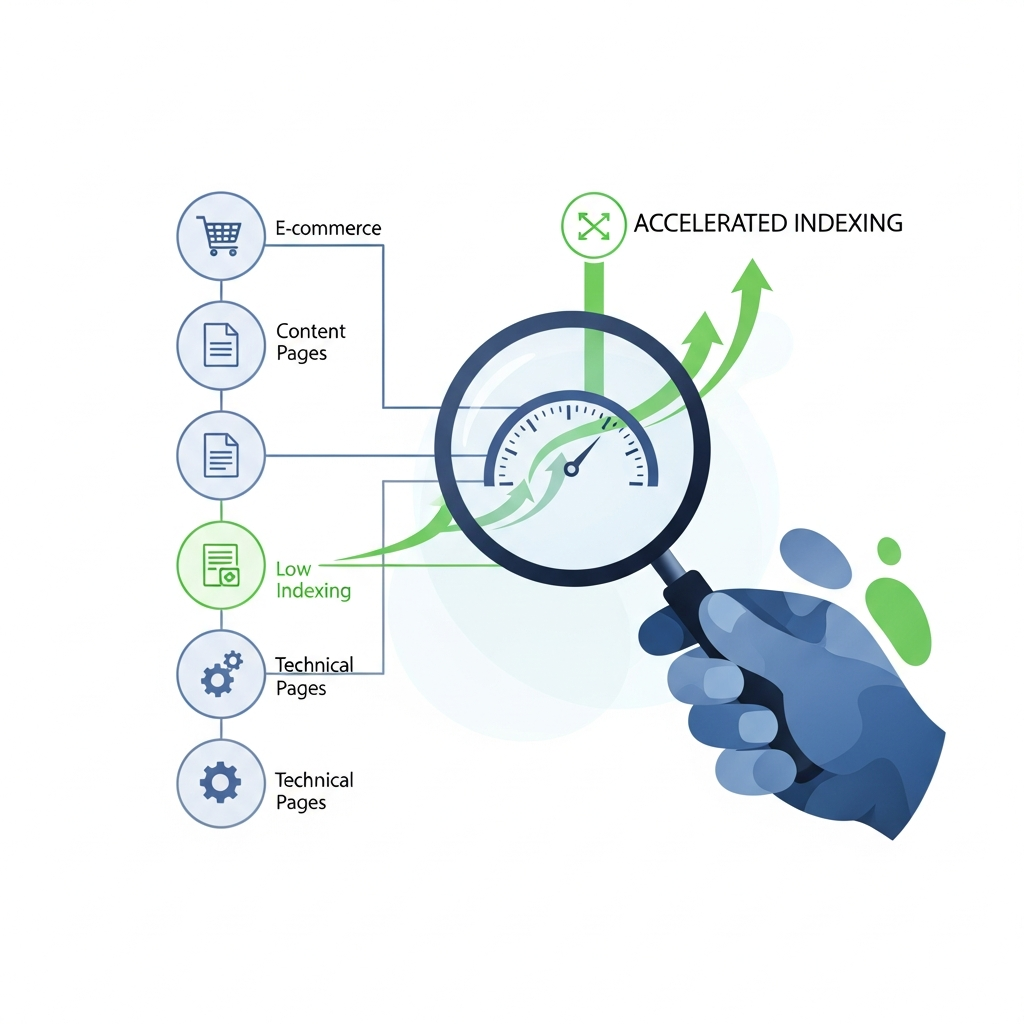
Crawl Budget Triage: Prioritize Pages to Accelerate Indexing
Understanding crawl budget and indexing velocity
For large sites, search engines allocate a finite amount of resources to crawl, index, and evaluate pages each day. This allocation is commonly referred to as crawl budget. Two intertwined concepts matter most: how often a page is crawled (crawl frequency) and how many pages can be crawled per day (crawl depth). When crawl budget is well managed, the pages that matter most—your high-value content and pages that frequently change—are discovered and indexed faster.
Indexing velocity, the speed at which new or updated content becomes visible in search results, relies on both crawl efficiency and how quickly engines can process updates. If search engines encounter low-value or duplicate URLs during the crawl, they waste budget that could otherwise be spent on important pages. The result is slower discovery of your newest posts, product pages, or critical category updates. A deliberate crawl budget triage approach helps reverse that dynamic by casting a focused net where it yields the most business value.
In practice, triaging crawl budget begins with a map of your site’s value hierarchy and a plan to adjust crawlability signals accordingly. The goal is to shorten the time from publish to indexing for top-priority assets, while keeping feedstock of less important content from consuming precious crawl resources.
A practical triage framework you can apply today
Think of crawl budget triage as a two-axis framework: business value and update velocity. High-value pages that change often and drive conversions should get top crawl precedence. Low-value pages—the ones that rarely change or contribute little to outcomes—should be deprioritized or deindexed when appropriate. The framework below provides a repeatable process you can implement in a single sprint or across a quarterly cycle.
- Step 1: Inventory pages by business value. Classify pages as high, medium, or low value based on signals like traffic, conversions, revenue impact, and engagement.
- Step 2: Assess update frequency. Identify pages that update weekly or monthly versus those that rarely change.
- Step 3: Align with crawl signals. Map crawl priority to each page using a simple matrix: high-value & high-change pages receive the most frequent crawl; low-value & static pages receive minimal crawl.
Operationalizing this framework means applying concrete actions (noindex, canonicalization, or disallow rules) where it makes sense, and communicating changes to content teams to avoid conflicting updates. The aim is to release crawl budget where it matters most and free up capacity for discovery of new or updated assets.
For a practical, repeatable approach, adopt a monthly triage cadence: review changes in top landing pages, reassess priorities after major site updates, and refresh your deindexing rules as your catalog evolves. This engine keeps your indexing velocity aligned with your growth goals.
What high-priority pages look like on large sites
High-priority pages typically fall into several categories: product pages with high purchase intent, cornerstone blog posts driving top-of-funnel traffic, category pages that aggregate large swaths of products or content, and landing pages associated with featured campaigns. These pages benefit most from faster indexing because their visibility directly affects acquisition and revenue.
To identify them, start with a simple scoring rubric. Consider traffic volume, revenue contribution, conversion rate, and the frequency of updates. In addition, assess pages that serve as gateways to multiple other pages—these often act as critical hubs in your site’s structure and deserve prioritized crawling to maintain internal linking health.
Two concrete playbooks help you operationalize high-priority indexing:
- Playbook A: Prioritize new pages from product launches or major content updates—treat these as urgent crawl targets for the first 24–72 hours after publication.
- Playbook B: Maintain indexability of evergreen pages (guides, tutorials) with periodic updates so engines see them as fresh without overloading the crawl.
When you tie these targets to your internal linking strategy, you improve discovery paths and reduce the likelihood that high-value pages are discovered late or not at all. See how internal linking optimization can influence crawl efficiency in our deeper sections.
Related reading: Editorial workflow for agencies planning, writing, and publishing at scale • Sao Paulo automated publishing for Brazilian ecommerce • Schema validation tools.
Technical signals that influence crawl efficiency
Crawl efficiency hinges on how search engines interpret and access your pages. Several signals can slow down or accelerate indexing if managed thoughtfully. Start with a quick audit of robots.txt, sitemaps, canonical URLs, and URL parameter handling, then layer on internal linking and canonical discipline to support crawl decisions.
Robots.txt and canonical signals
Robots.txt should disallow only content that has no business being crawled, such as admin interfaces or duplicate feeds. Avoid blanket disallows that might block your high-value assets by mistake. Canonical tags should reflect your preferred page versions, especially when facing near-duplicate content, to prevent crawlers from wasting time on redundant URLs.
Sitemaps and crawl directives
Your sitemap is a map for crawlers. Keep it lean and up to date, prioritizing URL entries that are essential for indexing. For large catalogs, sub-sitemaps or dynamic updates can help engines discover changes faster without crawling everything at once.
URL depth, parameters, and duplicates
Shallow URL depth and clean URL structures reduce crawl depth and improve crawl efficiency. If your site uses parameters for facets or filters, consider canonicalization and parameter handling rules to prevent crawl paralysis from infinite URL variants. Regularly audit for duplicate or low-value parameter-driven pages that siphon crawl budget away from value-bearing content.
Internal linking health
Internal links act as signals that guide crawlers through your site. A well-mapped internal linking strategy helps crawlers prioritize newer or updated content and understand page relationships. This is especially important for category hubs and product catalogs where navigation patterns can drive indexing paths.
Actionable steps to optimize crawl budget for high-value pages
Implementation begins with a deliberate plan to adjust crawl signals without compromising user experience. Below is a practical, action-oriented checklist you can apply in a sprint or as part of a quarterly optimization cycle.
1) Map high-value assets and update frequency
Create an asset inventory focused on business value. For each page, record its traffic, conversions, revenue impact, and update cadence. This map becomes the backbone of your triage decisions and helps you decide where to tighten crawl control or expand crawl access.
2) Control low-value content with noindex or disallow
Pages that rarely change or do not contribute to conversions can be candidates for noindex or disallow rules. Apply noindex only to truly non-essential assets and be careful not to deindex pages that might later gain value from updates or campaigns. When in doubt, start with a staged approach on low-traffic sections before widening the scope.
3) Strengthen internal linking to signal value
Direct crawlers to high-value pages by creating deliberate top-down linking from hub pages and category pages. Ensure that updates to high-priority assets receive fresh links from authoritative pages so crawlers quickly discover changes.
4) Refresh sitemaps with selective inclusion
Keep main and sectional sitemaps focused on assets that should be crawled today. Use live feeds or automatic generation for pages that change often, while excluding stale assets that rarely update.
5) Implement structured data and schema thoughtfully
Structured data helps engines understand page purpose, which can reduce re-crawling needs and improve indexing signals for important content. Validate schema usage with a schema validator and align markup with the most critical pages.
6) Schedule reviews around campaigns and launches
Coordinate with product and marketing calendars. When new products go live or major updates are published, ensure crawl budgets are allocated to crawl and index those assets promptly.
Internal reference: Editorial workflow for agencies • Sao Paulo publishing automation • Schema validator.
Handling low-value URLs and legacy content
Legacy content, faceted filters, and archive pages can become crawl sinks if not managed. The goal is to minimize these pages’ crawl footprint while preserving user experience and potential discoverability for future campaigns.
Noindex and canonicalization tactics
Use noindex meta tags on pages that are no longer central to your SEO strategy but may still offer value through social shares or niche traffic. For similar content variants, apply canonical URLs to point to the primary version to avoid duplication and wasted crawl cycles.
Redirects and archival strategies
When content becomes obsolete, consider 301 redirects to relevant, updated assets or an organized archive that keeps pages accessible without triggering redundant crawl events. Archiving can be preferable to noindex in some scenarios where long-tail traffic might accumulate over time.
Audit rhythm
Schedule periodic audits to identify pages that quietly drift into low-value territory. Use a combination of analytics and server logs to verify whether pages still contribute value and adjust crawl rules accordingly.
Operational playbook: implementing triage in your team
Turn the framework into a practical operating model. The following blueprint helps marketing, SEO, and development teams collaborate effectively to maintain a healthy crawl budget.
Phase 1: Discovery (Week 1)
- Inventory all pages and categorize value signals.
- Audit robots.txt, canonical tags, and sitemap coverage.
- Identify low-value clusters such as outdated archives and redundant parameter pages.
Phase 2: Implementation (Weeks 2–3)
- Apply noindex or disallow on low-value assets where appropriate.
- Strengthen internal links to high-priority pages.
- Update sitemaps to reflect prioritization changes.
Phase 3: Validation (Week 4)
- Monitor crawl stats and indexing velocity in Search Console or your preferred analytics tool.
- Review key pages for indexing status and user impact.
- Document lessons learned and adjust the triage matrix for the next cycle.
To keep momentum, sync triage decisions with content editors and developers through a lightweight change log and weekly standups. This ensures everyone understands what to publish, what to deindex, and why.
Measuring success: indexing velocity and beyond
Quantifying the impact of crawl budget triage is essential to demonstrate ROI and guide future improvements. Consider a mix of leading indicators (immediate signals) and lagging indicators (longer-term results) to get a complete picture.
Leading indicators
- Change in crawl rate and crawl budget usage for high-value pages
- Frequency of re-indexing for updated assets
- Internal linking changes and signal transfer speed
Lagging indicators
- Indexing velocity of new/high-priority pages
- Organic traffic growth for high-value assets
- Conversion metrics linked to newly indexed content
Tip: Track changes over a 4–12 week window to capture the full effect of triage actions. Use a dashboard that surfaces crawl stats, index status, and page-level performance in one glance.
Internal link references: Editorial workflow for agencies • Sao Paulo publishing automation • Schema validator.
Common mistakes and best practices
Even well-intentioned triage efforts can go off track. Here are common pitfalls and how to avoid them:
- Over-applying noindex: Some pages may have intermittent value; remove noindex if there are signs of growing engagement.
- Disallowing critical assets: Ensure you do not block pages that drive conversions or affect navigation depth.
- Ignoring internal linking: Poor linking patterns can stall discovery of high-value pages.
- Neglecting new content: A steady stream of new pages creates opportunities for indexing velocity gains.
Best practices include starting with a small, controlled set of changes, validating outcomes, and expanding the triage program in measured steps. Documentation and cross-team communication are essential for sustainability.
Note: This guide emphasizes actionable steps for technical SEO practitioners and growth teams managing crawl budgets on high-volume sites. It uses practical frameworks and clearly defined actions to accelerate indexing for high-priority assets while maintaining site health.