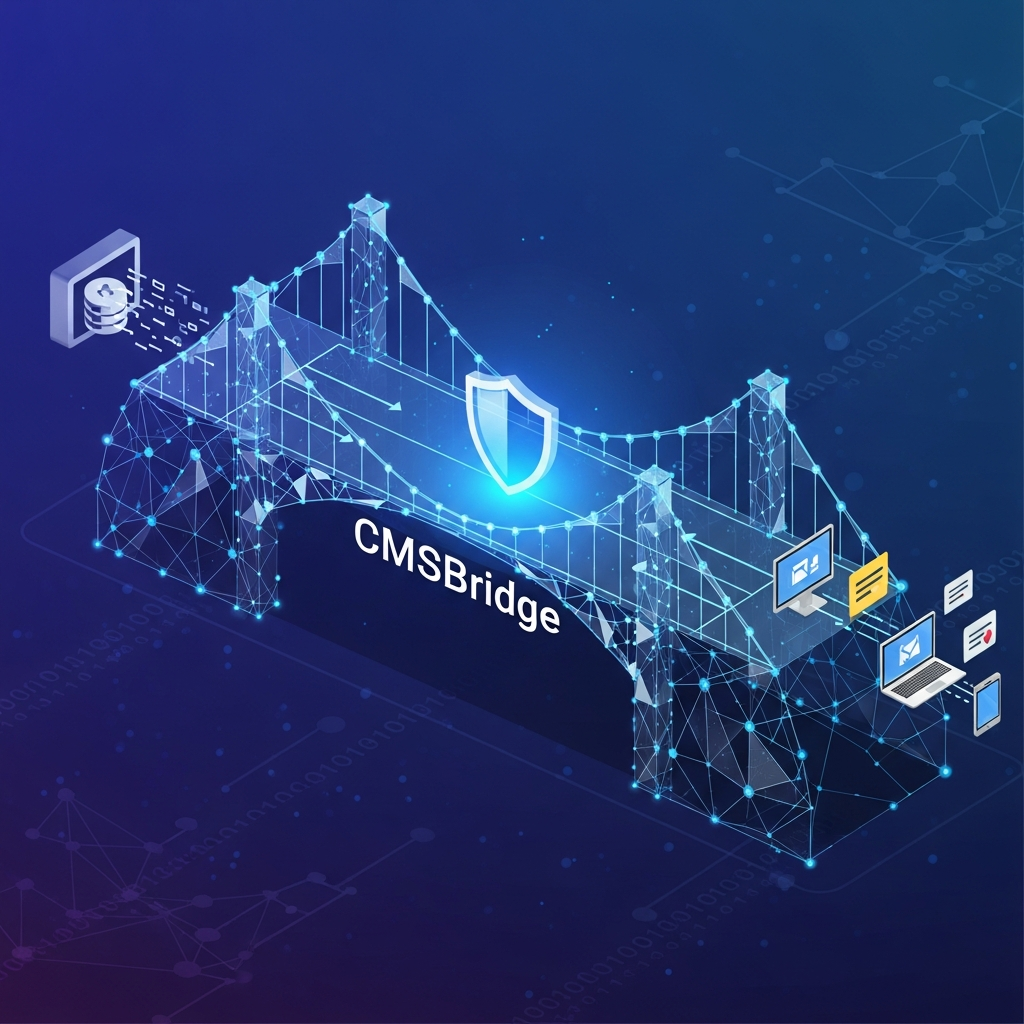
CMSBridge Guide: Secure API Content Delivery
Introduction
In today’s content ecosystems, delivering AI-generated and manually authored content through secure APIs has moved from a nice-to-have to a core capability. CMS API publishing enables pre-approved content to flow from editorials, AI studios, or content orchestration platforms directly into content management systems. This approach reduces handoffs, speeds up time-to-publish, and improves governance when combined with robust authentication, auditing, and observability.
This guide provides a practical, architecture-first view of API-driven CMS publishing. It explains how to design, implement, and operate secure content delivery pipelines that scale across multiple sites, brands, or languages. You’ll learn about push vs. pull models, idempotent payloads, and how to handle metadata so that content remains consistent across CMS backends.
For a hands-on look at concrete workflows and tooling, consider reading related resources such as our Editorial workflow for agencies planning, writing, and publishing at scale, or try our schema validator tool to validate structured data before it’s published. If you’re exploring regional publishing patterns, you can also explore local workflows such as the SAO Paulo automation article for Brazilian ecommerce.
Why API-based publishing matters
API publishing unlocks a direct, programmable channel from content studios to CMSs. It eliminates the friction of manual copy-paste, reduces the risk of human error, and enables stricter governance by centralizing authentication, rate limits, and auditing. In multi-site scenarios, API publishing provides a single source of truth for content status, localization, and SEO metadata across brands.
In practice, teams design content workflows where AI-generated drafts, editorial approvals, translation, and media processing converge into a publishable payload. The CMS API accepts the payload, validates required fields, and triggers the publishing lifecycle—draft, review, scheduled, or live—depending on policy. The result is faster publishing cycles, consistent branding, and tighter control over who can publish what, when, and where.
A well-architected API publishing layer also simplifies integration with CMS plugins, headless front-ends, and analytics pipelines. This is particularly valuable for organizations running multiple CMSs or multilingual sites, where centralized publishing policies and consistent metadata matter.
Security principles for CMS API publishing
Security is not an afterthought in API publishing. It should be built into the design from the start. Core principles include strong authentication, least privilege access, secret lifecycle management, and comprehensive observability. Below are practical practices to apply from day one.
Authentication and authorization
Use OAuth 2.0 or short-lived tokens for CMS API access. Enforce per-site or per-brand scopes so that a token issued for one site cannot publish to another. Rotate credentials regularly and implement automatic revocation if a credential is compromised. Consider token binding and audience restrictions to prevent token reuse.
Secrets management
Do not store API keys in code repositories or in client-side code. Use a secure vault or secrets manager and inject credentials at runtime through runtime configuration, CI/CD pipelines, or server-side functions. Limit the visibility of keys to the smallest set of services that require them.
Auditability and monitoring
Maintain detailed logs for publish attempts, payload versions, and content status transitions. Use tamper-evident logging and preserve logs for an appropriate retention period. Integrate with SIEM or security dashboards to detect anomalous publishing activity and to demonstrate compliance during audits.
Data privacy and localization
Ensure that content payloads containing personal data comply with applicable privacy laws. If your workflows involve localization, ensure that translation stages do not leak content to unauthorized services. Maintain data segregation by brand or region when required by policy.
Architecture patterns
There are multiple architectures you can adopt for API-driven CMS publishing. The choice depends on your scale, CMS landscape, and governance requirements. Here are three common patterns, each with trade-offs.
Push vs. pull publishing
In a push model, content is sent from the origin (AI studio or CMS orchestration layer) to the CMS via API. In a pull model, the CMS fetches content from a repository or content service on a schedule. Push models offer lower latency and tighter control, while pull models can simplify caching and offline workflows. Hybrid patterns can combine both approaches for resilience.
Event-driven and webhooks
Event-driven architectures, using webhooks, trigger publishing only when content changes. This improves efficiency and reduces unnecessary publish attempts. Events should be idempotent, so repeating the same event does not create duplicate content.
Idempotency, retries, and backoff
Implement idempotent publish endpoints and payload hashes to prevent duplicate posts. Build robust retry logic with exponential backoff to handle transient CMS outages. Logging retries helps you diagnose systemic issues without masking failures.
Integrations: WordPress and headless CMS
WordPress remains a dominant publishing platform, but API publishing shines when used with headless CMSs like Contentful, Strapi, or Sanity. For WordPress, leveraging the REST API or the newer Block Editor endpoints allows content to be created, updated, and published remotely. When working with headless CMSs, ensure that the publishing pipeline returns a canonical content model that all front-ends can consume consistently.
Important considerations include content modeling, media handling, and SEO metadata propagation. For teams with regional content, localization hooks must propagate language variants to each CMS faithfully. The ideal setup supports seamless content translation status updates and centralized governance across CMS backends.
Workflow design
A practical workflow links AI content generation, editorial approval, localization, and publishing. Start with a content contract that defines which fields are required, what constitutes a publishable state, and who can approve. Your workflow should include validation steps for schema conformity, asset readiness, and metadata completeness.
Localization is a critical piece. Separate language variants should be managed through locale-aware payloads, not through post-publication translations. Review cycles should retain author attribution, publish dates, and SEO metadata across locales.
Media and assets often require processing (image resizing, alt text, captioning). Automate media checks, ensure assets are cached or stored in a CDN, and attach accessibility metadata as part of the publish payload.
Implementation checklist
Implementing CMS API publishing is a cross-team effort. Use this step-by-step checklist to stay aligned:
- Define the publish model: endpoints, payload schema, and versioning strategy.
- Choose authentication and authorization patterns with scope controls.
- Model content with a consistent JSON schema that covers title, body, metadata, and localization fields.
- Build a staging environment for validation before live publish.
- Implement idempotent publish calls and robust retry policies.
- Add observability: metrics, traces, and logs for publish flows.
- Set up accessibility and SEO metadata propagation rules.
- Test end-to-end with a representative content sample and multiple locales.
Common pitfalls and how to avoid them
Rushed integrations can lead to brittle payloads and broken workflows. Always version payload schemas and keep backward compatibility during migrations. Avoid hard-coding site-specific IDs in code; prefer environment-driven configurations. Regularly rotate credentials and review access policies to prevent privilege creep.
Another frequent issue is insufficient validation. Validate every required field, content type, and locale before publishing. Finally, establish a clear incident response plan for API outages, including a pause mechanism to prevent cascading publish failures.
Practical patterns and case studies
Across industries, teams leverage CMS API publishing to harmonize multi-brand content calendars and regional campaigns. A common pattern is to publish a controlled draft to a staging CMS, route it through a review layer, run localization, then push to production CMSs with a single publish event. This approach yields consistent brand voice and efficient multi-site governance.
For inspiration and reference implementations, see the editorial workflow resources linked earlier and explore regional adoption patterns described in our Brazil-focused publishing post. Implementations frequently evolve into centralized dashboards that show publish status across all brands in real time.
Getting started with a starter workflow
A practical starter workflow starts with a single CMS and a single locale. Create a minimal payload with essential fields: title, slug, body, author, publish_status, and locale. Implement a test endpoint that validates the payload and returns a deterministic success or failure.
As you scale, gradually introduce additional locales, media handling, and SEO metadata fields. Add a translation workflow and localization checks. When you’re ready for multi-site rollouts, standardize the payload and extend the API client to support batch publishing with proper rate limiting.
For a practical blueprint, review additional workflows in the resources above and consider integrating with a schema validator to catch structural issues before publish attempts. The schema validator tool can help catch mismatches early in the process, reducing rework.
FAQs
Q: What CMSs support API publishing well? A: Most modern CMSs expose REST or GraphQL APIs. Some offer richer content modeling for localization and metadata propagation. Q: How do I ensure content integrity across locales? A: Use per-locale payloads with locale-aware slugs and metadata and validate translations through a dedicated workflow stage. Q: How do I monitor API publishing health? A: Instrument publish endpoints with metrics like success rate, latency, and retry counts, and surface them in a central dashboard that stakeholders can view.
By embracing a well-architected CMS API publishing strategy, organizations gain speed, consistency, and governance at scale. The combination of secure authentication, robust payload design, and a clear editorial workflow creates a reliable path from content creation to live publication across multiple CMS backends and locales.
To explore more about scalable content workflows, visit our editorial workflow overview and the Brazilian ecommerce automation article linked earlier. These resources illustrate how teams architect end-to-end content pipelines that align with governance, security, and speed goals.