Ciudad de México: Programa Diario para Pymes Turísticas
Why a daily content program works for CDMX tourism
For businesses in Mexico City that rely on local and tourist demand, a disciplined daily content routine can become a strategic differentiator. A predictable cadence not only feeds search engines with fresh signals but also shapes how potential visitors think about your hotel, restaurant, or activity. A well-executed daily program aligns with the search intent of travelers exploring CDMX: curiosity about neighborhoods, experiences, practical travel tips, and localized promotions.
Rather than sporadic bursts of posts, a daily program creates a consistent brand voice, improves internal linking, and accelerates indexing for new services and seasonal campaigns. The outcome is a compound effect: higher visibility for local queries, better engagement with thoughtful content, and a smoother path from discovery to booking. When designed with local relevance in mind, daily content can outperform sporadic big campaigns by maintaining a stable, rankable presence in a crowded market.
To get started, you don’t need a large content team. A lightweight, automated workflow can produce dimensions of content—from short neighborhood spotlights to longer guides about museums, markets, and day trips—while maintaining quality through templated formats and a clear brand voice. See how our approach mirrors real-world tactics described in other editorial automation resources, such as editorial workflows for agencies (editorial workflow for agencies) and scalable publishing patterns from international examples (São Paulo automation case study).
Designing a daily content framework
The framework acts as a blueprint for your entire calendar. Start with four pillars that matter to CDMX travelers: neighborhoods and routes, culture and events, practical travel tips, and hospitality promotions. Each pillar can be broken into subtopics that cover different audiences: tourists, local residents planning stays, and business partners looking for collaboration opportunities.
Key elements to include in every daily piece are: a clear intent, a local angle, optimized headings, a human-friendly tone, and a CTA that nudges readers toward booking, subscribing, or sharing. A practical template might look like this: a 600–800 word article, two supporting micro-posts (150–250 words), and an internal link set that ties to services, guides, and location pages. The goal is to enable a small team to publish consistently without sacrificing quality.
To maintain quality at scale, adopt a simple editorial checklist at the start of every week. This helps ensure that even with automation, every post adheres to brand standards and SEO basics: meta titles, meta descriptions, alt text for images, canonical URLs, and structured data readiness. If you’re exploring automation strategies, you can reference practical frameworks such as internal linking automation and structured content planning from AI-powered tools.
A practical consideration for CDMX is language and localization. Content should be in Spanish, with options to translate or adapt for international visitors. This is where a robust CMS integration and a multilingual strategy pay off by reducing manual translation effort and ensuring consistent tone across languages.
Building a 30-day calendar for hotels and tourism businesses
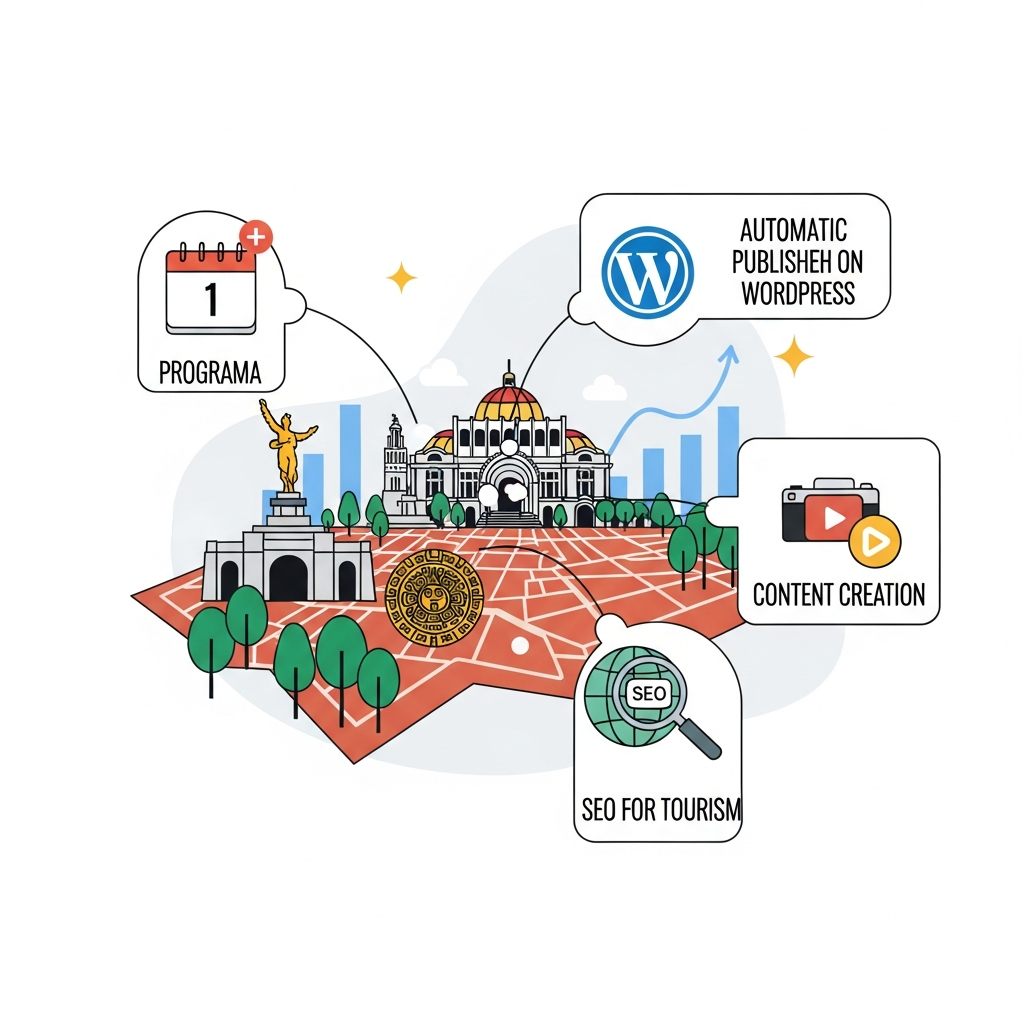
The 30-day calendar is a core component of the Programa diario. It provides a repeatable rhythm for content topics while allowing room for timely events like festivals, food markets, and seasonal weather. A typical 30-day plan can be segmented into weekly themes: Week 1 (neighborhood highlights), Week 2 (experiential itineraries), Week 3 (local dining and nightlife), Week 4 (guest experiences and promotions).
When constructing topics, start with keyword clusters tied to the core keywords: turismo CDMX, hoteles en CDMX, barrios de CDMX, restaurantes cercanos, transporte y movilidad, y eventos locales. Combine these with time-bound elements such as weekend getaways, seasonal exhibitions, or citywide concerts. For hotels in particular, ensure that the calendar includes: nearby attractions, parking tips, seasonal packages, and guest education pieces (check-in tips, safety, best times to visit popular spots).
Example topics might include: "A Local’s Guide to Condesa at Sunset" or "Family Weekend in Polanco: What to Do and Where to Eat". Each topic should include a primary keyword, a secondary angle, internal links to relevant pages (e.g., neighborhood guides or room packages), and a clear call to action to book or learn more.
Automating publishing to WordPress in Mexico
Automation is not merely posting content; it is synchronizing content creation with CMS publishing, SEO tagging, and analytics. For CDMX businesses, a typical automated workflow might involve: topic research, draft generation, on-page SEO tweaks, image optimization, and one-click CMS publishing. The goal is to minimize manual touchpoints while ensuring accuracy and brand alignment.
Best practices include: using templates for post structure, maintaining a consistent slug strategy, auto-generating meta tags aligned with the content, and coordinating publishing across channels. This approach helps you respond rapidly to seasonal trends and local events. For those exploring related strategies, see how automation is deployed in editorial workflows for agencies (editorial workflows).
In practice, you should partner with a CMS-friendly automation stack that supports one-click publishing, multilingual content, and integrated analytics. If you operate multiple properties or local branches in CDMX, whitenabled dashboards and white-label reporting can keep stakeholders aligned while preserving a single brand voice. A practical tip: start with a pilot of 2–3 automated posts per day and measure time-to-publish, CTR, and average time on page before expanding.
Local SEO considerations for CDMX
Local optimization is essential when serving a city as dynamic as CDMX. Focus on location-based keywords, neighborhood pages, and event-driven content. Structure data with local schema markup and ensure NAP consistency across pages and social profiles. Local search rankings improve when content demonstrates expertise about the city and relevance to nearby attractions.
Practical steps include: creating neighborhood-focused landing pages, publishing local guides tied to nearby hotels, and incorporating user-generated content such as reviews and questions. Regularly audit local pages for accuracy, update hours and promotions, and maintain fresh content to signal ongoing activity to search engines.
To accelerate learning, you can compare approaches from broader automation discussions and adapt them to the local context. For example, you might review how automation platforms address multilingual local content and internal linking (see multilingual SEO automation discussions in broader tool analyses).
Topic ideas for local audiences in CDMX
Generating topic ideas that resonate with both locals and visitors is key. Use a mix of evergreen content and time-bound posts tied to events like Art Week, Día de los Muertos celebrations, or weekend markets. Here are starter prompts you can adapt for daily publishing:
- Neighborhood spotlight: features on Roma, Condesa, Polanco, Coyoacán, and more.
- Seasonal itineraries: day trips from CDMX core areas and transit tips.
- Food and drink guides: markets, taquerías, and evolving culinary scenes.
- Local experiences: cultural workshops, tours, and family-friendly activities.
- Promotions: packages tied to holidays, events, or festivals.
As a source of inspiration, consider how content themes from other markets translate to CDMX. For instance, you can explore editorial workflows or automation patterns used by international teams and adapt them to your locale. See how editorial workflows are implemented in agency contexts (editorial workflows), and explore cross-market ideas for content publishing (São Paulo automation).
Internal linking and site architecture
Internal linking is a powerful but often overlooked lever for SEO and user experience. A robust internal link graph helps crawlers discover content, distribute authority, and guide readers through topics relevant to their interests. For a CDMX-focused site, think in terms of hub pages (neighborhood guides, experiences, and events) that connect to deeper assets (detailed itineraries, hotel pages, and booking offers).
Practical guidelines include: create a consistent anchor text taxonomy, map content to intent stages (awareness, consideration, conversion), and ensure every post links to one or more evergreen hub pages. Automating internal linking at scale can save hours weekly and improve crawlability, especially for large inventories or multi-location businesses. For a broader understanding of scalable linking strategies, review AI-assisted linking discussions in related platforms (editorial workflows).
Also consider canonicalization and prevent duplicate content issues when publishing similar articles across neighborhoods. A clear canonical structure signals to search engines which version should be indexed and ranked, preserving link equity across your site.
As you scale, you may want to reference general CMS publishing patterns in case studies and guides like the Sao Paulo automation article mentioned above (Sao Paulo automation).
Measuring success and ROI
A daily content program should deliver measurable improvements in traffic, engagement, and conversions. Establish a simple KPI set at the outset: organic visits to target pages, time on page, scroll depth, bounce rate, newsletter signups, and, where applicable, booking or inquiry submissions. Pair these with operational metrics: time-to-publish, error rate in posts, and CMS publishing velocity.
Automation yields value when it reduces manual workload and preserves quality. Track how much time you save per post, how often content topics align with seasonal events, and how quickly new pages start ranking for target terms. Over a 90-day window, you should observe improved crawlability, more indexed pages, and more qualified traffic from local and tourist searches.
To communicate ROI to stakeholders, present a dashboard that combines content output (posts per week), publishing velocity (days-to-publish), SEO momentum (ranking lifts and click-through rate), and business outcomes (booking starts or inquiries). A transparent, data-driven approach helps build confidence in continued investment in daily content.
Step-by-step deployment plan
- Define five neighborhood anchors and four seasonal themes relevant to CDMX tourism.
- Build two-week content templates and a 30-day calendar with topic seeds for each day.
- Set up your WordPress automation workflow: draft, SEO tags, image optimization, and one-click publish.
- Create local landing pages and neighborhood guides to host the internal link targets.
- Implement multilingual support if you serve international visitors; prepare Spanish primary content with translations as needed.
- Deploy a lightweight analytics dashboard to monitor performance in real time.
- Run a 30-day pilot with 2–3 automated posts per day, review results, and iterate.
As you move through deployment, leverage existing resources for inspiration and best practices in editorial automation. See practical examples and guidelines from related posts like the editorial workflow article (editorial workflows). Also consider cross-market insights from other regions (São Paulo automation).
Pitfalls and best practices
Common pitfalls include over-automating without quality checks, neglecting localization nuances, and underestimating the value of human review for certain topics. To mitigate these risks, implement a lightweight review gate for sensitive topics, maintain a clear content brief, and use templates to preserve brand voice across all posts. Also avoid keyword stuffing by focusing on natural language that satisfies user intent while still signaling relevance to search engines.
Best practices include maintaining a balanced mix of evergreen and time-bound content, prioritizing user experience, and ensuring accessibility standards. Regularly audit your internal links to prevent broken paths and to keep link equity properly distributed across the site. Finally, stay attentive to local SEO signals, such as updating business hours, promotions, and neighborhood-specific details as city life evolves.
For further reading on automation patterns and content strategies, explore related resources and case studies, including the broader automation discussions mentioned earlier.
Next steps and calls to action
If you’re a local business owner in CDMX seeking practical, low-friction ways to capture tourist interest and drive bookings, a structured daily content program is a promising approach. Start with a lean calendar, automate where it makes sense, and monitor results closely to refine over time. The aim is to create a sustainable engine that grows visibility, trust, and demand for your hospitality or activity offering.
For teams evaluating tools and partners, consider platforms that support WordPress Mexico integrations, multilingual content workflows, and clear analytics dashboards. Look for providers with a track record in editorial automation, CMS publishing, and scalable content strategies. If you want a hands-on look at how such a system could work for your site, you can consult practical guides and templates in our referenced resources and start a pilot project today.
Internal references and further reading: