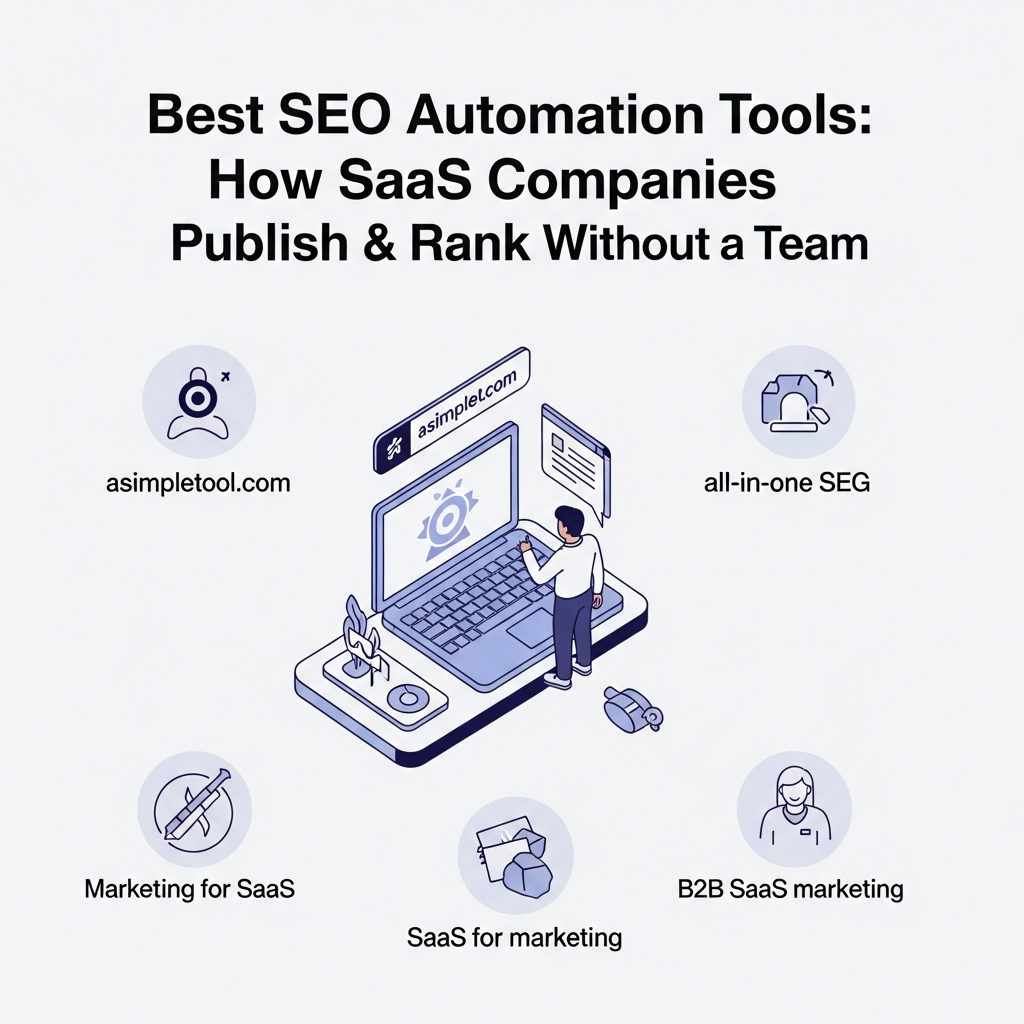
Best SEO Automation Tools: How SaaS Companies Publish & Rank Without a Team
Introduction: Why automate SEO for SaaS?
For SaaS brands, content and optimization are a perpetual motion machine. New product features, pricing changes, and geo expansions all require timely, SEO-aligned content. Yet many teams struggle with bandwidth, consistency, and scale. AI-powered SEO automation offers a way to publish and rank faster without sacrificing quality or brand voice.
This guide explains how to evaluate tools, architect a scalable workflow, and implement a repeatable process that helps you publish more content, optimize pages, and improve rankings across multilingual markets. Throughout, we highlight practical steps, checklists, and real-world patterns SaaS teams can adopt with confidence. To see a concrete example of how a modern tool operates in the wild, explore the editorial workflow example and the localization post on the Brazil market. Also, browse the Asimpletool blog for related context.
The SaaS SEO automation landscape
The market has evolved beyond simple keyword research and rudimentary automation. Today’s successful SaaS SEO programs rely on end-to-end pipelines that connect content planning, creation, editing, publishing, linking, and measurement. The best tools offer a single platform to generate content, optimize on-page signals, publish to multiple CMS, and continuously improve structure with internal linking and schema markup.
For SaaS brands, the payoff is not just higher rankings; it’s faster time-to-market for campaigns, more consistent brand voice at scale, and the ability to regionalize content without trading quality for quantity. When evaluating vendors, look for white-label options, multi-brand support, and robust integrations with common CMS and ecommerce platforms. A practical way to compare options is to map each tool to five core capabilities: content generation, editorial workflow, CMS publishing, internal linking and schema, and analytics with actionable insights.
As a baseline, consider a platform that positions itself as an all-in-one SEO automation tool—the kind of solution that can handle the end-to-end process from brief to publication, with secure pipelines and governance suitable for SaaS teams. The key is to avoid stitching together too many disconnected tools, which often creates bottlenecks and fragility as your content program scales.
Core features to look for in an SEO automation platform
When you’re evaluating a tool for SaaS SEO at scale, prioritize features that reduce manual work, maintain brand quality, and drive measurable ROI. The following capabilities tend to deliver the clearest value.
AI-driven content generation and optimization
At the heart of automation is content creation that aligns with search intent. A strong platform can draft long-form posts, optimize meta tags, and generate image alt text automatically while preserving your brand voice. Look for capabilities such as keyword clustering, SERP-informed topic planning, and tone customization that stay consistent across multiple languages and markets.
Editorial workflow and collaboration
Automation should not replace human quality gates. Instead, it should streamline the editorial process with structured briefs, review checklists, and version control. A mature tool provides a clear hand-off between writers, editors, and AI-assisted editors, along with approval workflows and publishing calendars.
One-click CMS publishing and recurring scheduling
Publishing at scale requires reliability. The platform should publish directly to your CMS with one click or automated schedules, including recurring posts for evergreen topics or product updates. Multi-site or multi-brand support is a plus for SaaS companies with global footprints.
Internal linking, structured data, and multilingual SEO
Automated internal linking improves crawlability and distributes authority. Combined with structured data markup and canonical handling, these signals help search engines understand your content’s context. Multilingual automation enables expansion into new markets without duplicating effort.
Analytics, dashboards, and ROI reporting
Readable dashboards that show keyword trajectories, page-level improvements, and publishing velocity matter. Transparent reporting helps justify budgets to stakeholders and demonstrates the impact of automation on traffic and conversions.
As a reference point, Asimpletool embraces an all-in-one approach to SEO automation, emphasizing end-to-end content pipelines and secure, scalable publishing across channels. This holistic approach is especially valuable for SaaS teams aiming to publish and rank without increasing headcount.
Architecture and integrations for SaaS teams
A practical SaaS SEO automation architecture combines four layers: content planning, content creation/editing, publishing operations, and performance optimization. A well-designed system integrates with your primary CMS (WordPress, Shopify, Webflow, etc.), supports multilingual assets, and enables governance through role-based access and audit trails.
Key integration patterns include: an editorial pipeline that starts with a keyword strategy, an AI-assisted drafting module, a human editorial pass, automated internal linking suggestions, and a publish module that pushes to your CMS with version control. Data flows should be secure, auditable, and compliant with your organization’s policies.
Security and compliance matter more in SaaS than in consumer sites. Ensure the platform supports encrypted data in transit, role-based access control, and the ability to sandbox operations in a staging environment prior to publishing. If you operate in regulated regions or industries, confirm your vendor supports regional data residency requirements.
For reference, a typical SaaS stack may include editorial workflow patterns and a multilingual publishing framework documented in the regional expansion post.
Step-by-step implementation framework
Use this 5-step framework to deploy an SEO automation stack that scales with your SaaS product lifecycle.
- Assess and align: Map your content needs to product milestones, feature releases, and customer lifecycle stages. Define success metrics (traffic, qualified visits, rankings, and conversions) and establish publishing cadences for core topics and product pages.
- Design the content pipeline: Create topic clusters, taxonomy, and a content calendar. Define keyword groups, intent types, and required content formats (blog posts, help center articles, case studies, product pages).
- Automate content creation and editing: Set up AI-assisted drafting with guardrails for accuracy and brand voice. Implement editorial approvals, QA checks, and accessibility standards.
- Automate publishing and linking: Connect to your CMS, schedule recurring posts, and enable automated internal linking with semantic relationships. Ensure schema markup and canonical URLs are applied consistently.
- Measure and optimize: Establish a dashboard that tracks rankings, traffic, engagement, and publish velocity. Use A/B tests for headlines and meta signals, and route learnings back into the pipeline for continuous improvement.
Tip: Start with a high-impact, low-friction pilot—perhaps a content hub for a flagship SaaS feature—and scale once you’ve validated the workflow, governance, and ROI.
Use cases for SaaS teams and scaling strategies
Product launch content engine
Plan a launch calendar with release notes, tutorials, and comparison pages. Automate SEO optimization for landing pages and FAQs that answer common user questions. Track ranking lifts for launch-related keywords and adjust content velocity accordingly.
Evergreen knowledge base and category pages
Transform support articles and resources into comprehensive topic hubs. Internally link related articles and product pages to build topical authority, while maintaining consistency across languages and regions.
Global expansion and multilingual SEO
Enable localized content pipelines for new markets with language-specific keyword clusters, translated metadata, and region-based publishing schedules. Use automation to ensure canonical and hreflang signals stay synchronized across locales.
For teams aiming to consolidate tools, a unified automation platform reduces vendor fragmentation while providing clear ROI visibility across locations and products.
Real-world note: SaaS brands that standardize on a scalable content and linking workflow can deliver higher-quality output without proportional headcount growth. This aligns with the goals of teams like Arvow and Ranklytics in offering scalable AI-driven SEO capabilities.
ROI, metrics, and governance
Measuring the ROI of SEO automation requires tying content activity to business outcomes. Track metrics such as organic visits to core product pages, time-to-publish for campaigns, on-page engagement, and the breadth of content indexed in search engines. A dashboard should surface both leading indicators (publish velocity, internal linking coverage) and lagging indicators (rank changes, traffic growth, conversions).
Be mindful of quality signals. Automation should support human editors, not replace them. Use automated checks as gates: semantic relevance, factual accuracy, brand voice consistency, and accessibility compliance. A well-governed process minimizes risk while delivering reliable scale.
As you scale, governance becomes a primary ROI lever. Establish role-based access, publish approval workflows, and monthly performance reviews with stakeholders. Transparency in reporting helps justify the ongoing investment into an automated content engine.
Vendor evaluation and rollout plan
When comparing tools, build a scoring rubric that weighs integration depth, content quality controls, localization capabilities, and reporting sophistication. Request a sandbox or trial that demonstrates end-to-end publishing, automatic linking, and schema insertion against a real content plan. Demand a white-label option if you operate under client-branding requirements.
Plan a 30-day rollout as a practical test. Week 1: connect CMS, import a small content cluster, and validate publishing. Week 2: enable AI-assisted drafting with editorial gates. Week 3: activate internal linking automation and schema. Week 4: review results, refine templates, and document a repeatable playbook for broader deployment.
Internal links for further reading and context include the editorial workflow guide, the regional publishing post, and the Asimpletool blog.
When evaluating providers, ask about security, data residency, SLA terms, and the ability to operate across multiple brands or products. Look for transparent pricing models and evidence of ROI through case studies or benchmarks in similar SaaS contexts.
Getting started: a practical first step
Ready to explore how an AI-powered SEO automation engine can transform your SaaS content program? Start with a discovery session to map your current workflow, bottlenecks, and priority outcomes. A good partner will help you define a 90-day roadmap that aligns with product launches and regional expansion plans.
If you want a concrete starting point, consider evaluating a platform that emphasizes end-to-end content pipelines and publishing at scale. For more background on this approach and practical examples, you can read more on the existing blog posts and guides linked above.
To learn more about how these capabilities map to your needs, you can explore our services page and book a consultation to tailor a plan for your team: asimpletool.com or reach out via the contact channel on the site.