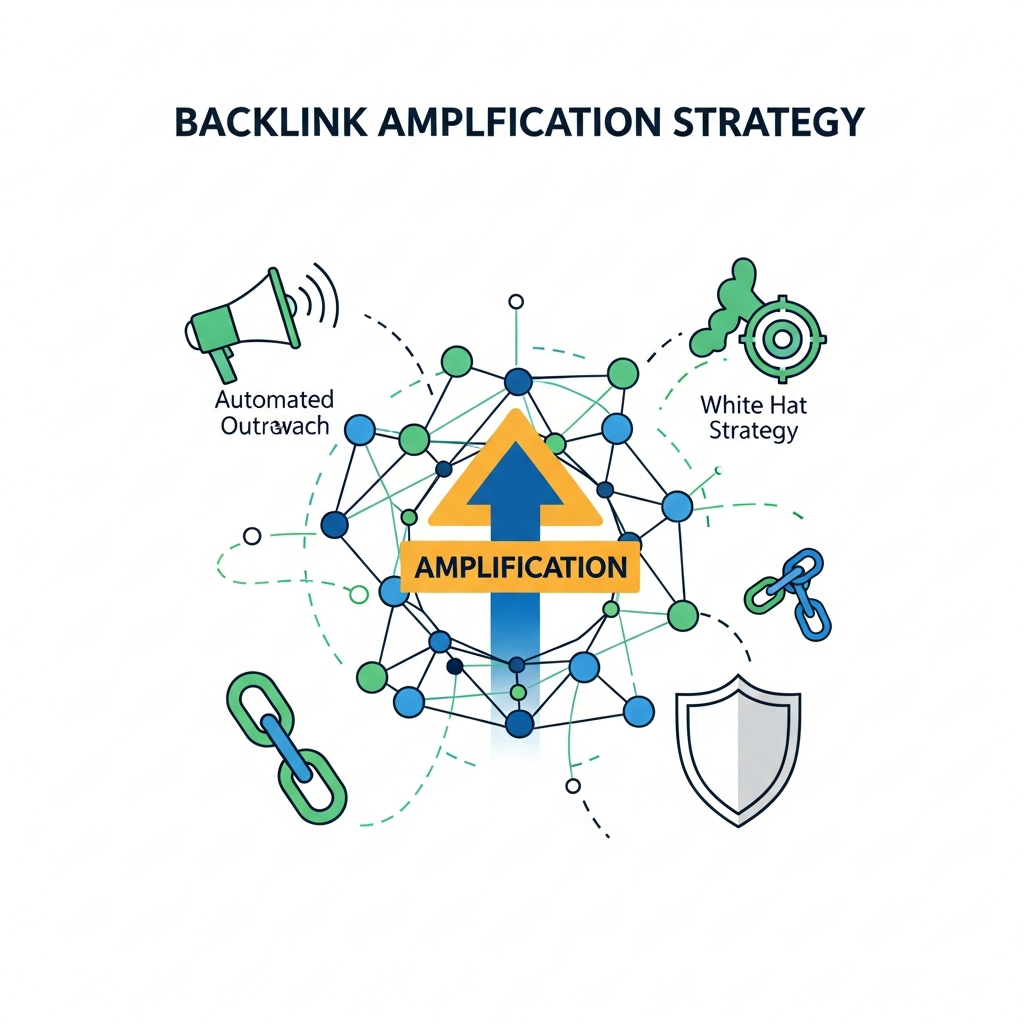
Backlink Amplification Strategy
What is backlink amplification?
Backlink amplification is the deliberate, repeatable process of earning higher-quality links that boost a site’s authority and visibility in search engines. It isn’t about a single heroic outreach blast; it’s about building a durable signal set that persists across time. The goal is to acquire links from relevant, credible sources in a way that scales without compromising quality or risk.
Think of amplification as three interlocking gears: content-led assets that attract attention, outreach mechanisms that responsibly connect with authorities, and signals that demonstrate value to crawlers and users alike. When these gears align, you don’t just gain links—you gain lasting trust with search engines and improved organic performance.
For teams evaluating tools and vendors, the question isn’t only “how many links can we acquire?” but “how will these links move the needle in measurable terms?” The answer lies in aligning content strategy with ethical outreach and rigorous measurement. To explore related concepts and practical workflows, our blogs cover editorial processes and scalable publishing at scale, including examples of how agencies plan and execute content operations.
Why backlink amplification matters
Links remain a core ranking signal because they reflect credibility and usefulness. A well-timed, high-quality link from a relevant site signals to search engines that your content deserves visibility. However, the impact of links depends on context, quality, and consistency over time. A few authoritative links earned through thoughtful content and ethical outreach can outperform a larger number of low-quality mentions.
In practice, scalable amplification helps with several business goals: increasing organic traffic, improving category and product page visibility, and accelerating the content’s reach across languages and markets. For marketers, a disciplined approach also reduces risk of penalties and preserves brand integrity.
To see practical steps in action, review our overview of editorial workflows in our editorial workflow for agencies, which demonstrates how to plan, write, and publish at scale without sacrificing quality.
Core pillars of a resilient backlink amplification strategy
Any successful program rests on three sturdy pillars: white-hat backlink building, content-led link building, and automated outreach for backlinks. Each pillar supports the others, creating a compound effect over time.
White-hat backlink building
White-hat approaches focus on relevance, value, and transparency. Methods include:
- Researching authoritative sites within your niche and crafting content that fills genuine gaps.
- Engaging with editors, researchers, and practitioners to earn mentions and citations rather than baiting links.
- Ensuring all links come from content-rich pages with good user signals and clear editorial intent.
White-hat practices reduce the risk of penalties and deliver durable benefits. They also align with long-term goals such as brand reputation, collaboration ecosystems, and cross-channel amplification. For teams seeking practical guidance, our editorial workflow article illustrates building quality signals through editorial discipline.
Content-led link building
Content-led link building uses assets that inherently attract mentions and references. Examples include:
- In-depth guides, data-driven research, and original case studies.
- Original datasets, interactive tools, or visual assets like infographics and templates.
- Translational content that translates expertise into practical takeaways for other publishers.
Content-led links tend to be more durable because the asset stands on its own merit and can continue to earn references over time. They also create opportunities for multiple downstream links, social shares, and re-publishes across channels. A practical starting point is to map your existing content to potential publishers who routinely cite high-signal resources.
Automated outreach for backlinks
Automation helps scale outreach without losing personalization. Effective automated outreach emphasizes relevance, value, and consent. Key practices include:
- Segmenting targets by topic, authority, and audience alignment.
- Using templates that are adaptable and context-aware rather than generic.
- Respecting cadence, follow-ups, and opt-outs to maintain a trustworthy brand voice.
Automation should not replace the human element entirely. The best programs blend data-driven outreach with thoughtful touchpoints and follow-through, ensuring each outreach interaction preserves integrity and quality. For a broader view on automation and content workflows, explore our editorial workflows and automation-focused content at our blogs.
Understanding linkworthiness signals
Linkworthiness signals are a constellation of factors search engines use to judge the value of links. They include the authority and relevance of the linking site, the context of the link within content, anchor text quality, and the overall health of the host page. Strong signals include:
- Editorial relevance: links from pages that discuss related topics in a meaningful way.
- Domain and page authority: credible domains with robust historical trust.
- Link placement and context: links within useful content rather than sidebar footers.
- Anchor text quality: diverse, natural anchors that reflect page intent.
- Traffic and engagement signals: pages with healthy user metrics and low bounce.
To cultivate meaningful linkworthiness signals, focus on producing assets that earn citations naturally and on ensuring every link sits in a relevant, informative context. This approach reduces risk and improves the odds of sustained visibility over time.
A scalable framework for backlink amplification
Here is a practical, repeatable framework you can implement in 30–60 days and progressively optimize:
Step 1 — Create content-led assets with intrinsic linkability
Begin with asset creation that naturally earns attention: original research, benchmarks, how-to guides, or tools. Research topics your audience cares about and identify gaps where credible publishers would want a reference. Plan for update cycles so assets stay current and relevant. For examples of scalable content approaches, you can reference the type of editorial planning discussed in our agency-focused workflows.
Step 2 — Build a scalable outreach mechanism with quality signals
Set up a tiered outreach cadence:
- Tier 1: high-value targets with context-rich outreach that includes concrete benefits and data.
- Tier 2: mid-tier authorities relevant to your topic, with lightweight, value-first pitches.
- Tier 3: community publishers and industry blogs that publish roundups or resource lists.
Use a mix of automated processes and personalized messaging. Always include a clear call-to-value and offer assets that publishers can easily reference. For a glimpse into scalable editorial workflows, see the agency-focused guidance in our editorial workflow article.
Step 3 — Optimize signals through on-page discipline and governance
Ensure linked pages have robust on-page optimization, canonicalization where needed, and clean internal linking. Maintain consistent NAP (name, address, phone) where applicable, and ensure your asset pages are crawlable and AMP-friendly where appropriate. Signal quality is amplified when content is well-structured and linked with purpose, not just quantity.
Implementation stack and tooling for efficient amplification
A practical stack combines content creation, CMS publishing, link monitoring, and outreach orchestration. A typical setup includes:
- Content generation and optimization that aligns with search intent and user needs.
- CMS integrations that support one-click publishing and recurring scheduling.
- Programmatic outreach with templates that maintain personalization and compliance.
- Link monitoring dashboards to track acquisitions, quality, and impact on rankings.
To explore example processes and approaches, read more on our blogs and the dedicated agency workflow post mentioned above. If you prefer to see related case material in other formats, our Sao Paulo automation article covers localization and scale considerations in practice.
When assessing tools, consider CMS compatibility (WordPress, Shopify, Webflow, etc.), automation capabilities for outreach, and the ability to maintain white-label reporting if you work with clients. For more background on how to structure workflows, visit the resources in our blogs: editorial workflow for agencies and the general blog hub.
Measurement, analytics, and ROI
A credible backlink amplification program requires robust measurement. Focus on these metrics:
- Link velocity and growth rate: track acquired links per month and their quality score.
- Referral traffic from new links: measure lifts in visits from sources hosting your assets.
- Editorial relevance and brand mentions: monitor mentions and citations across top-tier publishers.
- Ranking impact on target pages: observe changes in keyword rankings and SERP features.
- ROI of outreach: compare the incremental traffic value against outreach costs and content production.
To quantify ROI, you can model a simple equation: ROI = (incremental organic traffic value – outreach and content costs) / costs. The key is to attribute wins to specific asset-driven links and monitor long-term effects rather than short-term spikes.
Transparency matters. Use dashboards and regular reports to demonstrate progress to stakeholders. If you’re evaluating agencies or platforms, request referenceable metrics and a clear SLA for link quality and reporting.
Risks and common pitfalls to avoid
Backlink amplification carries risk if not managed carefully. Common pitfalls include:
- Over-reliance on automation without human review, which can reduce content quality.
- Engaging with low-quality or non-relevant sites that threaten domain trust.
- Using non-dynamic anchor text that appears manipulative or spammy.
- Ignoring technical health of the pages receiving links, which can limit transfer value.
Mitigate these risks with disciplined governance: human-review steps, regular site health checks, and a clear policy for link acquisition. For guidance on policy and process, explore our editorial workflows and cautionary notes in the blog hub.
Getting started — a practical 14-day plan
Day 1–3: Audit your existing links and assets. Identify top-performing content that could attract citations and assess current link quality. Day 4–7: Create 1–2 content-led assets designed to attract references in your niche. Day 8–10: Set up a scalable outreach workflow with templates and segmentation. Day 11–14: Launch the first wave of outreach, monitor responses, and adjust messaging based on feedback.
As you begin, consider keeping a running checklist visible for your team. For ongoing learning and updates, our blogs offer practical examples and templates to refine your approach. For a broader take on agency workflows and scalable publishing, check the dedicated article on editorial planning at Editorial workflow for agencies.
If you want hands-on guidance, you can evaluate our platform or request a consult. We regularly publish case studies and ROI-focused outcomes to help teams justify investments. You can also review our disclaimer for transparency before engaging in any external outreach or collaboration: Disclaimer.