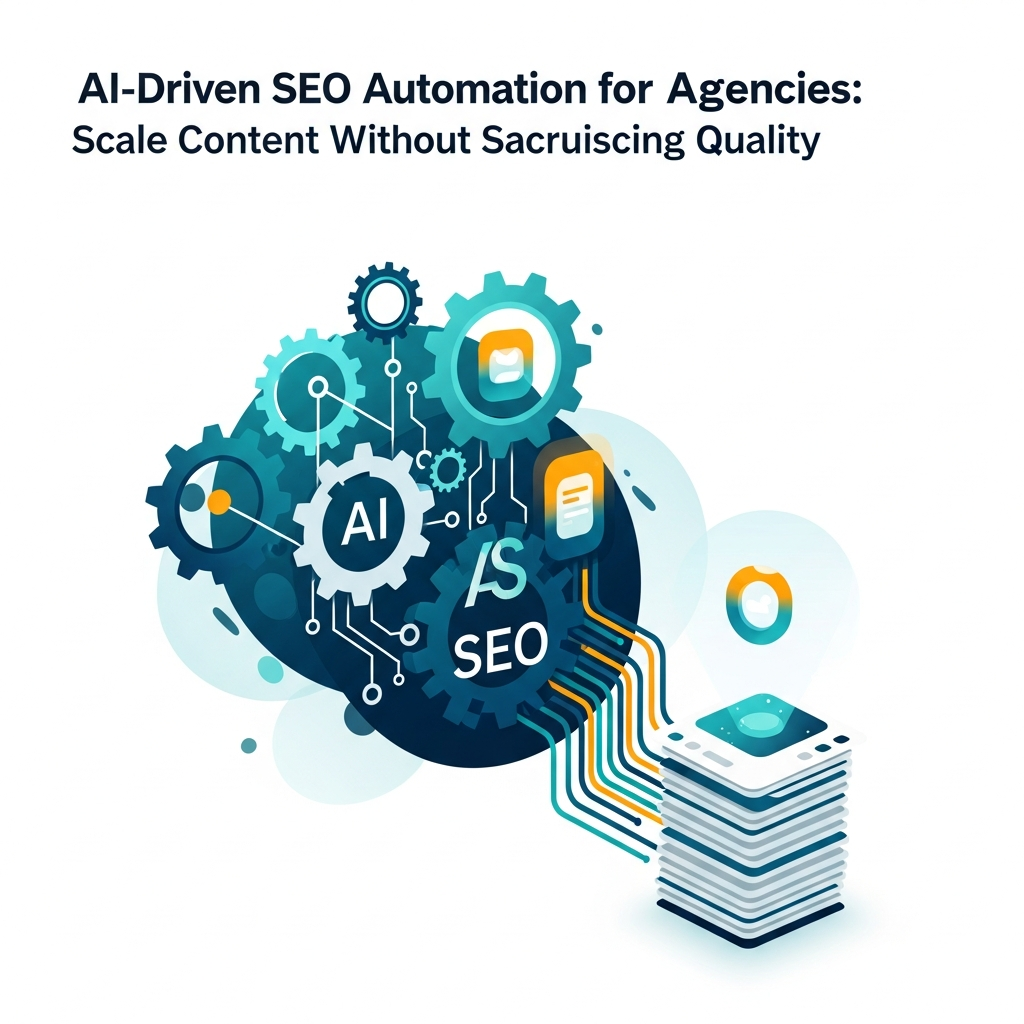
AI-Driven SEO Automation for Agencies: Scale Content Without Sacrificing Quality
Why AI-driven SEO automation matters for agencies
Agencies operate at the speed of content. Clients expect fresh, optimized articles, product pages, and landing pages published on tight deadlines. AI-driven SEO automation changes the math: it accelerates content creation, optimization, and publishing without sacrificing brand voice or governance. The result is more assets, more opportunities to rank, and a scalable process that supports multiple clients and markets.
With AI at the core, agencies can convert sprawling keyword lists into structured content plans, generate first-draft articles, and push updates to search engines and CMSs automatically. This empowers teams to move from bottleneck-driven delivery to repeatable, data-informed workflows. The outcome is a measurable lift in organic visibility across clients, while maintaining a consistent tone, structure, and quality control that reinforces brand credibility.
Key benefits include: faster time-to-market for campaigns, consistent content quality across clients, centralized performance dashboards, and the ability to test and optimize at scale. When well-governed, AI-driven automation becomes a strategic lever for client growth rather than a set of risky shortcuts. For agencies serving multiple brands or regions, centralized dashboards and multilingual capabilities become essential features of a scalable operating model.
Core components of AI-driven SEO automation
Successful automation rests on a stack of well-integrated capabilities. First, AI content generation for SEO turns keyword research and topic briefs into high-quality drafts that align with a brand’s voice. Second, automated publishing ensures content is released according to a defined cadence and optimization plan. Third, centralized dashboards provide visibility across all sites, campaigns, and teams, enabling governance and rapid decision-making.
Other essential components include automated keyword research and topic discovery, AI-assisted on-page optimization, and scalable content briefs or briefs templates that guide writers and editors. A robust automation platform also supports multilingual content, localization workflows, and seamless CMS integrations so the whole process remains frictionless for teams using WordPress, Webflow, or Shopify.
To connect these components, start with a blueprint: define your primary objectives (e.g., increase organic revenue by 15% in 12 months), establish a standardized content brief, and set guardrails for tone, accuracy, and factual integrity. Then map the data flows—keyword inputs, content generation, edits, optimization, and publishing—and assign clear ownership. The result is a repeatable, auditable process that scales with your agency’s growth trajectory.
Scaling content at agency level: workflows, templates, and brand voice
Scaling content while preserving brand voice requires a disciplined approach to templates, style guides, and autonomous-but-auditable workflows. Start with standardized content briefs that translate keyword intent into article structure, sections, headers, and suggested meta tags. AI then generates drafts that conform to those templates, and editors perform a focused review to ensure factual accuracy and alignment with policy and style.
Templates should cover common formats, such as blog posts, cornerstone guides, product pages, and category pages. Each template includes fields for intent, target audience, length, tone, and required SEO elements like schema, images, and internal linking rules. A well-constructed template reduces variance, speeds up production, and helps maintain a consistent brand voice across dozens or hundreds of assets.
With multi-site needs in mind, create a centralized content calendar that coordinates topics by site, language, and regional audience. This enables teams to publish content that fills gaps across markets while maintaining consistent quality. For example, a single SEO playbook can guide content production for multiple sites, with localized themes and keyword clusters aligned to each market.
Practical steps to scale content at pace include: (1) establish a reusable content brief library, (2) define tone and voice overrides by brand, (3) set publishing cadences per site, and (4) implement continuous AI-assisted optimization loops. For teams new to automation, start with a pilot involving 2–3 sites and a 4–6 week timeline before expanding to a broader portfolio. editorial workflow for agencies at scale offers concrete workflows to emulate.
AI content quality and governance
Quality governance is non-negotiable in an automation-first workflow. AI can draft quickly, but human reviewers are essential for accuracy, brand safety, and ethical considerations. Establish a tiered review process: automated QA checks (grammar, plagiarism, factual checks), a human editorial pass for tone and nuance, and a final sign-off by a subject-matter expert when needed.
Develop a brand voice style guide that translates into machine-readable rules. This guide should define preferred vocabulary, sentence length, formality level, and regional variations. Enforce vocabulary constraints in prompts, and use a scoring system to quantify content quality against your baseline metrics. Regular audits help catch drift as languages expand or markets evolve.
Quality governance also extends to data integrity and compliance. Ensure generated content does not introduce misinfo, and that any claims are sourced. A governance framework reduces risk while preserving speed. For teams exploring governance in practice, our linked resources on editorial workflows and schema validation can help keep output trustworthy and compliant.
Automated publishing and CMS integration
Automated publishing is the bridge between production and visibility. The best automation stacks connect to your CMS and publish content on schedule, with updates to metadata, internal links, and structured data. Seamless CMS integration reduces manual handoffs and keeps editors focused on strategy rather than logistics.
CMS compatibility is crucial. Ensure your automation layer supports the platforms you use (WordPress, Webflow, Shopify, etc.) and can handle multilingual publishing, version control, and rollback capabilities. With proper integrations, you can push content to multiple sites with a single command while maintaining site-specific constraints such as URL structure and localization rules.
Localization and regional tailoring are essential for agencies serving diverse markets. For example, localization workflows can adapt headlines, meta descriptions, and body copy to local linguistic nuances while preserving overall brand tone. For practical localization guidance, see our article on Sao Paulo automation for Brazilian ecommerce publishing: Sao Paulo: automated publishing for Brazilian ecommerce.
A practical tip: set up auto-generated initial drafts, then route them through a lightweight human review before publishing. This preserves quality while keeping speed. For a quick validation of your structured data and SEO assets, use a schema validator tool: schema validator tool.
Multi-site SEO management and centralized dashboards
Large agencies and enterprise teams often manage dozens of sites across markets. A centralized dashboard that aggregates performance, content status, and publishing pipelines across sites is a strategic differentiator. Centralized dashboards enable governance, standardization, and rapid cross-site optimization without sacrificing local relevance.
Key features to look for include role-based access control, cross-site reporting, and the ability to track global KPIs such as organic traffic, average session duration, keyword rankings, and conversion metrics. Security and data privacy are non-negotiable in multi-site environments; ensure SOC 2 or equivalent controls are in place and that vendor governance aligns with your procurement requirements.
With a centralized view, you can identify which sites are outperforming others, standardize underperforming templates, and quickly replicate winning content across portfolios. This reduces duplication of effort and accelerates ROI across a network of brands or locales.
White-label options, partner programs, and agency-friendly features
White-label capabilities turn AI-powered automation into a scalable service for your clients. Agencies can brand dashboards, reports, and content pipelines, delivering a consistent client experience while benefiting from the automation engine behind the scenes. Partner programs and reseller options help agencies extend their service catalog without reinventing the wheel.
When evaluating white-label capabilities, consider branding flexibility, white-label reporting templates, and the degree of control you have over content governance. Also assess how well the platform supports multi-tenant usage, data separation, and SLAs that align with client expectations. A strong white-label program enables faster onboarding of new clients and more predictable revenue streams.
Measuring ROI, governance, and risk management
ROI in AI-driven SEO automation comes from a blend of faster publishing, improved content quality, and higher organic visibility. Define clear success metrics up front: target increases in organic traffic, keyword rankings, content efficiency (assets per week), and client-specific KPIs. Use a baseline period to quantify impact and set staged milestones to monitor progress.
Governance reduces risk. Establish who owns each step, how changes are approved, and how performance data is audited. Include data privacy safeguards, access controls, and incident response procedures. From a procurement perspective, demonstrate governance readiness with SLAs, security certifications, and evidence of data handling compliance where applicable.
Finally, track cost efficiency. Compare the total cost of ownership for an automated workflow against a fully manual or semi-automated approach. A well-structured ROI model helps agencies justify investment and plan for scaling across more clients or markets.
A practical implementation checklist and pilot plan
Implementing AI-driven SEO automation begins with a lean pilot. Define a small scope (2–3 sites, 1–2 languages, 30–60 days) and establish guardrails for quality, governance, and ROI. Use a phased approach to confirm the value before expanding across the portfolio.
- Step 1: Align objectives with client outcomes and set measurable KPIs (traffic, conversions, time-to-publish).
- Step 2: Map data flows—keywords, briefs, drafts, edits, publishing, and reporting—into a repeatable pipeline.
- Step 3: Configure templates and style guides to instantiate brand voice in AI outputs.
- Step 4: Connect CMSs and analytics tools; validate data accuracy and privacy controls.
- Step 5: Run a 4–6 week pilot; collect feedback from editors, writers, and clients.
- Step 6: Review results, adjust prompts, and scale to additional sites or languages.
For a practical workflow example, see editorial workflow guidance at scale: editorial workflow for agencies at scale.
As you scale, re-evaluate your localization and automation needs. A phased, documented pilot helps you build confidence with stakeholders and minimizes disruption to ongoing campaigns. When teams are ready, you can extend automation to new brands or markets while maintaining control over quality and brand integrity.