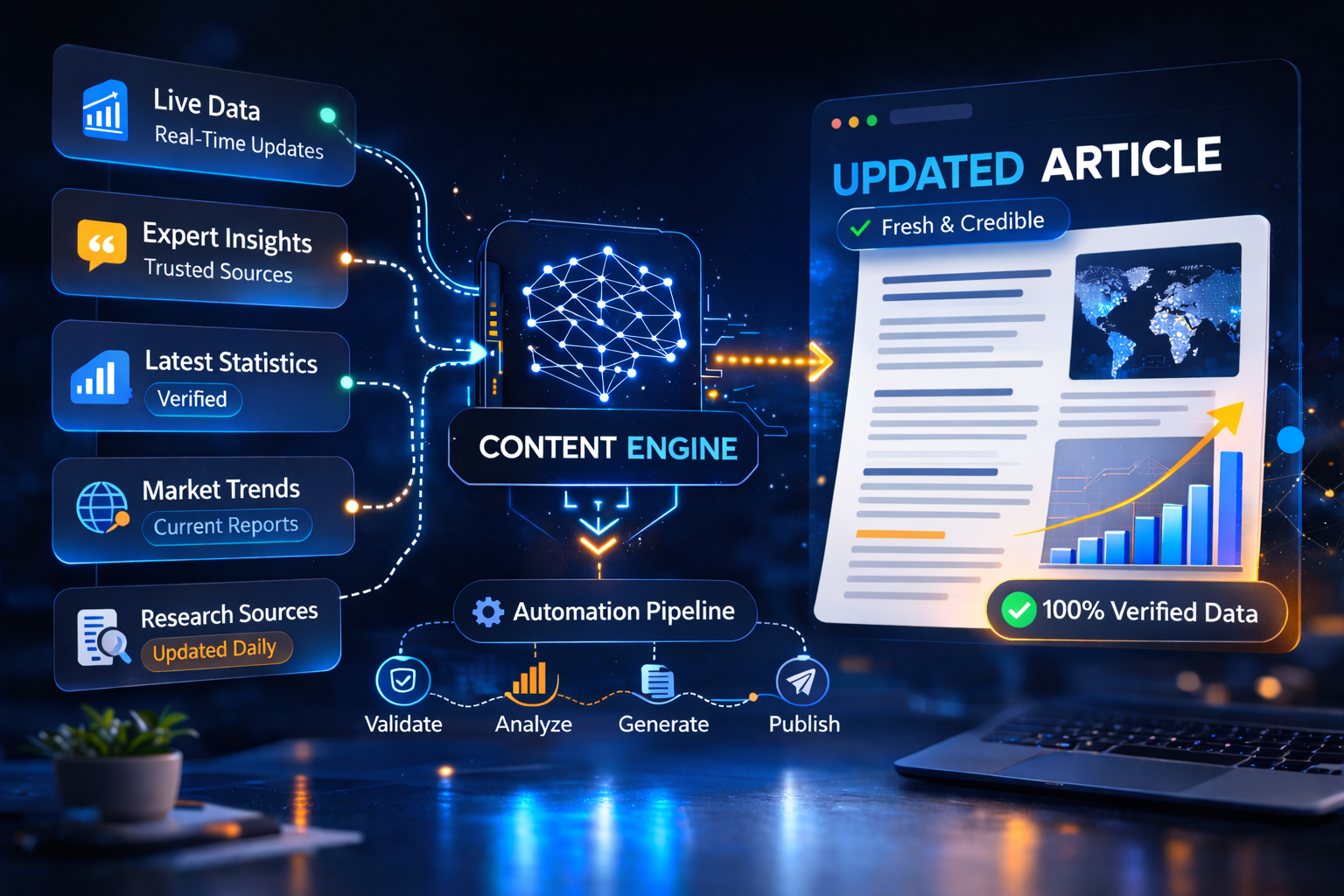
Real-Time Research for AI Content: Keeping Articles Fresh and Credible
Table of Contents
What is Real-Time Research for AI Content?
Real-time research is a disciplined practice of continuously sourcing, validating, and integrating current data, quotes, and observations into content. For AI-focused articles, this means linking to fresh statistics, referencing contemporary expert opinions, and embedding live signals that reflect the latest developments in a field. The goal is not to chase novelty for its own sake, but to strengthen credibility and relevance in the eyes of readers and search engines alike.
Real-time research blends traditional fact-checking with modern data access. It relies on structured data streams, credible primary sources, and transparent attribution. When done well, it helps content stay authoritative as the landscape evolves—without requiring nightly re-writes of every piece.
Why Fresh Data Improves AI Content
AI content should mirror how the world changes. Fresh data signals to readers that a piece is current, and search engines reward content that demonstrates ongoing relevance. This alignment matters more for topics impacted by policy shifts, market trends, or technology updates. In practice, fresh data can improve engagement, increase dwell time, and support higher-quality backlinks when readers cite updated sources.
Beyond SEO, real-time research supports better user outcomes. Readers leave with actionable insights grounded in recent observations. By embedding statistics and quotes sourced today, you reduce the risk of propagating outdated assumptions and you reinforce trust in your brand voice.
A Practical Real-Time Research Workflow
A repeatable workflow is essential for scale. The framework below is designed to fit into editorial calendars and content briefs so your team can produce credible, up-to-date AI content without sacrificing quality or governance.
Sourcing: Where to Look for Fresh Data
Begin with a prioritized map of reliable data sources. Primary options include official statistics portals, government data releases, industry association reports, peer-reviewed papers, and corporate disclosures. Public dashboards, press briefings, and accepted market forecasts also qualify if they meet recency and methodological clarity.
To keep data current, establish routine feeds: weekly or bi-weekly checks for key metrics, and real-time monitors for breaking developments. When possible, prefer sources that publish versioned PDFs, machine-readable data, or licensed data you can reuse with attribution.
Validation: Vetting, Verifying, and Attributing
Verification should be built into every data point. Cross-check numbers across at least two independent sources. Note the window of data collection, sample sizes, and any caveats about methodology. When quoting experts, document the context of their statements and the date of the quote to avoid misinterpretation later.
Attribution is crucial. Use precise citations and provide direct links if your policy permits. When quoting experts, paraphrase where appropriate but keep the essence and credit the source. Always confirm licensing rights for any data you reuse, especially dashboards or paid reports.
Embedding in Content: Formatting for Clarity
Integrate data and quotes with clear visual and textual cues. Use pull quotes to highlight key insights, block quotes for full statements, and inline data boxes for statistics. Maintain readability by balancing numbers with narrative explanations. For longer datasets, offer an executive summary and a link to a data appendix or a data-driven brief.
Tools and Tech Stack for Real-Time Research
To scale real-time research, assemble a lightweight but robust toolkit. Consider four layers: data discovery, data validation, content integration, and governance/notes.
Data Discovery
- News dashboards and RSS feeds from reputable outlets
- Official statistics portals and open data platforms
- Academic databases and preprint servers with clear methodology
Validation and Versioning
- Two-source cross-checks and versioned data releases
- Citation management tools and SPDX-style licensing notes
- Structured data briefs that capture source, date, method, and caveats
Content Integration
- Templates for data-driven briefs that standardize how data appears in articles
- Embeddable data visuals and pull quotes that align with brand voice
- CMS-friendly formats and API-based publishing where available
Governance
- Editorial guidelines for freshness minimums and cadence
- Tagging and taxonomy to track data sources and credibility levels
- Audit trails to demonstrate due diligence for readers and auditors
Case Frameworks for Real-Time Content (No Data Required)
Even without publishing live data in every piece, you can implement repeatable frameworks that preserve credibility while staying scalable.
Data-Driven Content Brief (DDCB) Template
1) Topic and audience cue. 2) What counts as fresh data for this piece (date range, sources). 3) Minimum three sources with at-a-glance caveats. 4) Approved data visuals and quote opportunities. 5) Clear attribution plan. 6) Update cadence and maintenance plan.
Expert Quote Playbook
Identify a pool of credible experts early. Draft questions that elicit concise, quotable insights. Schedule follow-ups post-publication for additional context or corrections if needed. Maintain a log of quotes with source, date, and permission details.
Governance and Scale
Governance ensures consistency as you scale. It covers tone, data credibility, and update cadence. A mature governance model reduces risk of drift and maintains a consistent brand voice across articles and formats.
tone and voice alignment
Document how data is presented: neutral language, perceptual qualifiers, and clear distinctions between facts and interpretation. Regularly review a sample of published pieces for tone alignment and accuracy of attributed data.
Update cadences
Define base cadences for different topics. Some subjects may require weekly checks; others can be refreshed monthly. Set triggers for urgent updates when a major development occurs.
Measuring Impact and ROI
Impact metrics for real-time research are both qualitative and quantitative. Track engagement signals, such as time on page and scroll depth, alongside concrete signals like updated citations, data-driven callouts, and improvement in AI-search visibility over time.
Use A/B testing to compare articles with real-time data integration against baseline pieces. Monitor backlinks and mentions that reference your updated data. Document learnings to inform future briefs and update strategies.
Common Mistakes and Pitfalls
Even well-intentioned efforts can stumble. Avoid citing data without transparent methodology. Do not rely on a single source for critical numbers. Be cautious with evergreen claims that rely on stale datasets. Always respect licensing and attribution rules when using third-party data visuals.
Another pitfall is overloading an article with data points. Pair statistics with narrative that explains relevance and takeaway, rather than presenting numbers in isolation. Finally, maintain guardrails to prevent sensationalism; credibility comes from disciplined sourcing, not novelty alone.
Next Steps: Building Your Real-Time Research Pipeline
Start with a small pilot: pick a core topic, define a minimal data set, and establish a fast validation loop. Expand to a living content brief library as your team gains comfort with the workflow. Over time, you can reuse templates, automate data pulls where licensing permits, and scale your publication cadence without sacrificing quality.
Key actions to implement in the coming weeks include: creating a standard data brief template, identifying recurring data themes across products, and assigning data editors responsible for freshness checks. As your process matures, integrate more advanced data visuals and structured data to support AI search alignment.