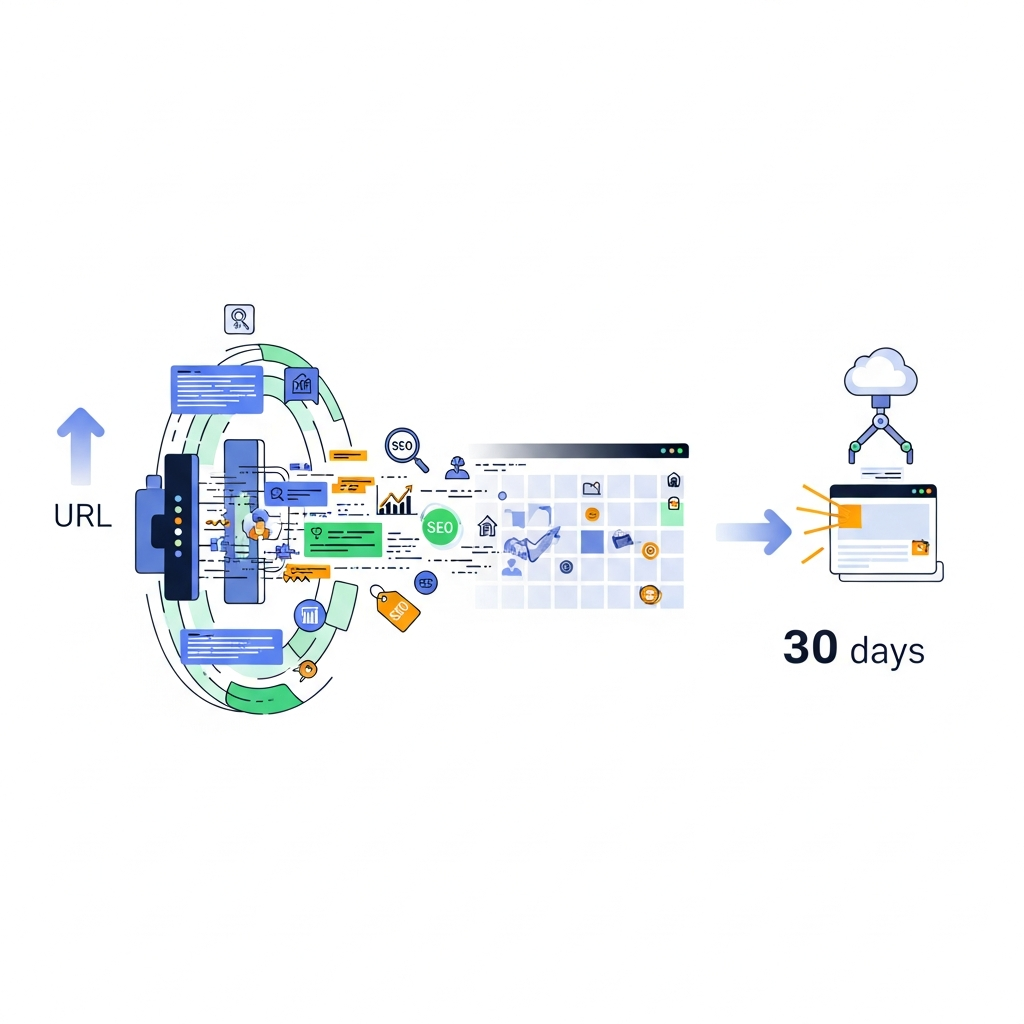
From URL to a 30-Day Content Plan: Automate SEO Content and Daily Publishing
- Overview
- Step 1 — Starting with a URL and goals
- Step 2 — Generating topics and keywords
- Step 3 — Building the 30‑day calendar
- Step 4 — Production workflow and optimization
- Step 5 — Automating publication to WordPress
- Step 6 — Analytics and iteration
- Best practices and pitfalls
- Templates and a sample 30‑day plan
- Internal resources
Overview: Why transform a URL into a 30-day plan
In a fast-moving digital world, a single URL can become the seed for a comprehensive content engine. The goal of a 30-day content plan is not merely to fill a calendar, but to align topics with audience intent, optimize for search engines, and publish consistently without burning out your team. This guide shows how to take a URL—whether it’s a cornerstone blog post, a product page, or a pillar guide—and turn it into a practical, demand-driven content road map for the next 30 days.Why a 30-day horizon? It creates a repeatable cadence that keeps audiences engaged and signals to search engines that your site is active. When paired with automation for content creation, optimization, and publishing, you can sustain momentum while focusing human effort on strategic or high‑impact work. The result is improved rankings, more pages indexed, and a clearer path from discovery to conversion.This article targets teams seeking a practical blueprint—whether you’re a lean startup, an agency, or a mid‑market brand—to automate insights and speed up daily publishing. You’ll find actionable steps, checklists, and templates you can adapt to your tech stack, including WordPress publishing and analytics workflows.
Step 1 — Starting with a URL and goal setting
The process begins with a concrete URL that represents your anchor—the piece you want to expand into a month of content. Start by clarifying three questions: Who is the intended reader? What problem does the URL help solve? What action do you want readers to take after consuming the content?Define success metrics upfront. Common targets include search impressions, organic traffic to a set of pages, time on page, and the number of subsequent article clicks. These KPIs inform topic selection, keyword strategy, and the publishing cadence. A well‑defined goal keeps the 30‑day plan focused and measurable.If you’re working with multiple brands or product lines, map each brand voice and topic to a separate content track. This helps maintain consistency while preserving distinct positioning. For teams integrating with a CMS like WordPress, map the URL’s topic to the right taxonomy and category structure so that publishing and internal linking stay coherent across the site.
Step 2 — Generating topics and keywords from the URL
Topic extraction starts with a close reading of the anchor URL. Identify core themes, subtopics, and questions that readers are likely to search for. Then pair these with keyword research to build a topic cluster. The cluster should include a mix of high‑volume opportunities and strategic long‑tail phrases that match user intent.
Cluster structure
- Core pillar: the main URL’s central concept (e.g., a foundational guide or product overview).
- Supporting topics: deeper dives that reinforce the pillar’s themes (e.g., how‑to articles, case studies, step‑by‑step tutorials).
- Long‑tail pages: practical, intent‑specific queries (e.g., troubleshooting, templates, checklists).
Use a simple framework to prioritize topics: impact (alignment with business goals), intent coverage (informational, navigational, transactional), and ease of creation (data availability, internal subject matter experts). Include a few “quick wins” that can be produced in days, plus a handful of ambitious, evergreen topics for long‑term value.Secondary keywords such as automated content publishing, content calendar generation, and analytics integration can be woven into titles, headers, and meta descriptions to reinforce relevance without keyword stuffing.
Step 3 — Building the 30-day calendar
With a topic map in hand, sketch a calendar that alternates content types and formats. A healthy mix might include long-form cornerstone articles, quick how‑tos, visual guides, and short updates that trigger social amplification and email engagement. Schedule daily outputs that balance quality and quantity.
Cadence and formats
- Days 1–7: Foundational pillar article plus a handful of adjacent posts that link back to it.
- Days 8–14: Practical how‑to guides and templates that readers can implement immediately.
- Days 15–21: Case studies or data‑driven analyses that demonstrate outcomes.
- Days 22–30: Refreshers, updated data, or seasonal content tied to ongoing campaigns.
In the calendar, annotate publishing times, author owners, edit windows, and when evergreen updates should be revisited. Build in a weekly optimization checkpoint to reallocate resources from lower‑performing topics to higher‑potential ones.
Step 4 — Production workflow and optimization
A robust production workflow combines clear roles, guardrails for quality, and automation where it adds value. Start with a draft framework for each article that covers target audience, intent, key takeaways, and on‑page SEO signals such as title tags, headers, meta descriptions, image alt text, and schema where appropriate.
AI-assisted drafting and editorial guardrails
AI can generate initial drafts, outlines, and metadata, but human review remains essential for accuracy and brand voice. Establish guardrails for factual checks, tone, and compliance. A lightweight editorial checklist reduces back‑and‑forth and keeps timelines intact.
On-page SEO and internal linking
Plan internal links to improve crawlability and page authority. Each article should link to related posts, product pages, and cornerstone content. Use canonical URLs consistently to avoid duplicate content and track linking outcomes to measure impact on rankings.
Step 5 — Automating publication to WordPress and daily cadence
Automation is not about removing humans; it’s about removing repetitive friction. Use a publishing workflow that takes validated drafts from your content authors and pushes them into your CMS with the right metadata, images, and internal links. A one‑click publish or a scheduled publish window helps maintain a daily cadence without manual intervention every day.Key considerations for WordPress publishing include: streamlining media handling, ensuring schema markup is embedded correctly, and coordinating with an editorial calendar so that posts publish in the intended order. If your site relies on multiple languages, ensure the workflow handles localization without breaking links or SEO signals.
Step 6 — Analytics and iteration
Analytics integration is the engine that drives continuous improvement. Connect your content plan to a dashboard that tracks traffic by post, topic cluster performance, engagement metrics, and conversions. Use these signals to adjust future topics, revise existing posts, and reallocate resources toward higher‑ROI areas.Two practical angles to include in your analytics: (1) content health, including crawlability, page speed, and schema correctness; (2) content performance, including keyword rankings, organic sessions, and engagement metrics. Regular reviews—weekly for ongoing campaigns and monthly for strategic alignment—keep the 30‑day plan responsive to search dynamics.
Best practices, pitfalls, and a practical checklist
Best practices
- Anchor your 30-day plan to a single URL’s core topic to maintain coherence across posts.
- Balance evergreen, high‑value topics with timely, opportunity‑driven content.
- Document your content brief with a clear audience, intent, and success metrics for every post.
- Automate where it reduces toil but preserve human quality in critical areas like accuracy and voice.
Common pitfalls
Checklists
- Define the URL anchor and publish the pillar post first.
- Create a topic cluster with at least 4–6 supporting posts.
- Pre‑define titles, meta descriptions, headers, and image assets for all posts.
- Set up automated publishing with review windows for final checks.
Templates and a sample 30‑day plan
Templates help standardize the process and reduce decision fatigue. Use a consistent article brief template that includes: objective, audience, search intent, primary keyword, secondary keywords, outline, and a measurement plan. For the 30‑day plan, you can reuse a weekly template that maps days to topics, formats, and publication times.Here is a lightweight sample structure you can adapt:
- Day 1: Pillar article with in‑depth coverage of the URL’s core topic.
- Day 2–4: Supporting posts that answer common questions around the pillar.
- Day 5: Quick reference guide or checklist that adds practical value.
- Day 6–7: Round up of related resources with internal links to the pillar.
- Day 8–11: Case study or data‑driven analysis related to the pillar.
- Day 12–15: Updated data or refresh of older content with new insights.
- Day 16–21: Multiformat content (video, infographic, podcast notes) tied to the pillar.
- Day 22–30: Review, expand, and perform a content health check with updates.
Use the 30‑day calendar as a living document. Allow space for adjustments based on performance signals and seasonality.
Internal resources
For reference and to support legal and policy alignment, you can explore the following pages:
These links open in a new tab to help you reference guidance without losing your place in the article.