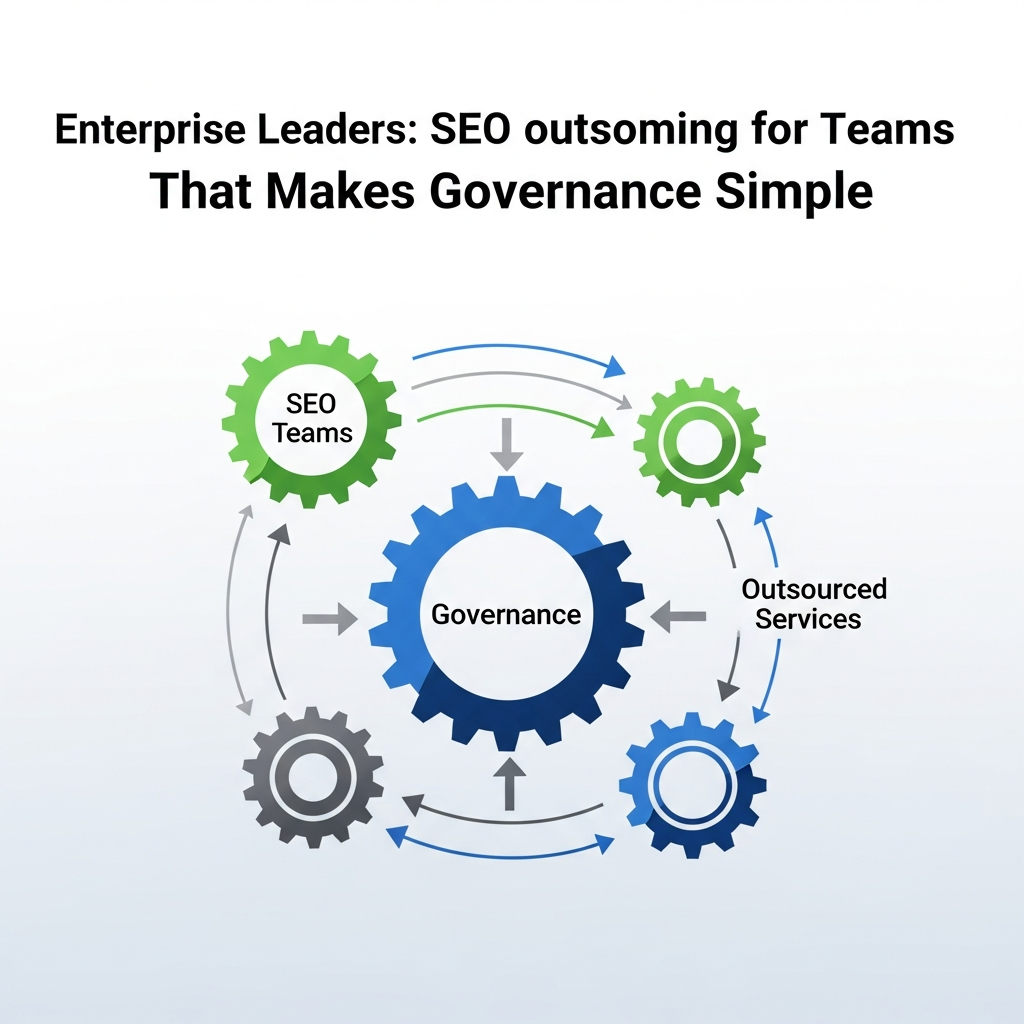
Enterprise Leaders: SEO outsourcing for teams That Makes Governance Simple
Governance and Security: The Cornerstone of Outsourcing SEO for Teams
For enterprise and multi-brand teams, outsourcing SEO is less about cutting costs and more about creating a framework that preserves governance, privacy, and auditability while expanding reach. When you outsource, you’re not surrendering control—you’re transferring risk and complexity into clearly defined processes coordinated across vendors, teams, and platforms. A governance-first mindset helps you maintain brand voice, data integrity, and regulatory compliance as you scale.
Key governance pillars include role-based access controls, data retention policies, audit trails, and standardized SLAs. With well-defined access permissions, teams can segment rights for writers, editors, and technical specialists, ensuring that sensitive data never travels outside approved channels. A robust audit trail makes it feasible to verify every optimization, algorithm adjustment, or content change during client reviews or internal governance meetings.
Security and privacy are not optional add-ons; they are prerequisites for enterprise trust. SOC 2 or equivalent security attestations, encryption in transit and at rest, secure API integrations, and clear data-handling policies should be non-negotiable when evaluating outsourced partners. When you pair governance with security, you create a reliable environment where multi-brand teams can operate with confidence. For teams seeking concrete governance practices, see the ROI and governance dashboards article linked later in this guide.
As you design your outsourcing strategy, consider how governance will translate into daily workflows. A clear governance model translates into predictable delivery timelines, consistent brand voice, and transparent reporting that your executives can rely on. If you’re looking for practical, vendor-agnostic guidance on governance mechanics, you’ll find actionable frameworks in the linked ROI dashboards resource and in the broader content that accompanies this guide.
Building Scalable Workflows: From Manual to Automated, with Guardrails
Scalability starts with repeatable, documented processes. When teams outsource SEO, the goal is to automate routine work without sacrificing quality or brand alignment. Scalable workflows enable a single content calendar to power dozens or hundreds of pages across markets, products, and languages. They also make it easier to onboard new brands or teams without reengineering their entire SEO stack.
Begin by mapping the end-to-end lifecycle: keyword research, content briefs, on-page optimization, publishing, internal linking, outreach, and reporting. Create playbooks for each step that specify who does what, how tools are configured, what metrics are tracked, and what approvals exist. With a solid playbook, vendors can reproduce success across multiple sites with minimal friction. The goal is to reduce bespoke, one-off tasks and replace them with standardized, auditable routines.
Automation should extend beyond content creation. Centralized dashboards, automated content briefs, and standardized templates for meta tags and schema markup help maintain consistency across brands. If you’re evaluating tools or agencies, look for features like centralized multi-site management, configurable workflows, and CMS integrations that fit your tech stack. For hands-on guidance on practical automation patterns, you can explore our 30-day content calendar resource linked below as a concrete example of scalable planning.
In practice, scalable workflows also require governance checkpoints. Regularly scheduled reviews—across content quality, backlink quality, and technical SEO health—prevent drift from brand guidelines or policy requirements. The combination of scalable workflows plus governance creates a powerful recipe for consistent results at scale.
To deepen your understanding of scalable automation patterns, consider reading the automated content calendar guide that demonstrates how to jumpstart SEO at scale. It’s a practical companion for teams moving from ad hoc efforts to repeatable, enterprise-grade processes.
A Concrete Workflow Example
- Weekly keyword deep-dive: 2–3 hours to refresh priorities for all active sites.
- Daily content briefs: standardized templates that auto-populate with keyword plans and risk flags.
- Bi-weekly on-page optimization sprints: implement structured data, optimize meta, and adjust internal linking.
- Monthly governance review: audit trails, security access logs, and SLA compliance checks.
When these steps are codified and automated where possible, teams gain the bandwidth to pursue growth initiatives without compromising governance or security. The result is a scalable SEO engine that grows with your organization rather than outgrowing your processes.
Choosing Outsourced SEO Services: A Vendor Comparison Framework
Selecting outsourced SEO services requires a clear decision framework. Enterprise teams typically evaluate vendors against a consistent rubric: governance capabilities, data security, multi-site management, CMS and analytics integrations, reporting transparency, and cost of ownership. A practical comparison checklist can help you avoid surprise costs or misaligned expectations later in the relationship.
Core evaluation criteria include: governance model (who owns what, and how are changes approved?), data privacy posture (encryption, access controls, data residency), scalability (how many sites or brands can be managed, and at what rate), and auditability (how easy is it to verify changes and outcomes?). You’ll also want to assess the vendor’s ability to integrate with your existing tech stack (WordPress, Shopify, Webflow, Notion, etc.), and whether they offer white-label options if you’re an agency evaluating partnerships for clients.
As you compare, demand transparent roadmaps and evidence of prior governance maturity. Request samples of quarterly or monthly governance reports, security attestations, and a proof-of-concept pilot plan. A thoughtful vendor will provide a clear, executable path from pilot to scale with defined milestones and success metrics. For more on governance-focused ROI evaluation, see the ROI and governance dashboards resource linked later in this piece.
Data Privacy and Compliance: Guardrails That Build Confidence
In an outsourcing arrangement, data privacy is not just about compliance; it’s about ensuring that sensitive information remains secure across vendors, tools, and workflows. Enterprises should require robust data handling policies, strict access controls, and incident response plans. Data residency requirements may dictate where data is stored and processed, particularly for multi-region brands. Encryption in transit and at rest, secure API practices, and regular third-party security assessments are essential parts of the posture you should demand from every partner.
Beyond technical protections, governance arrangements should specify data ownership, retention, deletion timelines, and return of assets at contract end. Clear breach notification SLAs minimize risk and give leadership the confidence to proceed with multi-brand outsourcing. If you’re exploring regional considerations or localization, our Brazilian ecommerce automation case study can provide practical context for region-specific data practices (see the linked resource). You’ll also find the latest best practices for data governance embedded in enterprise-grade SEO platforms and dashboards.
Data privacy is a shared responsibility. Your internal teams should maintain control over high-sensitivity assets, while outsourced partners manage day-to-day SEO operations within the boundaries you set. The end goal is transparent governance where both sides can demonstrate compliance and accountability at every milestone. For a regional example of how automation supports ecommerce in multilingual markets, explore the linked Brazilian Portuguese post as a practical case study.
Brazilian ecommerce publishing automation case study offers a concrete illustration of how localization and governance intersect in practice, underscoring the importance of privacy-conscious automation across geographies.
ROI and Governance Dashboards: Measuring Value with Confidence
Governance without insight is merely a checklist. The true value of outsourcing SEO for teams emerges when you can quantify progress, prove ROI, and demonstrate governance maturity to executives. Robust dashboards consolidate data from content performance, site health, link activity, and conversion metrics into a single, auditable view. When dashboards are designed with governance in mind, you can answer questions like: Are we improving quality over time? Are we reducing manual toil? Is the content pipeline delivering predictable outputs across brands?
Effective dashboards should offer role-based access, clear attribution to campaigns and brands, and exportable audit trails for leadership reviews. Look for features such as automated reporting schedules, anomaly detection, and drill-down capabilities that let stakeholders explore the levers behind performance changes. For a practical, hands-on look at governance dashboards in automation for SEO, consult the linked resource on measuring ROI and governance in automated SEO dashboards.
Enterprise buyers increasingly demand proof of scalable value. If you’re building a business case, align dashboard metrics with your strategic priorities: traffic growth, revenue impact, time-to-publish improvements, and brand consistency across regions. A governance-focused reporting framework not only demonstrates value but also clarifies where to invest next to maximize impact.
Starting a Pilot: A Practical Roadmap to Validate SEO Outsourcing for Teams
A pilot is your first opportunity to validate governance, security, and ROI in a controlled environment. Start with a single brand or a small, well-defined segment of content to minimize risk while you learn. A well-structured pilot reduces uncertainty and accelerates learning across the organization.
Here is a practical six-step pilot plan you can adapt:
- Define goals and success metrics that align with your governance framework (e.g., improved page speed, increased qualified traffic, lower operational headcount for content production).
- Select a single brand or geography to limit scope and complexity.
- Choose a partner with a transparent governance model, clear SLAs, and proven data privacy controls.
- Establish a lightweight, collaborative process for briefs, approvals, and dashboards. Include a weekly check-in and a bi-weekly sprint review.
- Implement a pilot calendar and content plan. Consider using a structured calendar approach to keep momentum—for practical guidance, see the Automated 30-Day Content Calendar resource.
- Measure outcomes against predefined KPIs and document learnings to inform a broader rollout.
Key to a successful pilot is keeping things simple at first while ensuring governance constraints remain intact. If you want a concrete example of how to jumpstart SEO at scale, the 30-day content calendar resource demonstrates how to structure your initial pipeline for rapid results.
Once the pilot demonstrates clear value, you can progressively widen scope to additional brands, geographies, and languages, applying the same governance framework and measurement approach across the expanded program.
Common Pitfalls and How to Avoid Them
Even with a strong governance frame, teams can stumble if they overlook a few practical realities. Here are common pitfalls and how to avoid them:
- Underinvesting in governance up front. Invest in clear SLAs, access controls, and audit trails from day one to prevent drift at scale.
- Losing brand voice through automation. Enforce brand guidelines in content briefs and maintain human review at critical junctures.
- Over-reliance on a single tool or vendor. Maintain tool diversity where appropriate, but guard against tool sprawl by consolidating dashboards and data models.
- Inadequate localization for multi-region programs. Plan for language-specific content, local guidelines, and regional data practices early in the program.
- Lack of transparency in ROI calculations. Use auditable dashboards and align metrics with executive expectations to avoid 'black box' concerns.
By anticipating these pitfalls and embedding governance in every phase of the outsourcing relationship, teams can sustain momentum while maintaining the high standards expected by enterprise leadership.
Next Steps: From Strategy to Scale
Outsourcing SEO for teams at an enterprise level is less about handing off control and more about embedding governance and security into scalable, automated workflows. The right partner brings not only technical expertise but also a disciplined governance model, robust data privacy practices, and transparent ROI measurement. As you plan your next steps, begin with a clear governance framework, a scalable workflow design, and a pilot that demonstrates tangible value within a few weeks.
To move from strategy to execution, consider the following practical next steps:
- Document your governance requirements and data privacy expectations in a formal vendor brief.
- Identify one brand or region to pilot the outsourcing program with clearly defined KPIs.
- Solicit proposals from partners who can demonstrate enterprise-grade governance and multi-site support.
- Establish a shared dashboard that consolidates performance, health, and compliance metrics.
- Iterate based on pilot results and prepare a rollout plan for additional brands and geographies.
If you’d like to explore a governance-forward approach to SEO outsourcing for teams, our resources and case studies can guide you through each phase of planning and execution. For practical examples of automation-driven content calendars and governance dashboards, check the linked resources above and consider starting a pilot to validate the approach in your own environment.