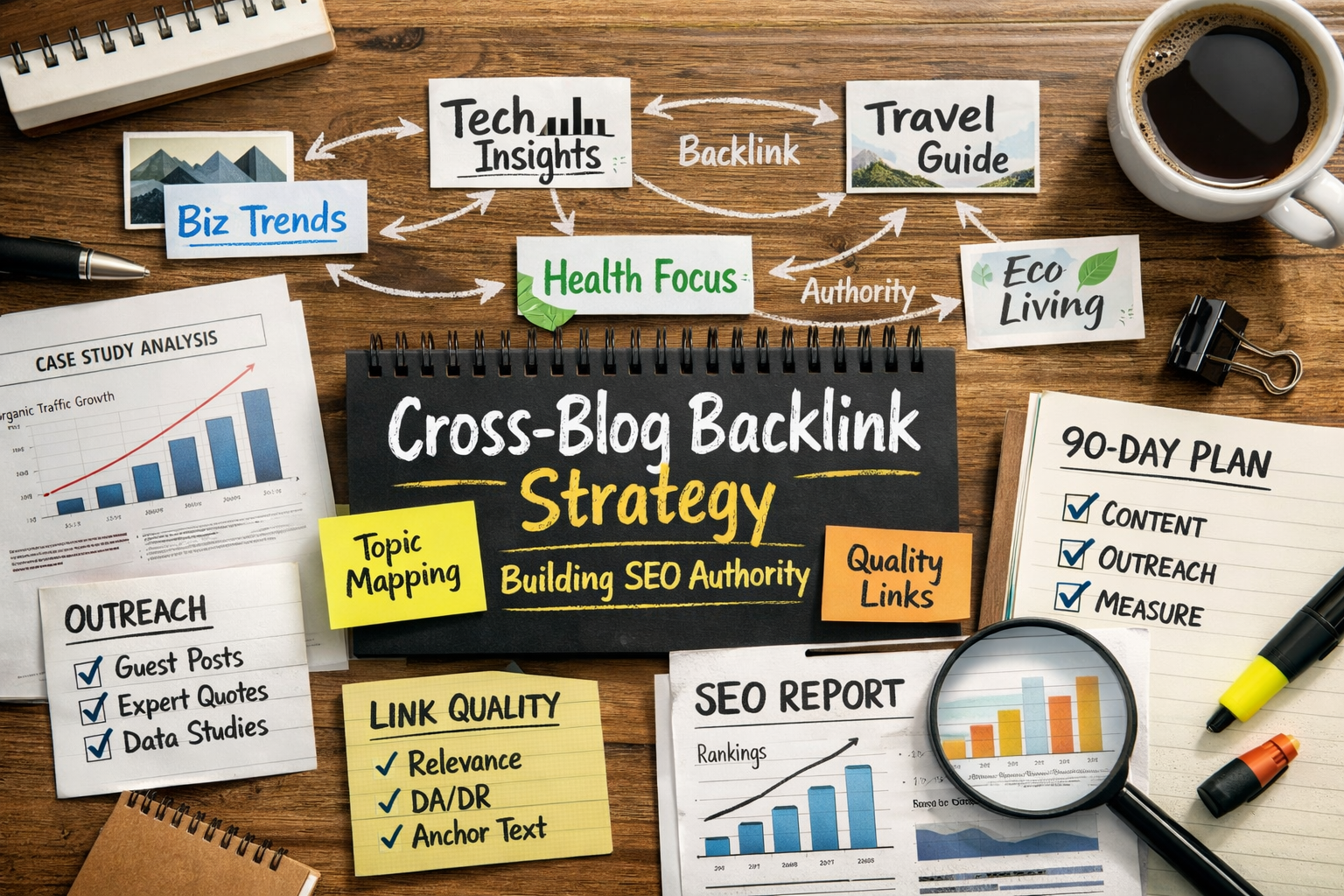
Cross-Blog References That Build SEO Authority: A Practical Networked Backlink Playbook
Introduction
In today’s search landscape, authorities rise from structured, networked signals rather than isolated pages. Cross-blog references create a web of relevance that search engines interpret as expertise, trust, and topic authority. A well-designed networked backlink playbook helps brands scale high-quality references across multiple blogs while maintaining brand voice and governance.
This guide provides a practical framework for building and sustaining a scalable cross-blog backlink network. It covers architecture choices, content formats that attract legitimate references, measurement approaches, and step-by-step actions you can take in the next 90 days. The focus is on quality, governance, and measurable impact on both traditional SEO and AI-first search visibility.
What is a cross-blog backlink playbook?
A cross-blog backlink playbook is a documented, repeatable process for creating and earning references from multiple blogs that share topical relevance with your content. Instead of chasing single, standalone links, you build a network where relevant articles point to each other as sources of authority. The result is a more resilient SEO signal set and improved AI search visibility, as large language models and crawlers recognize interconnected expertise across domains.
Key ideas include mapping a network of partner blogs, creating content that naturally invites references, and coordinating outreach that aligns with each blog’s audience. The playbook also emphasizes governance: style guidelines, cadence, attribution, and ethical link practices so the network remains sustainable over time.
Think of the playbook as a blueprint for scalable collaboration among brand-owned properties, partner blogs, and industry publications. It focuses on relevance, editorial integrity, and measurable impact rather than opportunistic link building.
Core components of a networked backlink strategy
Topic mapping and network scaffolding
Begin with a map of core topics where your brand owns deep expertise. Identify adjacent topics that are credible for third-party references. The goal is to create a lattice where each node (a blog or publication) has a defined role and relevance to your content clusters. A simple matrix can help: blog name, primary topic, suggested article formats, and preferred reference types (data, quotes, case studies).
Maintain a living document that shows who references whom and under what anchor text. This scaffolding guides outreach, helps prevent overlap, and ensures every reference adds incremental authority rather than duplicating signals.
Content formats that invite references
Some formats naturally attract cross-blog references. Consider data-backed studies with transparent methodology, industry benchmarks, expert roundups, and multi-case analyses. Rich media like charts, infographics, and data tables increase the likelihood of being cited as a source. When possible, embed quotes and statistics from credible external sources to strengthen the content’s citation value.
In addition, craft reference-ready assets such as one-page data briefs, event recaps with key takeaways, and “how-to” guides that other editors can link to as a source of authority. The structure should make it easy for a blogger to reference you without breaking their own narrative flow.
Editorial governance and attribution
Governance is essential for scale. Establish a brand-wide style guide, citation standards, and a clear process for approving cross-blog references. Define attribution rules (who gets credit, how links appear, and whether nofollow or follow attributes apply) to avoid disputes and maintain consistency across networks.
Architectural options for cross-blog backlinks
Unified network hub
In a unified hub model, a central content hub coordinates references across a curated set of partner blogs. This hub publishes cornerstone articles that reference companion posts on partner blogs and invites external references into those hub articles. The benefit is a single, coherent signal that ties multiple properties together, reinforcing topical authority.
Trade-offs include higher coordination overhead and the need for shared governance. The payoff is a predictable, scalable flow of high-quality references that strengthen both on-page and off-page signals across the network.
Decentralized references
With a decentralized approach, each blog operates with more autonomy, pursuing references into and from peer properties as opportunities arise. This reduces coordination frictions and fosters organic collaborations. It works well for large networks with diverse editors and editors who prefer to own their editorial calendars.
However, it can yield uneven coverage and requires clear compatibility standards to ensure anchor text, topics, and citation quality remain consistent across the network.
Hybrid approach
The hybrid model blends central governance with decentralized execution. The hub defines core topics, reference templates, and governance rules, while individual blogs execute outreach and publish cross-blog references aligned with their audience. This offers balance: scalable governance plus editorial flexibility.
For most growing brands, a hybrid approach often delivers the best mix of control and agility, enabling steady growth of high-quality references while accommodating editorial diversity.
Quality vs. quantity: how to measure backlinks
What quality signals matter
Quality is not a single metric. Focus on contextual relevance, domain authority or trust signals, editorial quality, and link placement. Prefer references within topical clusters rather than generic mentions. A strong signal comes from links embedded in substantive content rather than footer slugs or boilerplate mentions.
Quality is also about longevity. Prefer sources that maintain their content over time and demonstrate ongoing editorial standards. High-quality backlinks tend to stay relevant longer and contribute to durable SEO gains.
Anchor text strategy and link placement
Anchor text should reflect the referenced content and maintain natural language. Avoid over-optimizing anchor phrases across the network. A balanced mix of branded, exact-match, and natural anchors generally performs best while reducing the risk of penalties from aggressive optimization.
Monitor anchor distribution across the network to prevent overreliance on any single phrase. Maintain editorial integrity by ensuring anchors fit within the surrounding narrative and provide value to readers.
Step-by-step playbook: the 10 actions you should take
- Define core topics and audience signals.
Document the top topics where your brand is strongest and where third-party references would be most natural. Align these topics with audience intent signals and AI-search considerations so your content supports both human readers and search engines.
- Map a target blog network.
Create a matrix of potential partner blogs, Industry publications, and brand-owned sites. Capture audience fit, topic overlap, and potential reference styles (data, quotes, case studies). This map becomes the backbone of your outreach plan.
- Create reference-ready content briefs.
For each target topic, develop briefs that specify data needs, quotes, and suggested article formats. These briefs help editors understand how to reference your content naturally and credibly.
- Develop outreach templates and collaboration incentives.
Prepare outreach messages that emphasize mutual editorial value, not just link building. Offer co-authored pieces, data contributions, or expert quotes that improve both parties’ content quality.
- Publish cornerstone and reference-ready articles.
Publish anchor articles that set the stage for cross-blog references. Include pull quotes, data tables, and clearly attributed sources to make it easy for others to reference you.
- Coordinate cross-blog references with governance checks.
Ensure all references follow your brand’s citation standards, including placement, attribution, and anchor text. Validate each reference against a quick editorial checklist before publication.
- Monitor referrals and update content as needed.
Use simple dashboards to track referring domains, anchor text distribution, and the performance of linked articles. Update or refresh data-driven references to maintain accuracy over time.
- Assess impact on AI-search visibility.
Complement traditional SEO metrics with AI-first signals. Look for improvements in prompt-based visibility, increased branded searches, and higher presence in knowledge panels or AI-assisted results related to your topics.
- Scale with governance and automation where appropriate.
As you mature, codify processes, templates, and approval workflows. Introduce lightweight automation for content briefs, outreach tracking, and attribution logging to sustain velocity without sacrificing quality.
- Review and refine quarterly.
Every 90 days, review network performance, adjust topic focus, and prune references that no longer add value. Use learnings to inform the next cycle’s goals and content plans.
Content formats and best practices for cross-blog references
Data-driven articles
Publish studies with transparent methodology and robust data visuals. Data-backed pieces invite citations from other blogs that value credible sources and reproducible results.
Expert roundups and quotes
Gather insights from recognized industry voices and feature them in a single piece. This format provides natural opportunities for reference links as contributors link back to their quoted thoughts.
Benchmarks and case studies
Share benchmarks, success stories, and practical takeaways. Case studies create a narrative that other editors want to reference to illustrate real-world impact.
Guides and how-tos
Educational content that walks readers through a process is inherently referenceable. Treat these guides as reference-ready assets that other blogs can cite when teaching their own audiences.
Tools, governance, and process discipline
Implement lightweight governance without crushing creativity. Create a simple content calendar, a standard reference template, and a clear approval flow. Track the network with a shared spreadsheet or lightweight project board that documents topics, target blogs, and reference status.
Automation can help with routine tasks such as brief generation, outreach tracking, and attribution logging. Use these tools to maintain consistency while allowing editors to focus on quality and relevance.
Risks, pitfalls, and ethical considerations
A well-managed network avoids manipulative tactics that could trigger search penalties. Avoid excessive cross-linking, irrelevant references, or content that exists solely to acquire links. Maintain transparency about sponsorships, affiliations, and author contributions where applicable.
Regular audits help ensure the network remains compliant with search-engine policies and editorial standards. When in doubt, prioritize reader value and credible sourcing over rapid link volume.
A compact case study: practical outcomes
Company A built a 10-blog network around its primary topics and created a set of data-backed cornerstone articles. Over 12 weeks, the team published 6 cornerstone pieces and 14 reference-ready posts on partner blogs. The network yielded a 28% increase in referring domains and a 15% lift in organic traffic to core product pages. AI-search visibility improved for several long-tail terms related to the brand’s top topics, with more mentions appearing in knowledge-edge results and prompt-driven queries.
Key takeaways from this compact case study include the importance of clear topic mapping, high-quality data, and editor-friendly reference formats. The outcome demonstrates that a well-governed network can produce sustained growth in both traditional SEO metrics and AI-related signals.
90-day roadmap to momentum
- Weeks 1–2: foundation. Build the topic map, select initial partner blogs, and draft the first reference-ready cornerstone article.
- Weeks 3–4: content production. Publish cornerstone content and begin outreach for first round of cross-blog references.
- Weeks 5–8: scale outreach and governance. Expand the network, refine reference templates, and implement attribution guidelines.
- Weeks 9–12: measure and optimize. Track backlink quality, AI-search signals, and traffic lift. Refresh data-driven references if needed and prepare for the next cycle.
By the end of the quarter, you should see improved topical authority signals, a broader set of referring domains, and early indications of AI-search visibility gains. Use the learnings to inform ongoing content plans and cross-blog collaboration projects.