Content and Backlink Strategy: Automated Outreach and Content Alignment
Why content and backlink alignment matters
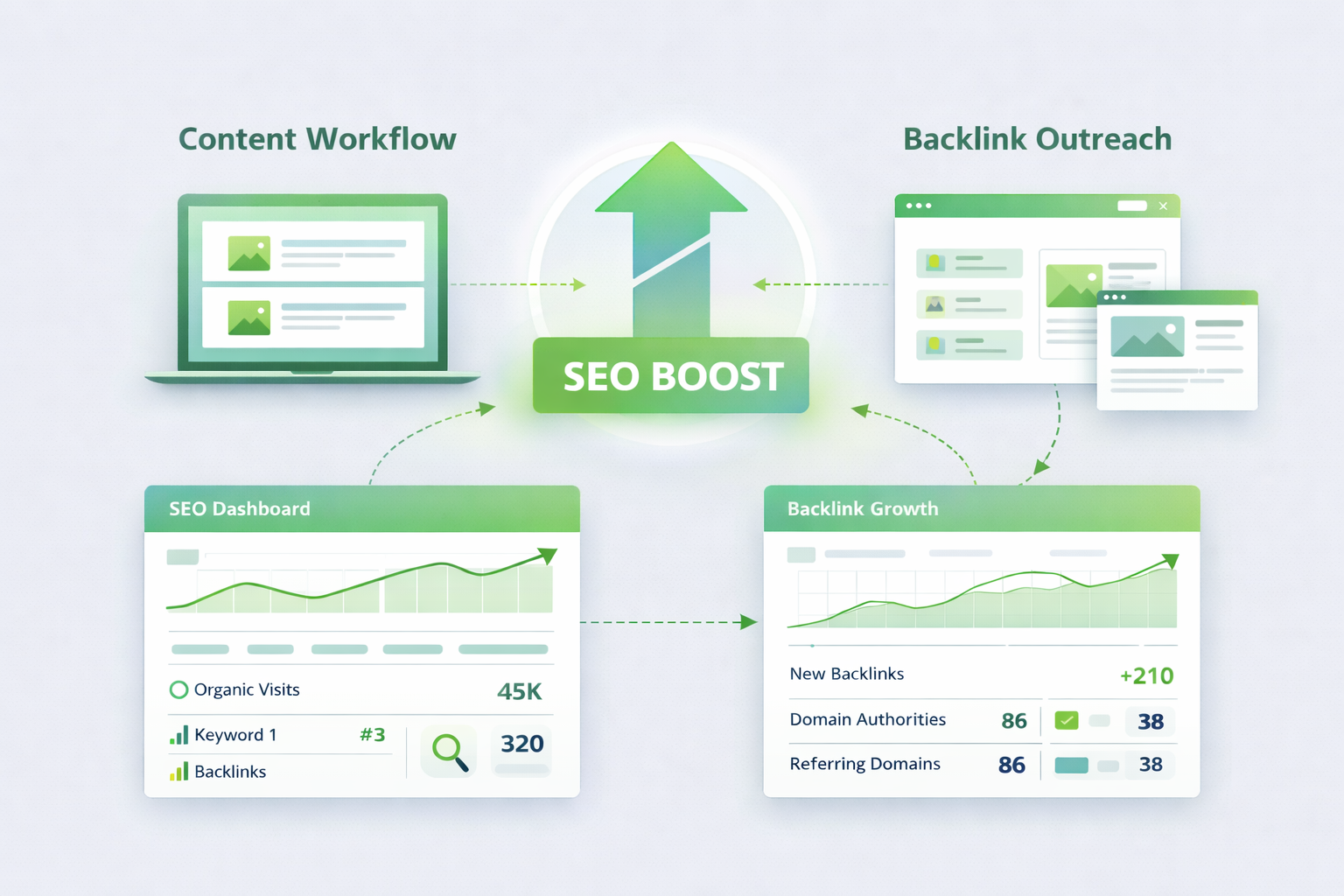
For modern SEO, content and backlinks operate as a paired engine. Quality content earns attention, authority, and mentions from other sites. Those mentions become backlinks that signal trust to search engines. The stronger the content alignment with audience intent, the more likely outreach efforts will result in earned links that move rankings and traffic. This harmony between creation and outreach is what we call content-aligned backlink strategy.
Traditional link-building often treated content and outreach as separate activities. Content teams produced assets, and outreach teams chased link opportunities. When those efforts failed to align—when outreach pursued irrelevant or thin content—the results were uneven, costly, and not scalable. The modern approach centers on a cohesive system where content assets are designed with link targets in mind, and outreach workflows are built around measurable editorial opportunities.
This guide presents a practical framework for backlink outreach automation that fits into real-world editorial calendars. It emphasizes content-driven link building, efficient outreach workflows, and a disciplined approach to citation building that improves authority signals over time. If you’re a growth-minded marketer, agency owner, or in-house SEO lead, expect to gain repeatable processes, clearer ROI, and fewer missed opportunities.
For context, a well-aligned program reduces manual friction and helps teams operate at scale. It also supports multilingual and multi-location strategies by standardizing how content assets are created, linked, and promoted across sites. As you read, you’ll find practical steps, templates, and a modular architecture you can adapt to your tech stack and team structure.
To explore practical examples and templates, see the linked resources at the end of this article. They provide ready-made checklists you can adapt to your site, CMS, and workflow preferences.
A practical framework for backlink outreach automation and content alignment
At a high level, the framework rests on three pillars: content intent, outreach signals, and measurement feedback. Each pillar informs the others in a continuous loop. When you connect these pillars through automation, you create a system that reliably turns content into linkable assets and outreach into measurable results.
1) Define content intent with link potential
Before you write, map each content asset to a set of potential link targets. A good practice is to tag assets by primary topics, authoritativeness, and audience needs. Then identify types of backlinks you want to attract—examples include expert roundups, case studies, data-driven insights, and resource pages. The goal is to embed natural, link-worthy angles within the content itself rather than chasing links after publication.
2) Design outreach signals into content briefs
Editorial briefs should include outreach signals—elements that make it easy for others to reference, quote, or cite your work. This can include data visuals, shareable infographics, exclusive insights, and clear canonical references. The outreach plan should align with the asset’s themes and include a prioritized list of target domains, relevance checks, and proposed anchor texts that match content intent.
3) Automate outreach workflows around editorial calendars
Build an automation layer that scrapes potential link opportunities, suggests outreach emails, and tracks responses. Automation should augment, not replace, human judgment. Start with templated outreach that preserves brand voice and compliance requirements, then layer in personalization signals that increase response rates without sacrificing scalability.
4) Tie measurement to editorial velocity
Quantify impact with a lightweight dashboard that tracks mentions, referrals, and backlink quality over time. Use signal-based metrics such as domain authority, page authority, and relevance to content intent. Regularly review which content assets attract high-quality links and adjust future briefs accordingly.
Key takeaway: align the asset design with specific link targets, bake outreach into the content lifecycle, and measure impact continuously to improve both content quality and link velocity.
Content alignment lifecycle: from planning to link acquisition
Think of your content and link-building program as a lifecycle with four stages: plan, create, outreach, and measure. Each stage feeds the next, creating a sustainable loop rather than isolated campaigns.
Plan: map topics to link opportunities
Begin with a topic map that connects high-potential themes to target domains. Use keyword clustering to group related concepts and identify gaps in the current link landscape. Define success criteria for each asset, including expected backlink types and volumes.
Create: design assets with natural linkability
Craft content that is not only informative but also paves the way for credible mentions. Integrate data visuals, expert opinions, and clear citations. Include practical takeaways, checklists, and frameworks that readers can reference when linking to your work.
Outreach: automate, personalize, validate
Leverage templated outreach to scale but insert personalization where it matters. Validate outreach lists with relevance checks and ensure your emails respect site policies and webmaster guidelines. Track responses and adjust templates to improve response rates without sacrificing compliance.
Measure: learn and optimize
Monitor link acquisition velocity, quality, and impact on rankings. Use a simple control-drift model to test changes in outreach messaging, asset formats, or content structure. Use insights to inform the next cycle of planning and asset creation.
Automation architecture and workflows
A scalable backlinks program benefits from a modular architecture that separates data, content, and outreach logic while keeping them tightly integrated. The following blueprint offers a practical starting point.
- Editorial briefs, outlines, long-form drafts, data visuals, and optimized metadata.
- Link-intent layer: A catalog of target domains, content archetypes, and anchor text guidelines aligned with goals.
- Outreach layer: Email templates, personalization tokens, and outreach sequences with status tracking.
- Measurement layer: Real-time dashboards for mentions, referral traffic, and backlink quality signals.
In practice, you might implement a workflow like this: (1) generate a content asset with data visuals; (2) associate the asset with 5–10 high-priority target domains; (3) generate outreach emails with personalization cues; (4) publish the asset to your CMS; (5) track responses and adjust the asset or outreach approach based on early signals.
Tooling considerations include CMS compatibility, API access for automation, and clear data contracts so your team can work across content and outreach without stepping on each other’s toes. If you’re evaluating vendors, look for features such as white-label reporting, scalable templates, and transparent workflow SLAs.
For teams operating across multiple sites or brands, a shared automation layer helps standardize processes while respecting unique brand voices. You can implement role-based access to keep editors and outreach managers aligned without overcomplicating governance.
Outreach emails that convert
Effective outreach blends relevance, credibility, and clarity. Your templates should present a concise value proposition, a direct ask, and a clear avenue for the recipient to respond or engage. Below is a practical framework you can adapt:
Template structure
Subject: A quick resource you might find useful for [topic]
Hi [Name],
I’ve been following [Site] and appreciated your coverage on [topic]. I recently published a data-backed guide on [asset topic], which I think complements your article on [related topic]. It includes [a takeaway, dataset, or actionable framework].
Would you consider linking to it as a reference in [specific page] or using it as a source for [upcoming piece]? I’m happy to share alternative formats (CSV data, infographic, or a one-page summary).
Best regards,
[Your Name]
Note: Personalization matters more than length. Aim for one or two lines that show you read the recipient’s content and articulate a concrete value exchange.
As you scale, automate the repetitive parts (contact discovery, email sequencing, follow-ups) while preserving individualized elements. For compliance and quality control, maintain a registry of approved anchor texts and target placements to ensure consistency across campaigns.
Legal and ethical considerations are essential. If you want to review our policy on disclosures and licensing, you can read our Disclaimer or Terms and Conditions for how we handle outreach data and content rights. For additional guidance, see the disclaimer again Disclaimer.
Measuring impact and iteration
Measurement is the engine that powers continuous improvement. A lean measurement framework focuses on three questions: Are we earning high-quality links? Is traffic improving meaningfully? Are rankings moving in the expected direction for target keywords?
Key metrics to track include:
- Quality backlink velocity and domain authority trends
- Mentions and citation quality across target domains
- Referral traffic from acquired links
- Content engagement metrics (time on page, scroll depth, shares)
- Time-to-link and response rate for outreach campaigns
Establish a simple cadence for review—monthly for high-volume programs, quarterly for smaller efforts. Use a control-driven approach to test changes in content depth, data visuals, outreach messaging, or target lists. Document learnings and adjust your asset creation and outreach templates accordingly.
In practice, integrate these measurements into a single dashboard that your team can access. Provide stakeholders with a clear narrative that ties content investments to qualified backlinks and downstream SEO results. This transparency helps justify budgets and improves cross-functional collaboration.
If you are unsure where to start, examine a sample 90-day plan that details one content asset, its target list, outreach sequence, and a predefined set of success criteria. Use this as a baseline to tailor your own program and to scale responsibly across brands or markets.
Pitfalls and best practices
Even well-structured programs face common challenges. Here are practical tips to avoid the most frequent missteps.
Pitfall: over-optimizing anchor text
Be cautious with anchor text variety. Over-optimization can raise red flags with search engines and harm long-term results. Use natural, content-aligned anchors that reflect the reader’s intent and the page context.
Pitfall: buying links or using questionable sources
Stick to white-hat practices and credible sources. Transparent outreach, proper disclosures, and high-quality placements protect your site’s authority and maintain a sustainable trajectory.
Pitfall: blocking editorial velocity
Balance automation with human review. Automation should speed routine steps, not replace editorial judgment. Maintain editorial standards to preserve brand voice and content quality across assets.
Best practices
- Embed data visuals and practical takeaways that invite citation.
- Publish content to your CMS with proper structured data and canonical references.
- Regularly refresh assets to keep links relevant and up-to-date.
- Co-create with credible experts to enhance trust and linkability.
- Document processes and maintain clear governance for multi-brand programs.
To further align with site policies, consult our policy documentation available at the links previously mentioned. The combination of discipline and scalable tooling is what sustains long-term growth rather than one-off wins.
Implementation roadmap and a quick-start checklist
Use the following 30-day plan to begin integrating content alignment with automated outreach. Adapt the timeline to your team size, tech stack, and risk tolerance.
- Audit existing content and backlink profiles. Identify high-potential assets that could attract quality citations.
- Define 3–5 target domains that align with your key topics and audience. Create a brief for each asset.
- Develop outreach templates and personalization rules. Ensure compliance with webmaster guidelines.
- Publish a pilot asset to your CMS with structured data and citations. Schedule automated promotion across channels if applicable.
- Launch the initial outreach sequence, monitor responses, and refine templates.
- Establish a simple dashboard to track backlinks, referrals, and ranking changes over the next 90 days.
As you scale, maintain a governance model that protects brand voice and ensures consistent quality across assets. Consider expanding the program to additional brands or markets with a centralized automation layer and clear escalation paths for outreach approvals.
If you want a deeper dive into a tailored plan, you can review our legal and policy references here: Disclaimer and Terms and Conditions.
For ongoing updates and examples, explore related sections of our site. You can learn more about our approach to Disclaimer and how we structure our outreach workflows for scalable results.